Plan seeks to expand WSF fleet
Published 8:30 am Saturday, September 15, 2018
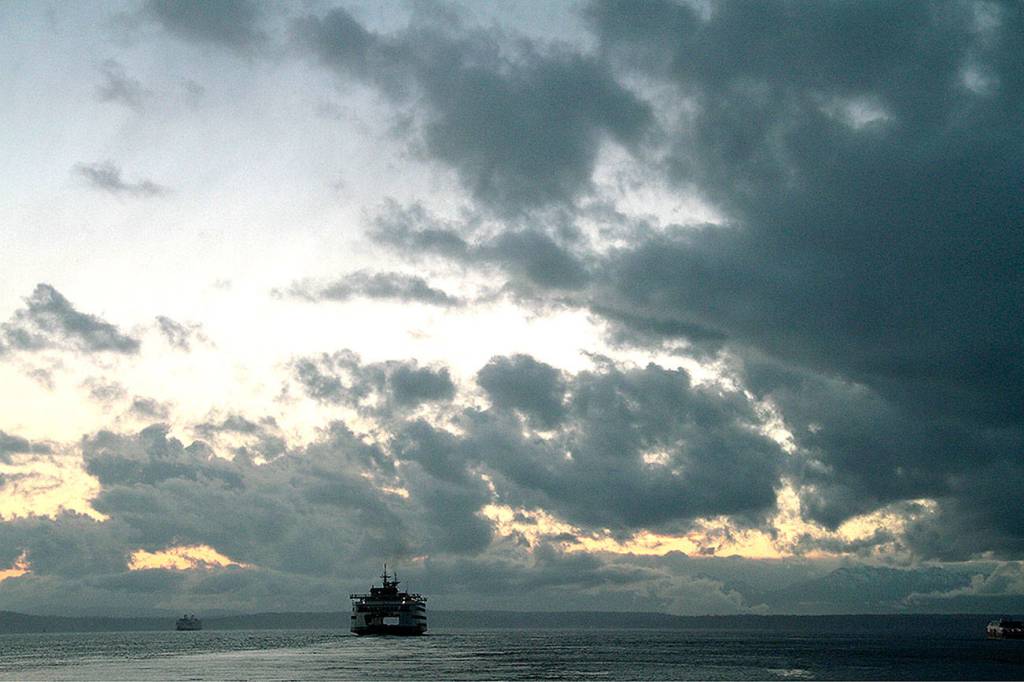
Ridership on Washington’s ferries is expected to grow by 30 percent by 2040, and that means changes are expected for all Kitsap routes.
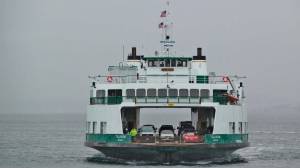
The Washington State Department of Transportation recently released a draft of the 2040 Long Range Plan for Washington State Ferries. It details how WSDOT intends to improve reliability, customer service, growth management, sustainability and resilience across the fleet.
Upgrades in the overall plan are expected to cost $14.2 billion. Overall tax revenues and fare collection are expected to provide an income of $7.5 billion, which leaves $6.7 billion unfunded.
“Historically the Legislature has appropriated additional revenues to cover the shortfall between dedicated WSF revenues and WSF operating and capital funding needs,” the document states.
Five more Olympic class vessels would be constructed as soon as possible — two to stabilize the fleet and three to replace vessels about to retire. Overall, the plan calls for the retirement and replacement of 13 vessels by 2040.
In Kitsap County, ferry ridership is expected to grow significantly.
“The routes with the largest numbers of walk-on passengers, Seattle/Bainbridge Island and Seattle/Bremerton, both expect large increases,” the draft plan reads. “Both vehicle and passenger ridership on the Edmonds/Kingston route is projected to grow significantly.”
The Edmonds/Kingston route is expected to grow from 1,914,100 passengers and 2,068,800 vehicles to 3,360,000 passengers and 2,514,400 vehicles, while the Seattle/Bremerton route is estimated to grow from 2,215,100 passengers and 689,600 vehicles to 3,101,800 passengers and 846,700 vehicles.
The Bainbridge Island-Seattle route — WSF’s most popular route — is expected to increase from 4,548,800 passengers and 1,997,100 vehicles to 6,422,500 passengers and 2,344,200 vehicles.
Bainbridge Island-Seattle
The plan calls to convert the Jumbo Mark II Class ferries to all-electric by 2022. The Bainbridge terminal would require enhancements so that the vessels can be plugged in. The long-term plan includes increasing capacity on the ferries from 1,800 passengers to 2,400 passengers by 2028. Enclosing some deck space and adding more life rafts would be required.
Bremerton-Seattle route
The existing vessel to be replaced with a hybrid Olympic Class (144-car capacity) vessel by 2026. The current ferry would then be used in the
maintenance relief fleet. By 2034, passenger capacity would increase to 1,800.
Kingston-Edmonds route
The plan would convert one of the two vessels to hybrid-electric by 2022. Preservation projects to the Kingston terminal would include the trestle, bridge, landing aids and restrooms. From there, the plan breaks into two scenarios. Scenario A would replace both vessels with three hybrid vessels by 2033 and increase service frequency to 30-minute headways. Scenario B would replace both vessels with hybrids and make no changes to service frequency.
The draft document can be found at https://wsflongrangeplan.com/.
Comments can be submitted on the plan through Oct. 25 by visiting www.wsflongrangeplan.com/comment/.
WSF is also hosting a series of open houses on the plan.
The first Kitsap meeting is 5:30 to 7:30 p.m. Thursday, Sept. 20 in Bremerton (Kitsap Conference Center, 100 Washington Ave.).
The Bainbridge open house is planned for 5:30 to 7:30 p.m. Tuesday, Oct. 9 at Waterfront Park Community Center, 370 Brien Drive SE.
An open house will also be held in Kingston, from 6 to 8 p.m. Thursday, Oct. 11 (Kingston Village Green Community Center, 26159 Dulay Road NE).

Best of Bainbridge