
This article originally appeared in The Time of Your Life special section, Spring 2016.
The 25th annual Older Americans Conference is 9 a.m. to 1 p.m. Wednesday, May 18 at the Elks Lodge (4131 Pine Road NE, Bremerton). Is is free and open to the public.
They are called “Elder Orphans” and they represent a growing number of Americans who are coming into their senior years without anyone to watch over them.
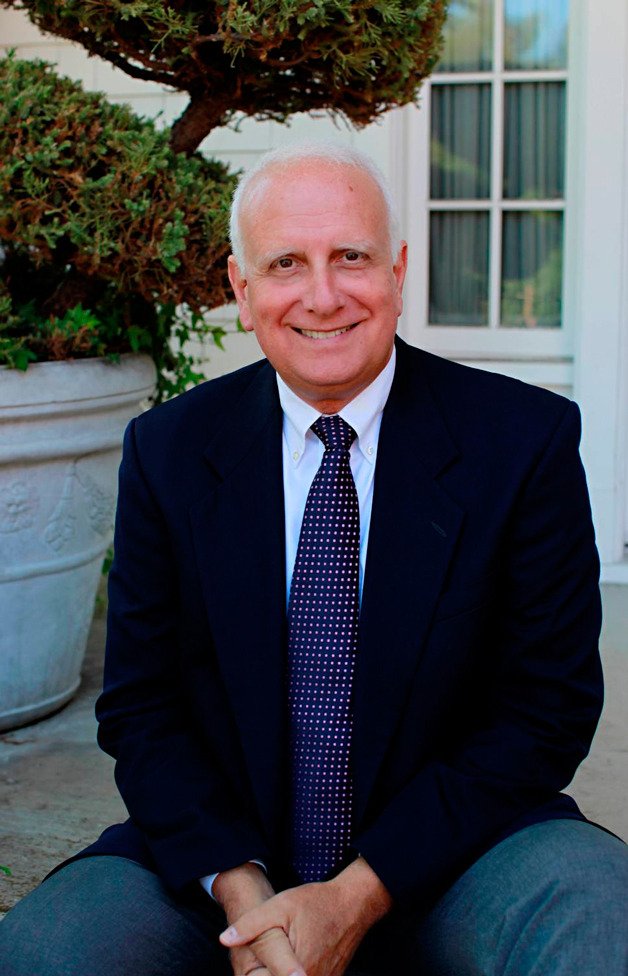
Just ask Richard Tizzano, a Poulsbo attorney who specializes in Elder Law. Many people are familiar with him because of his free seminars throughout Kitsap County, where he helps seniors to know their health care and legal options.
“All seniors need to be asking ‘Who’s got your back?,’ ” Tizzano said. “Everybody needs to have someone to watch over them – someone to be their advocate.”
Elder Orphans refers to the coming wave of childless and unmarried Baby Boomers and seniors who are aging alone. Many have no surviving spouse, may never have had children, and have lived long enough to have no surviving family or close friends.
 “What about those who don’t have family watching over them?,” Tizzano said. “Or those whose family live far away and haven’t noticed that things are falling through the cracks?“
He’s seen that happen when seniors come to get his guidance. Sometimes they even reach out to him to be their advocate.
“I’ve had clients ask ‘Can you be my Power of Attorney?’, or they’ll say ‘Are there people out there I can hire to do this?’” he said.
He strongly advises seniors to think ahead and ask themselves ‘is there someone who has my back?’
Tizzano recommends that seniors attend a seminar where he speaks about choosing an advocate to be your Power of Attorney. He talks about the health care options when a senior can no longer live on their own and what financial assistance may be available.
“There’s really no simple answer,” he said. “But knowing what the options are and being able to choose what’s right for them, gives the senior the feeling that they are in control.”
Tizzano recently had a husband and father come see him. His wife had been in nursing care for more than nine months and he had maxed out his credit cards to pay for her care. He had just received a notice from the care home that he needed to pay another $30,000.
“I helped him fill out an application for Medicaid, and we found that Medicaid would pay the costs back three months,” Tizzano said. “But I kept thinking how I wished he’d come to see me earlier because he still had the credit card debt that he can’t pay.”
Tizzano said that Medicaid is still a strong and fully operational program in the U.S. and can help with nursing home costs in most cases.
“It remains to be seen how long that will be the case, given the national debt,” he added.
Usually someone enters the arena of elder care after they have an accident, or a medical need that lands them in the hospital. Tizzano said they will then need time in a rehabilitation center, and then may be able to go home, but need specialized care at home. Or, in some cases, they will need to move to a nursing facility.
“Seniors need to know the options and the costs ahead of time,” he said. “Seniors need to ask themselves ‘how am I going to pay for this?’”
There are programs including Medicaid, veterans benefits, and others, he said.
One options is Long-Term Care Insurance, which is less expensive the younger you start it. And there are plans that allow your survivors to get a payout if you don’t use it, just like a life insurance policy.
Elder Orphans are also coming about because Baby Boomers are independent people, he said. Each day 10,000 people in America turn 65. And many of them have been focused on their careers and hence, don’t have a lot of close friends.
He tells a story of a comedian who has an act where he tells his wife that he doesn’t have close friends. He asked, ‘If I die, are there six people you could ask to carry my coffin?’
“Then he sets out to make six good friends to take that burden off his wife,” Tizzano said. “There’s a lesson in there. Start now to intentionally be friendly. And think about making more than one good friend, because you don’t know who’s going to go first.”
Tizzano began giving his seminars two years ago. He offers two hours of private consultation for $200 to anyone who attends a seminar and still has questions.
His calling to help others came to him when he was 12. That was when his mother, who was only 42, had a stroke that left her paralyzed on the left side for the rest of her life.
“It was a Sunday and my dad woke me up to say that mom was sick, the ambulance was here and that he was going to the hospital with her,” Tizzano recalled. “Because I was the only child, I’d be alone at home.
“I watched them leave and then my first thought was ‘Hey, now I don’t have to go to church.’ But I can still feel what came next, just like I was standing right there in the hallway of our New York City apartment. Something told me ’You better go to church, because those people care about us and we need them to pray for us.’”
Tizzano said that the lesson from that is to be a part of things and reach out to friends and neighbors because you never know when you’ll need help.
“There’s a lot of pain in the world,” he said. “You can either be a part of the problem or the solution.”
Tizzano is a 1992 graduate of the University of Puget Sound School of Law and is a partner in the Sherrard McGonagle Tizzano law offices in Poulsbo and on Bainbridge Island. He practiced law in California before moving to Poulsbo. He and his wife have six children, five still living at home. Four of his children were adopted through the foster care program in Washington.
His office is at 19717 Front St. NE, Poulsbo. His phone is 360-779-5551.
