
Bainbridge team ruling state and the art of debate
Published 4:10 pm Thursday, February 12, 2009
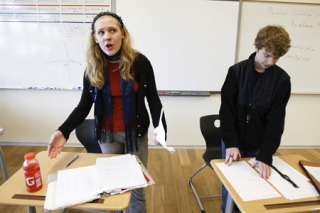
While many high school students loathe studying on weekends, some have made it their obsession.
They research scholarly journals and court decisions once their homework is complete, and on weekends they don power suits and business attire and travel across the state to engage in heated arguments.
It’s not your stereotypical vision of high school students, but then again, those attracted to debate are far from typical.
“Some would say the culture is bizarre,” said Jeff Kingshott, the school’s debate coach. “You have all these high schoolers and all they can talk about is debate. They talk about these substantial issues and they do it for 12 hours on a Saturday. It’s intense. It’s like being in another world.”
Bainbridge has been on a rampage in the regional debate circuit this year, building upon an almost decade-long history of outstanding BHS debaters.
“The success we’ve had is so uncanny,” Kingshott said. “I’ve had coaches come up to me and ask what’s in the water on Bainbridge. We’ve been building momentum here.”
Bainbridge has won every tournament but one this school year, consistently taking the top places in each event.
“The team has been extremely successful,” said senior co-captain Lizzie Sivitz. “We’ve had a lot of competitions where the final or semifinal doesn’t take place because the only remaining competitors are from Bainbridge. That’s hegemonic power.”
The team dominates the style of debate made popular by Stephen Douglas and Abraham Lincoln in 1858. The format allows two opposing speakers to take stances on a predetermined issue, outlining their case and questioning the reasoning of their opponent.
This year, Bainbridge qualified four members of their team for the state debate finals, but regulations only allow for two students per school.
But the success hasn’t come easy, debating takes a heavy commitment to staying abreast of the politics, science and reasoning of the major issues that affect the world today.
“I enjoy politics and current events and I like the format, getting dressed up and doing research,”said junior co-captain Jimmy Mooney. “It appeals to my instincts. You get out what you put into it. I’ll write cases for each side, then write responses I think my opponents will give. There’s lots of research and decisions to make before coming to a debate.”
While much of the prep work is done individually, team practices are important, too.
A dozen students stay after school on a Tuesday to analyze each teammate’s form, posture, annunciation and reasoning.
Kingshott, an economic student at the University of Washington, engages the team with a barrage of hypothetical situations and a liberal use “why?” The questions are designed to challenge students on their reasoning and the foundation of their beliefs.
Finite differences in definitions and arguments can be the end-all in debate. As Sivitz knows, winning is not solely reliant on your ability to reason, but to pick out conflicting statements made by an opponent and to drive a wedge into those cracks.
“Maybe you’ll only find one weakness in their argument and you exploit it, and that’s really fun,” Sivitz said. “You ask questions and set traps for them. I love destroying someone. It’s fun to be fierce and give it your all.”
Sivitz is one of two members of the debate team who have won enough competitions this year to attend the elite Tournament of Champions competition, scheduled for May in Kentucky. Mooney also qualified but won’t attend because of conflicts with SAT testing.
It is almost unheard of to send two members of a team to TOC, a competition that only has 64 positions open nationwide.
“I don’t expect to win,” Sivitz said. “These are the 64 best debaters in the nation. I just want to represent Bainbridge and females in debate.”
Sivitz debated for the first time in eighth grade after watching her older sister, Rebecca, debate for BHS.
Since then, Sivitz has debated extensively, including at a tournament last year at Harvard where she was seeded ninth among 350 competitors. It’s the highest a Washington debater has been seeded at the Harvard tournament in 15 years.
According to Kingshott, the program is blessed with stars like Sivitz, and a strong core team.
“We have some key people that are really dedicated and it rubs off on others,” he said. “We now have a history of having a few good people but what’s different this year we have a lot of solid people. That allows us to take first through third at tournaments.”
The team will soon lose some of its brightest debaters to graduation, but others will step forward to carry on the tradition.
“I’m pretty happy about it because I watched this program grow for years and became a part of it,” Sivitz said. “Graduating and leaving behind a good program is so important to me.”
But Sivitz is also looking toward her future, which, not surprisingly, she hopes will include working as a lawyer.