
Monkey business expected to end well
Published 11:18 am Tuesday, January 12, 2010
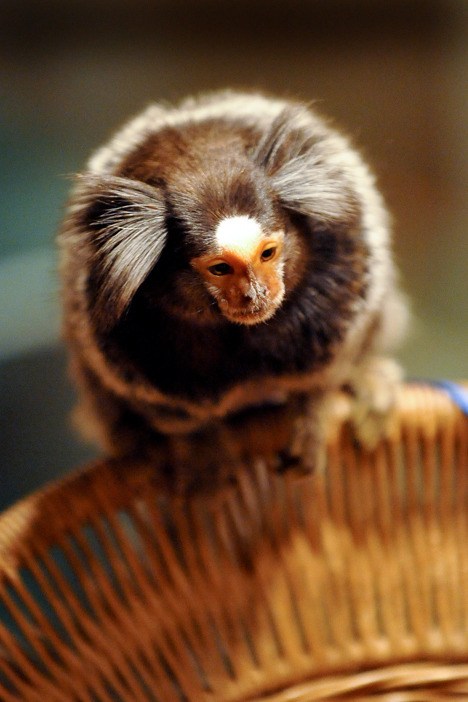
It appears that Rafiki, a tiny marmoset monkey who has lived most of his eight years on Bainbridge Island, will be allowed to remain with his adopted family when the City Council revisits a code issue during its Jan. 27 meeting.
The council is expected to reword its code involving “wild animals” to allow Rafiki to remain living with the Bainbridge family of Greg and Linda Stevenson. The Council addressed the monkey’s dilemma Wednesday night, but decided against a resolution giving an exception to Rafiki in favor of “repealing” the part of the code involving the issue.
Since July 2007, possession of the penicillata marmoset species and other primates has been illegal after state law defined them as “potentially dangerous wild animals,” though RCW 16.30.010(2)(a)(iii) provides a “grandfather clause” that allows such domesticated animals to remain with their pet owners for the rest of their lives.
The Stevensons knew nothing about the new law until Rafiki, who was visiting Seattle last month with his best friend, University of Washington student Robert Stevenson, wandered away and eventually found himself in a Seattle Animal Shelter isolation cell.
Fortunately, Rafiki, who weighs less than a pound, was returned to Robert the next morning. But before he could return to Bainbridge, which doesn’t have an exception clause to the wild animal designation in its code, the city had to agree to consider adopting a resolution that would allow the pet to live legally on the island.
In a letter that Robert – a junior majoring in bio-engineering at UW – wrote to the council earlier this month requesting the change, he said, in part: “…it would be life threatening for him to be forced into a different setting.”
That’s not a surprising statement since the story of how the domestically bred (in Florida) Rafiki came to Bainbridge when only 7 weeks old centers on Robert’s infatuation with primates.
“He was fascinated with them,” said his mother, Linda. “But when he asked to get a monkey, of course his parents said, ‘never in our house.’ But starting in the sixth grade, he spent two years learning everything he could about them. He asked us over and over again as he knew more and more about them. And eventually we said, ‘who are we to stop the next Jane, uh, John Goodall?’”
Before agreeing, they established several specific parameters, which essentially required him to be responsible for researching exactly what it would take to adopt and care for a primate.
“We were thinking he wouldn’t follow through, but by the eighth grade he had all the stuff done, including the financial end of it,” she said. “So then we looked into it and the more we did, the more I got hooked. And now we have a monkey. We love him.”
She admits she wouldn’t do it again, “because I’m a strong believer that this animal should not be a home pet,” she said. “It’s a lot for families to commit to, so I don’t support it now. But he’s a member of our family just like anyone else. He’s a real fun character.”
Marmosets, which generally can be found high in trees deep in the Brazilian rainforest, are extremely social and family oriented. Generally, their families are large and inseparable.
“He needs touching and attention all the time,” Linda Stevenson said. “It’s all about him. You could say he’s a perpetual 2-year-old. He’s very cuddly and protective of us.”
He roams freely throughout the house and puts himself to bed, which is a large, open cage located in the family room.
The Stevensons nixed Robert’s request to take Rafiki with him when he started college since his first residence was a fraternity house. But short visits have been allowed since he moved out of the frat. Unfortunately, Rafiki’s last visit – to Robert’s house for a couple of days – turned into a nightmare.
As Robert said: “…he was slightly disoriented being away from home and his family troop. He panicked and ran to a nearby apartment complex (in 20-degree weather), ending up later in the pound.”
Rafiki was discovered by a nearby complex’s maintenance man, who quickly became his friend and placed him in an empty apartment while calling the animal shelter.
“We were lucky,” Linda Stevenson said. “He was in an obstinate mood and took off running while they were outside. It was a very cold day. He’d never done that before. His MO is to be around the family all the time. He has an outside cage at home where he comes and goes, and he likes to climb trees in the backyard. But never far from us. I guess he got confused.”
She said the family has been a little anxious about the city’s action, but it became clear Wednesday that council members have no intention of separating the Stevensons and Rafiki.


Best of Bainbridge