Pacific Fusion adds to its winning tradition
Published 1:30 am Wednesday, July 26, 2023
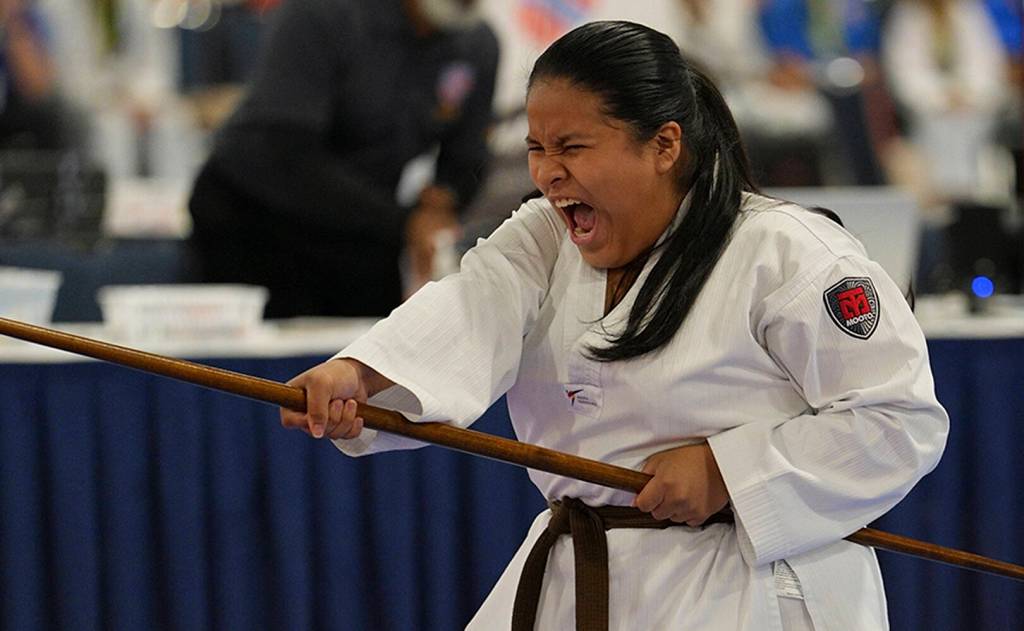
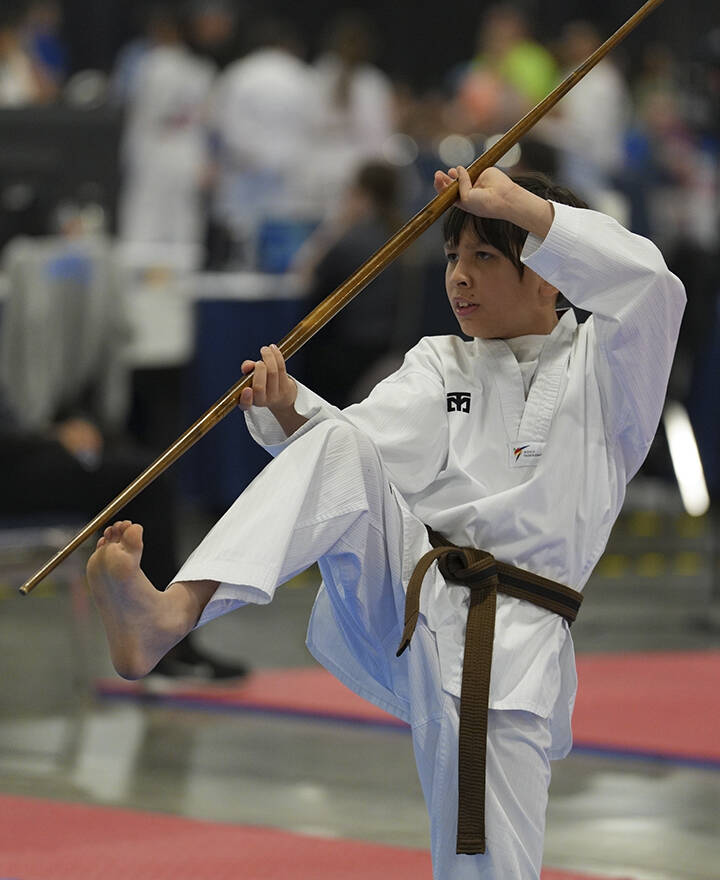
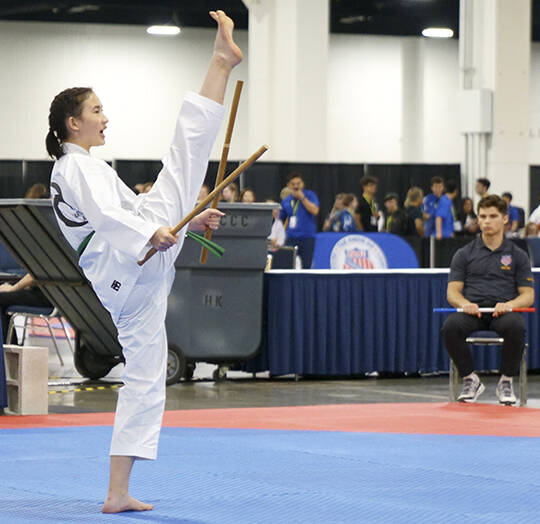

Dynasties typically last five to 10 years in sports. However, Pacific Fusion Martial Arts of Bainbridge Island has made winning a tradition for over 20 years. Since 2002, Ken and Stephanie Aduddell have had over 100 national titles and nearly as many Junior Olympic gold medals.
The national championship is a seven-day tournament with thousands of competitors from around the world. Certain Amateur Athletic Union national champions are invited to try to qualify for the Olympic team based on belt rank and age.
“It’s amazing how when you invite someone to shine, they do,” Stephanie said. “I’ve worked with the Stanford Positive Coaching Alliance and make sure that we’re uplifting the kids in a really super positive way.”
Ken added: “Part of our success is reprogramming both the family and the athlete. Don’t worry about the outcome initially, you’re just gonna go through this process, and at some point, you know you will be competitive. Once we earn the trust of the athlete, they go through a few tournaments and can’t imagine doing anything else.”
Over 3,500 athletes ages 12-48 competed in the recent AAU Taekwondo National Championships. Pacific Fusion sent nine of 20 qualified athletes to compete in Florida as the rest were on vacation or unable to make the trip for other reasons. All nine placed at the national championships.
“The athletes’ eyes are really big,” Ken said about the first-time competitors. “The building is big enough to have a 747 jet inside of it, and thousands of people in the bleachers every day. It takes a little bit of time, but the great part as a coach is being able to plug that athlete into that process where it is just one ring and one day at a time.”
The divisions were split based on how the athlete’s belt rank, age, gender and event. The Pacific Fusion athletes competed in two separate sparring competitions, two breaking competitions, four weapons forms and four traditional form events.
Tricia Fong was a first-time competitor, and the oldest competitor for Pacific Fusion, this season. She joined after watching son Kai Marquardt, the youngest competitor, compete last season. “It was a different experience actually being a competitor versus an observer,” Fong said. “The number of participants was daunting.”
Weston Schick, one of 24 grand champions in the entire tournament, described his experience. “The tournaments in Florida were like no tournaments that I have ever been to around here,” Schick said. “The competition was so much harder than what I’m used to, which made it an amazing experience.”
Fong won a breaking event and three weapons form events in the 43-52 age bracket. She also placed third in a traditional form event. “I truly enjoyed breaking through all ten boards at nationals,” Fong said. “I was coming off a hand injury, and I wasn’t sure if I could do it but I smashed through cleanly. When I turned around and saw the look of pride on my husband’s and son’s faces, it was priceless.” Fong said her favorite moment was “watching my son battle back from a defeat to win silvers. The joy on his face was incredible.”
Schick won four gold medals, including three in traditional form events in the 14-15 age bracket. He also earned four silver medals and a bronze medal throughout point sparring, breaking and traditional form events. “In some of the harder divisions, I was surprised and happy,” Schick said. “I was beating people who were flipping and spinning their weapons and themselves.”
In that same age bracket, Isabella Osborn earned silver and two bronze medals in weapon form events.
The rest of the locals competed in the 12-13 age bracket.
Marquardt won a weapons form event, and two traditional form events, and placed second in weapons form and another traditional form event.
Lauren Roger won four gold medals, including three in traditional form events, and a silver in a breaking event.
Pebbles Featherston won three gold medals in weapon and traditional form events.
Zahara Rist won a gold medal in continuous point sparring, breaking and traditional form. She also earned five bronze medals in weapons form and traditional form.
Natalie Fleishman won a gold, silver and bronze medal.
Cristina Guadalupe picked up a silver in a weapon form event after nearly backing out of the tournament after being in physical therapy for months with an MCL issue. “She had to pull out of fighting at nationals last minute,” Stephanie said. “When she got silver, she just started crying on the side of the ring with me afterward. It was an exclamation point on her journey.”
Each athlete trained at least 15 hours a week to prepare. “For the past two to three years, I have been taking two regular classes per day in addition to longer competition team-only practices,” Schick said.
Fong said: “Since I’m the only adult woman on the team, I feel like I had to do a lot of catching up to keep up with my younger teammates. I started doing double classes every day just to condition and bring my skills up to competition level.”
Not every member at Pacific Fusion competes on the sports team. Athletes have to prove why they deserve a spot on the squad. “Recreation students come to us and say they would like to potentially get information about competing,” Stephanie said. “We’ll evaluate if they made the time and the space in their life to participate in martial arts at that level. We’ll have a conversation with the family as a whole and take a look if they do show that kind of desire.”
Ken added their athletes come in all shapes and sizes. “They can be athletic, they can be multi-sport, or be someone that’s really academic and likes the mental challenge of martial arts,” Ken said.
The competitors are looking to better their performances next season. “I don’t feel like I’ve succeeded or accomplished my tournament goals until I can’t lose,” Schick said.
Fong said: “My goal for this first season was to survive. My real reason for being on the team is to prove to myself, my sons and to society that we can do anything if we want.”