
Inslee addresses climate change topics with Grow Community
Published 1:30 am Monday, March 16, 2026
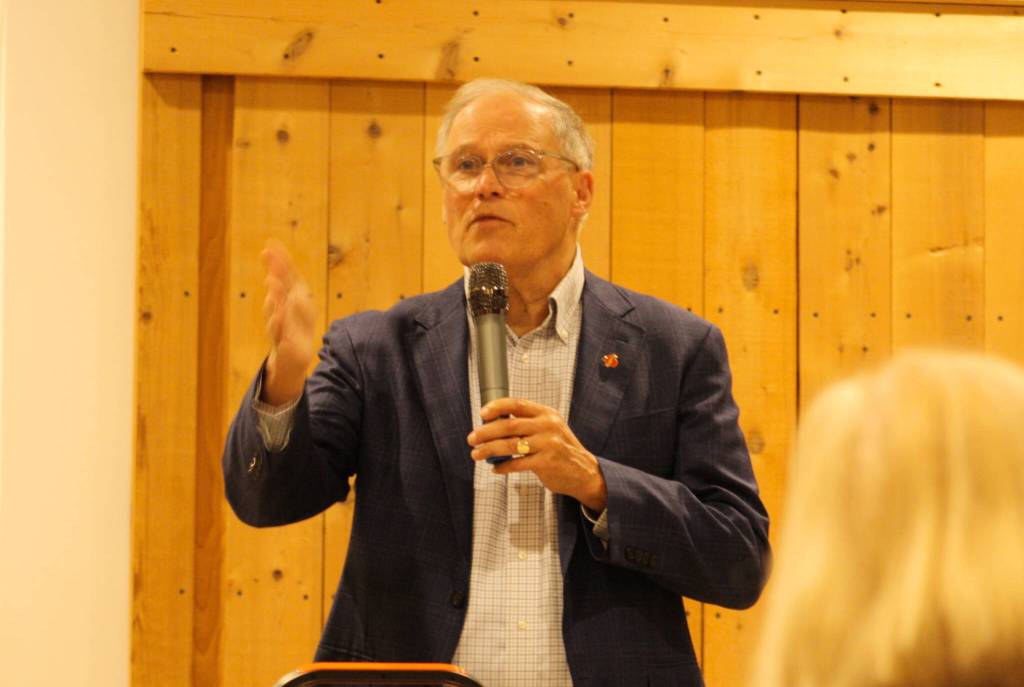



Former four-term Washington state governor Jay Inslee held a Q&A session with members of the Grow Community on Bainbridge Island March 12, discussing the state of climate change response in the state, nation, and the world at large.
About 60 people attended the event, posing inquiries that ranged from dependence on carbon-based energy sources, individual states’ ability to hold polluters accountable, staying motivated, and more.
During the discussion, Inslee touched on the statewide and economic policies like the Climate Commitment Act and the democratization of climate-smart energy sources, but he praised individual consumer choices like sustainable living as one of the best ways for people to make progress in the “shadow of [President] Donald Trump.”
“The fact that people are embracing these new technologies — heat pumps, solar — the fact that there’s so many reasons to realize the incredible progress that we’re making — solar panels have come down 80% in cost the last two years, wind 30, 40%,” said Inslee. “We’re continuing to make progress […] Between technological progress and our state-based actions in our own home state, there’s a reason to keep our chins up and our eyes on the prize.”
Monika Aring, a resident of the Grow Community and former senior policy advisor at Massachusetts Institute of Technology’s Fab Foundation, helped coordinate the event with Inslee. Aring explained that inviting Inslee to discuss sustainable living options made sense for the Grow Community, as one of the country’s only net-zero climate footprint housing developments in an urban center. Inslee agreed.
“For people who believe you can’t decarbonize, they ought to come to the Grow Community. Just take a look at what these folks have done in embracing solar, and embracing particularly energy-efficient buildings, which is extremely important,” Inslee said.
Overall, finding ways “to not burn gas” is key to an individual’s impact on slowing climate change, Inslee said. Choosing low-emissions transportation options is an easy way to start: for example, the Inslee family has a Chevy Bolt electric vehicle, which he loves to drive, the former governor said.
However, it should not be lost on anyone that the biggest culprits for climate change include large corporations and oil companies, Inslee noted. There are currently 24 active civic lawsuits against oil and gasoline companies for violation of consumer protection laws, he said.
“We’ve seen this movie before — it’s the tobacco movie. The tobacco industry spent decades, millions of dollars, trying to convince Americans their product wasn’t dangerous, and the oil and gas industry has done, effectively, the same thing,” said Inslee. “Now, they’ve also tried to create the impression that they’re really out there pumping renewable energy right and left, and they’re making massive investments. You know, they buy one solar panel and spend $100 million on a TV ad. [During the Obama administration,] we had a good cap-and-invest system ready to go. The bill’s still there. We can pass it.”
Toward the end of the session, attendees inquired about the growing level of despair among young people worried about climate change and how to support and motivate them to take action. Most members of the audience were over the age of 60, including Inslee himself.
“This is a real thing in the mental health issue for our young people. And it’s really disturbing to me that I’ve talked to a number of young people who said, ‘I’m not going to have children. I’m uncomfortable having children, bringing them into a world that will be so distorted because of climate change.’ That really hurts when I hear people saying that it has reached that level of concern,” said Inslee. “Now I think it’s going to be a good planet to have children on, in any event, but it is a reminder why it’s up to my generation to do something about this. And I really believe my generation — the Boomers, Woodstock and the Age of Aquarius — as we leave the scene, we ought to leave on an up-note, because we are the first generation who has felt the sting of climate change, and we’re the last generation who can really stop it.”