Film festival returns with a historic twist
Published 11:10 am Sunday, September 7, 2014
Throughout the weekend of Nov. 14, the Arts & Humanities Council will once again showcase the works of our island’s local film professionals at the 16th annual Celluloid Bainbridge Film Festival, showing at both Bainbridge Cinemas and the historic Lynwood Theatre.
Following the simple guideline that works must have been filmed on Bainbridge or feature a past or present Bainbridge resident in the cast, crew or production, the goal of the three-day festival is to bring the Bainbridge community together to learn about and celebrate the work of local filmmakers.
In addition to the large variety of films already submitted to the festival, this year will also include the “Celluloid Bainbridge Film Challenge,” a contest requiring that filmmakers produce a quality film in an abbreviated amount of time using either a specific character name, prop or line of dialog taken from the history of Bainbridge Island.
Please note: the historical context below is provided for informational purposes, though not required for inclusion in your film.
The historical additions are:
A Character Name: Captain William Renton
Use of the prompt: All or part of the name must be used in the film.
Bainbridge Island Historical Context: Captain William Renton established the first successful lumber mill on Bainbridge Island in 1864, located at Port Blakely Harbor. During the following four decades the Port Blakely Mill Company flourished, eventually becoming the world’s largest lumber mill of its time. The mill brought in workers from every corner of the earth, including Australia, England, Germany, France, South America and Japan.
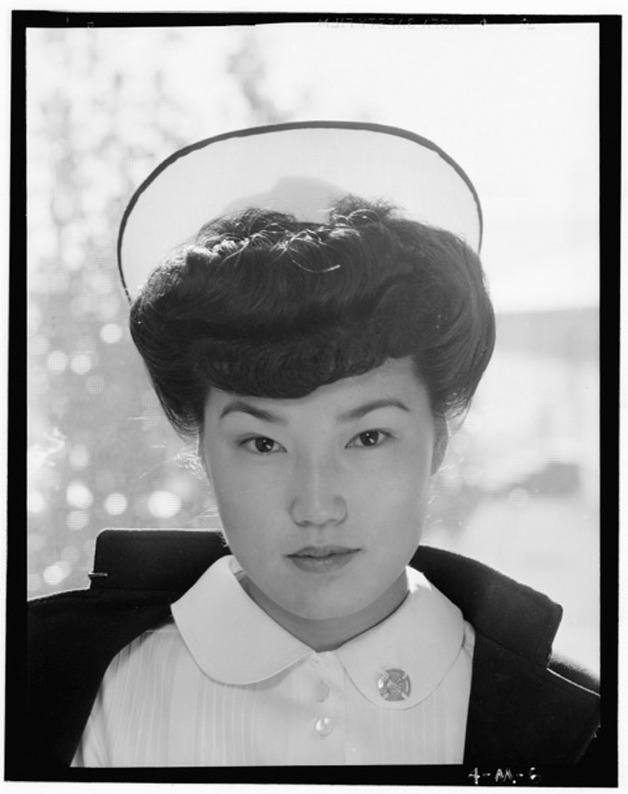
A Prop: the Ansel Adams’ Photograph of Nurse Aiko Hamaguchi
Use of the prompt: Filmmakers must print out a copy of the photograph and use it visibly in the film, either directly or indirectly.
Bainbridge Island Historical Context: After the attack on Pearl Harbor in 1942, President Franklin Roosevelt exiled nearly 120,000 people of Japanese ancestry from the West Coast through Executive Order 9066, followed by Civilian Exclusion Order No. 1.
Citizens of Bainbridge Island were the first to be sent to an interment camp in Manzanar, California, allowed to take with them only what they could carry or wear. Renowned photographer Ansel Adams was permitted to capture images inside the camps, though prohibited from photographing any of barbed wire fences, guard towers or details that would have undermined the official storyline that the move to the camps was a “voluntary migration.” This iconic photograph of nurse Aiko Hamaguchi was one of the many portraits taken.
A Line of Dialogue: “This is Bainbridge Island.”
Use of the prompt: The phrase must be included in the film either spoken or printed and posted in a visible manner.
Bainbridge Island Historical Context: In 1990, what was once a community of 14 separate and self-governing precincts, motioned to incorporate the entire island into one city. Initially known as the city of Winslow, in November of 1991 citizens passed a vote to change name to Bainbridge Island. The phrase “This is Bainbridge Island,” spoken publicly in 1992, declared the now lasting name of our island city.
Filmmakers who wish to take on the Challenge may choose from a list of genres in creating their three- to seven-minute films.
The final deadline for submission of the films is Oct. 14. Submission guidelines and applications can be found at www.BainbridgeArtsHumanities.org.
Films will be given points based on creative use of the prompts, technical skill and entertainment value.
Winners will be announced at the festival after a showing of all the top films. The Arts & Humanities Council will be giving away $1,000 in cash prizes to winners of the competition.