
BI council: Another no on affordable housing
Published 1:30 am Saturday, August 14, 2021

Faced with a tight deadline, Bainbridge Island city staff suggested a developer agreement and some content so the Wintergreen Project, with 31 affordable housing units, could proceed.
But the City Council denied that agreement at its work session Tuesday.
”We continue to be confounded by the council’s unwillingness to support our project despite all of the Comp Plan guidance and the acknowledged affordable housing crisis,” attorney Hayes Gori said in an email. “In order to make some lemonade out of lemons, I think many of the provisions in the development agreement regarding affordable housing could be useful in the staff report.”
The project still is not dead, however. It will go to the Planning Commission, with the hearing examiner expected to get it Sept. 16.
Gori said the development team conceived and drafted the agreement independently, so it did not get preferential treatment from the city, as some councilmembers suggested. And, he said Councilmember Christy Carr’s comment that it did not meet development standards was inaccurate.
Developer David Smith of Central Highlands added in another email: “We have been denied the legally required timeline for the land-use process, which is why a developer agreement is necessary. The DRB (Design Review Board) held up the project for eight months.”
He said Carr’s belief that a 50-foot buffer from Highway 305 is required is inaccurate, as city code allows a 25-foot setback for single-family residences — “it doesn’t matter if they are attached or detached.”
Central Highlands is proposing a 73-lot residential subdivision on High School Road and wanted assurance the permit process will be done in a timely manner. In exchange for such assurances, Central Highlands planned to offer all 31 units to be sold to low-income buyers through Housing Resources Bainbridge and Housing Kitsap, which will result in the units being permanently affordable as part of HRB’s Land Trust.
Despite that, a majority of the council didn’t see the benefit. Previously, only 10% of the “affordable” units had to go to the lowest-income buyers.
“There’s nothing here for the city to gain, and the community,” Councilmember Kirsten Hytopoulos said, adding it needs to go through the normal process with the Planning Commission.
Councilmembers Leslie Schneider, Joe Deets and Carr agreed.
Carr said the community doesn’t like bonus density, and there is no guarantee the developer will sell only to the lowest income buyers. “I’m not willing to take that risk,” she said.
Deets, who is running for re-election and says affordable housing is one of his top concerns, said he thinks the project should go through the normal process, even though it was city staff who suggested the developer agreement. “It’s very suspicious,” he said.
Mayor Rasham Nassar and deputy mayor Michael Pollock supported the project, as did Phedra Elliott of the nonprofit Housing Resources Bainbridge. She was allowed to speak, although Smith and Gori were not. “I’m hopeful we can find a way to move this forward,” Elliott said.
Nassar said she was disappointed in the council, adding after saying for years it supports affordable housing, it still hasn’t done anything about it. She said it would have cost taxpayers nothing but staff time.
“This is not a big request,” she said. “We essentially could be losing thirteen affordable housing units.”
Nassar said normally she doesn’t like density, but, “I really believe in this one. The area is already urbanized. It’s exactly where” we want to build these types of projects.
As for the development agreement process, city manager Blair King said, “I’m comfortable with them.”
Madison Project
The Bainbridge Island City Council also talked about expanding the scope of the Madison Sidewalk Project.
Public Works says the project could include bike and sewer improvements, creating cost efficiencies by doing it all together — saving around $500,000, along with minimizing public inconvenience.
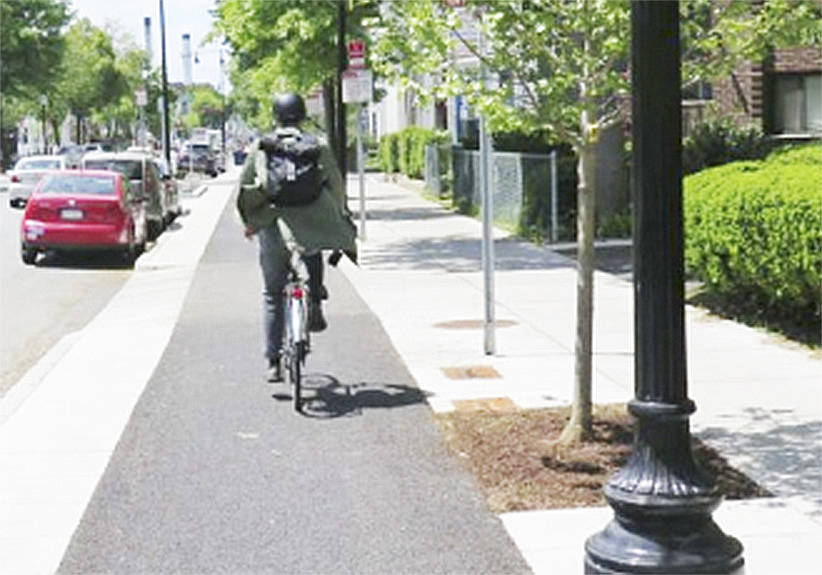
Plus, a separated bike lane would create an all-ages north-south corridor through Winslow, connecting downtown with library, schools, parks and other establishments.
Public Works director Chris Wierzbicki presented options as there are time constraints related to a $1.4 million federal grant. Staff will ask for another $1 million in federal funds. The city is paying $600,000. Depending on the scope, cost will be between $4.2 million and $5.2 million. The council budgeted $2.75 million for the original project. Wierzbicki gave ideas on how to reduce the project to reduce the cost, and also ways to fund the extra amount.
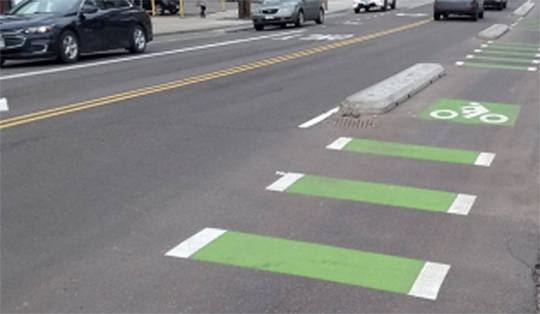
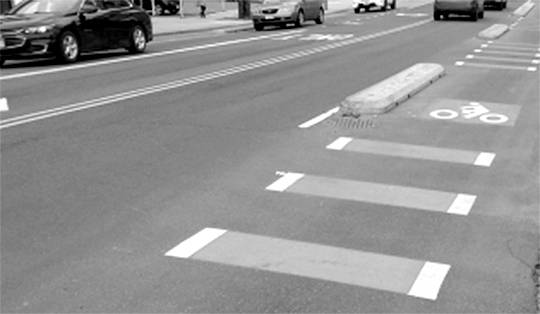
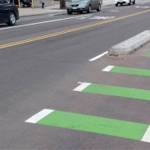
A virtual open house last month showed support for expansion. Winslow to Wyatt would have separated bike lanes with painted visual clues. Wyatt to High School Road would have raised bike lanes to the east and separated bikes lane and a widened sidewalk on the west. High School Road to Highway 305 would have separated bike lanes on both sides, sidewalk gap filling, traffic calming and new crosswalks, along with road construction and sewer replacement.
King said more funds will be requested from the council for the expanded project in the future.
“This looks really exciting for the downtown core, making it bike-friendly,” Deets said, adding, like others said, that he doesn’t like giving one project so much money.
“This is a core segment” of the city, Schneider said, adding she walks it to work and to council meetings. “We need it badly.”
Hytopoulos said this is where “we should put our dollars” to help the most people.
Housing Action Plan
The council also looked at the Housing Action Plan.
The proposed scope consists of quantitative that includes information gathering and statistical research, along with a qualitative component that includes community outreach that would help the city to reach housing-related goals. With that information, it will come up with a plan on what type of housing products should be encouraged.
King said the city also wants projects that conserve energy and reach their fair housing goal serving all segments of the population. He added they will look for a consultant in the $150,000 range.
Pollock said he would like to see existing housing repurposed, rather than “building our way out of this problem.”
Deets said the city needs projects that “house workers who need to live here.”
Carr said the “work needs to be appropriate to Bainbridge” with strategies to reduce displacement.
Shoreline Management Program
The council discussed pausing work on the Shoreline Management Plan, as suggested by the Planning Commission.
Commissioner Sarah Blossom said they want to work with city staff to get on the same page. And they want King to facilitate that discussion so he needs time to get up to speed on the SMP.
Along with that, Commissioner Bill Chester said they want the public to be more involved, so a plan is needed to get that going. “Sometimes you have to take a couple of steps back in order to make the process move forward,” he said.
Commissioner Ashley Mathews said sometimes it’s best to slow down so “others know what you’re doing.”
Hytopoulos said she wants what the Planning Commission wants.
King said he doesn’t have to become an expert on the SMP, but can help make it easier to understand and still deal with the state mandate.
The SMP is 400 or so pages, so Mathews said they need help deciding what to focus on. The commission also wants a topic-based workplan going forward. “A break is not a negative thing,” she said.