Following two separate incidents of sunken derelict vessels in one month, cities along waterways in Kitsap are asking the state for more assistance.
The city of Bainbridge joined a letter to Gov. Bob Ferguson, authored by the city of Poulsbo, advocating for better disposal of derelict and abandoned vessels in waterways around Kitsap County.
Rob Gelder, Poulsbo city administrator and author of the letter, called for the Department of Natural Resources’ Derelict Vessel Removal Program to be fully funded in the 2026 budget and to remove the need to identify an owner of a “derelict” vessel that is sinking, obstructing a waterway, or endangering life or property, rather than waiting 30 days to declare it abandoned before taking action.
“The Kitsap Peninsula regularly faces negative impacts from derelict vessels and their discharges, including environmental and security concerns. Many times, these boats sink, dumping fuel and other pollutants into the Salish Sea. Additionally, derelict vessels impact the navigability of our waterways, imposing safety risks for other boaters and water recreators,” wrote Gelder.
As of Oct. 21, the DNR’s inventory of “vessels of concern” listed 354 watercraft statewide, at least 52 of which were in Kitsap County. All four incorporated cities in Kitsap County — Bainbridge Island, Port Orchard, Bremerton and Poulsbo — as well as the county itself, Kitsap Transit and the Suquamish Tribe have signed so far.
In September, two different boats sank in Sinclair Inlet, the waterway between Bremerton and Port Orchard, releasing thousands of gallons of oil into Puget Sound.
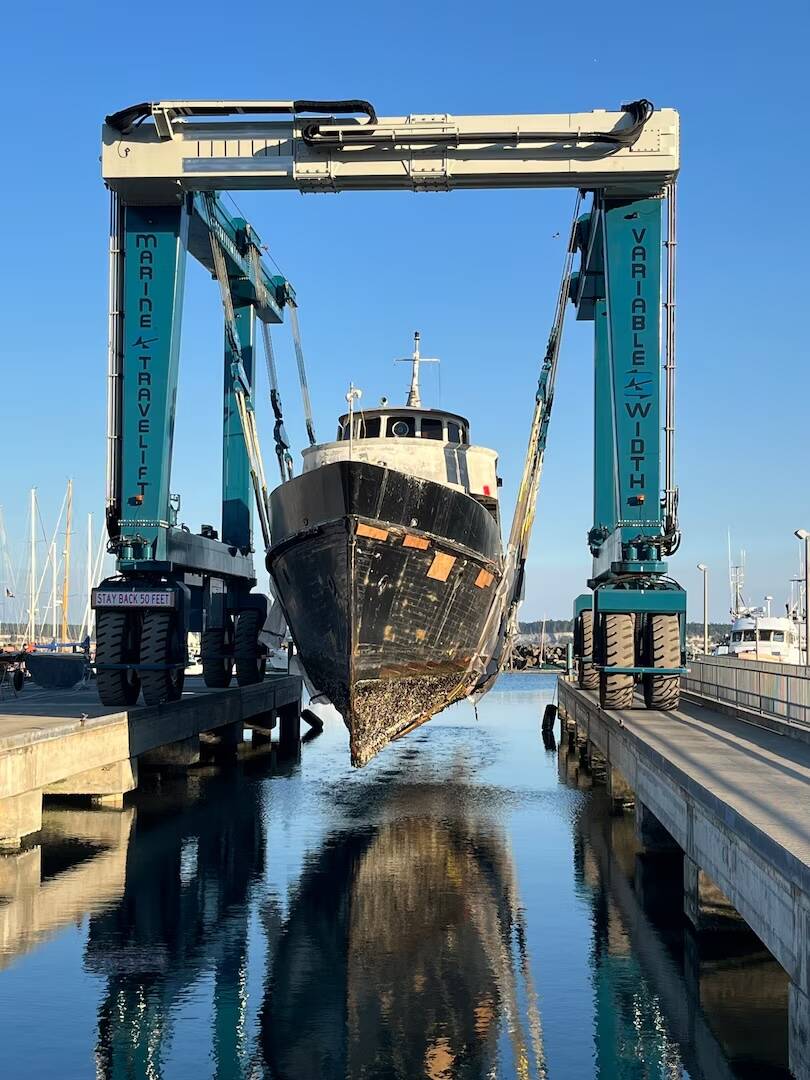
The first vessel, the World War II-era Navy sub-chaser “Cairdeas,” sunk Sept. 7, releasing about 1,200 gallons of oil into the Sound. Ten days after the Cairdeas sank, another military vessel — the 130-foot U.S. Army tugboat “Dominion” — sank at the Bremerton Marina Sept. 17, releasing at least another 2,500 gallons of oil.
Cleanup efforts ensued: the U.S. Coast Guard, state Department of Ecology and DNR placed about 12,600 feet of containment boom around the vessels; dive teams and environmental specialists checked the area to assess the extent of damage; fishing areas were closed and marina access was restricted; plans were made to remove the vessels for salvage.
While the multi-agency coalition was able to retrieve Cairdeas Sept. 24 and ship it to Port Townsend in custody of the DNR, it held fewer than 15 gallons of fuel left in its tank.
Addressing the Dominion has proven more complicated.
Initially, the multi-agency coalition planned to re-float the boat and send it to a scrap shipyard in Anacortes, but efforts were stymied Oct. 11 when it became clear upon a second attempt at removal by crane that the integrity of the vessel “was compromised to the extent that multiple dewatering pumps were not enough to overcome the water continuously flowing into the vessel,” explained DOE communications correspondent Jasmin Adams.
Lifting the Dominion also released more oil, Adams added. In anticipation of that, members of the multi-agency coalition positioned an oil spill boom before the operation, but trace amounts of oil still escaped and dissipated south of Dyes Inlet.
“As Unified Command reviews plans on the most effective path forward, pollution control measures will remain in place to ensure natural, cultural, and economic resources at risk are protected,” Adams wrote on the incident website. “Response personnel will remain onsite to tend the boom and ensure marina tenants can access their vessels and leave/enter the marina as needed. Additional pollution control measures will remain on standby to be activated if needed.”
So far, no oiled wildlife has been discovered, but over 7,700 gallons of oily water has been removed from the inlet from the Dominion incident alone, as well as 98 oiled solids and 1,730 pounds of household hazardous waste.
The DNR’s Derelict Vessel Removal Program has successfully disposed of over 1,205 abandoned or dangerously unkempt boats in Washington since it was established in 2002. The state agency can perform removals itself, or it can provide funds to cities, ports, metropolitan and state parks and the state Department of Fish and Wildlife to remove vessels.
The city of Bainbridge has received about $50,000 from the DNR over the past five years to address problem watercraft around the island. Poulsbo is awaiting reimbursement for one vessel it removed earlier this year; the last watercraft the city removed cost about $8,400 in 2021, per Gelder.
In South Kitsap, derelict vessels are managed based on where they are moored or adrift in the water. The Port of Bremerton’s marina, which also manages the marina of Port Orchard, has removed about 11 derelict vessels between both marinas in the last year at a cost of about $10,000 each, to be reimbursed by the DNR, said CEO Jim Rothlin.
“There are no boats that are tenants of the marinas that are derelict, and there are many other boats outside the marina that are derelict,” Rothlin added.