
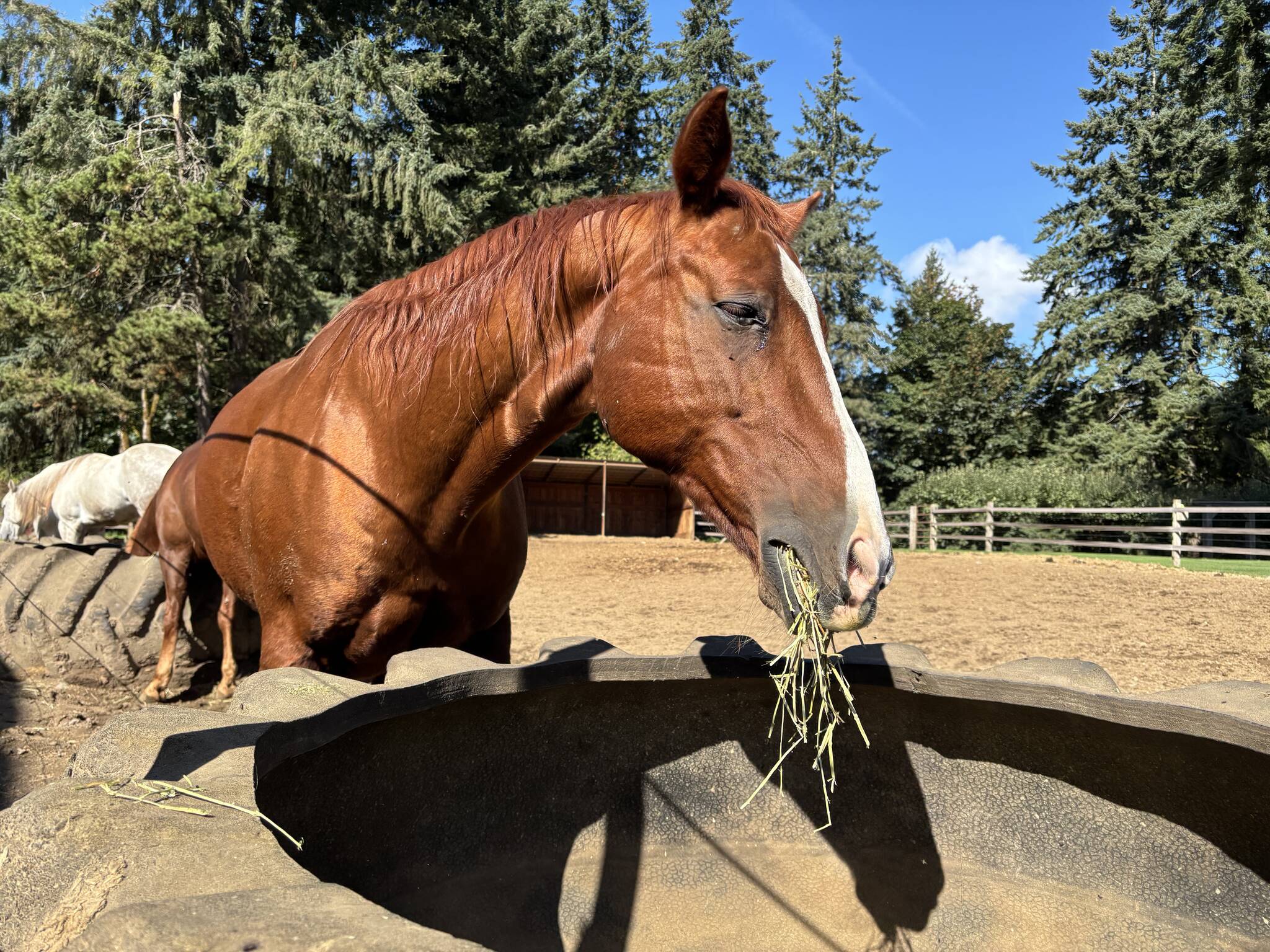
The future of horse culture in Kitsap County will remain in question as planners review changes to laws governing the management of equestrian facilities through 2026.
Countywide public outcry prompted the highest authority in Kitsap County, the Board of Commissioners, to direct the Department of Community Development to separate planning for equestrian facilities from the rest of its “Year of the Rural” planning project.
While the rest of the plan will be certified in December, the deadline for the new codes regarding equestrian facilities will be extended to mid-2026, per an Oct 13 news release.
“This decision allows the county and community to focus on other ‘Year of the Rural’ topics during the 2025 public process while providing additional time for engagement, discussion, research, and refinement of the proposed Equestrian Facility Code,” county leaders wrote in the release.
The decision comes after a suite of zoning updates were released as part of a “Year of the Rural” zoning draft in early September. The proposed changes appeared over halfway through the planning year, many of which had no precedent in the code and were not previously shared with leaders in the equestrian community — prompting confusion and pushback.
“Postponing to 2026 is the right call, but transparency has to catch up. If the county can write new rules, it can also fairly represent public input,” said Clif Peterson, co-owner of Joy Equine and JOY Inc. in Burley. “We need the same energy spent on deregulation and clarity as on drafting new code—because where there is liberty, there is prosperity.”
Some key details in the draft would have amended the definition of “equestrian facility” and added requirements for structures and maintenance, but would have made no distinction between large-scale business operations and individuals with horses on their property.
During public planning meetings, county planners assured the public that changes would only affect new development, but equestrian advocates throughout the county argued that the steep entry point could throttle the hobby, and many of the proposed limitations seemed arbitrary.
“The reason this should concern people who have existing uses and structures is: if you have someone who has a stable that only boards [horses], but then you want to add an activity like clinics or lessons, under this code, that could be a ‘change of use,’” said Bainbridge Island City Council candidate Sarah Blossom, a lifelong equestrian who owns a tack shop in Poulsbo. “So for someone who just has a couple of acres and keeps their own horse at home, and they’re interested in having a companion horse to keep their horse company — they’re herd animals, that’s what they like — and decides to board one horse, then, under this code, they are defined as an equestrian facility.”
In the proposed language, equestrian facilities and activities went from a two-sentence paragraph in the county agricultural code to a subsection longer than the regulations for livestock and dairy farm management.
The new rules would have defined any property that houses horses that do not belong to the property owners — a common situation called “boarding” a horse — as an “equestrian facility,” the same designation as venues with arenas that host events like riding lessons, competitions, veterinary and training clinics, or operations that breed horses and sell supplies like feed and tack.
Permits would have been granted for facilities that comply with a series of stipulations: limits on “hours of operation” (7 a.m. to 8 p.m.); “visual screening” of parking lots, manure storage and mechanical or transportation equipment, like trailers or tractors; control of odors, dust, noise and drainage to prevent nuisance or health hazards for neighbors; barns and paddocks situated 50 and 200 feet back from any property line, respectively, regardless of parcel size; and adequate access to a county-maintained road for passenger and emergency vehicles.
Currently, no permits are required under the agricultural code to operate commercial horse boarding or equine event facilities, explained Diener, and while regulations for certain equine facilities existed until 2006, they were removed from code. Public concerns about existing facilities “prompted the board to ask the Kitsap Department of Community Development to evaluate alternatives to the current approach,” Diener said.
“Because many rural parcels are small or have environmental constraints, activities such as boarding, events, and clinics can create challenges, including parking, traffic flow, and backing, as well as manure storage, that can adversely affect neighboring properties. The goal is to find a balanced approach that supports rural lifestyles while addressing potential impacts,” said Diener.
Public comments and feedback from the equestrian community will be incorporated into an “Equestrian Facilities Code 2.0,” said “Year of the Rural” planning director Heather Cleveland.
The proposed updates made waves in the equestrian community from as far north as Hansville to as far south as Burley. Over the course of one month, hundreds of people across the county organized a grassroots campaign to provide feedback to county planners and establish a working group of stakeholders.
Horse advocates agreed that large operations could feasibly accommodate some of these rules, but said many small operations could not, and several rules did not make sense for horse husbandry.
Katie Starks of Countryman Stables on BI explained that her existing five-acre horse property would not have been compliant with the proposed laws: if she had to keep her paddocks 200 feet from the property line, “that leaves me with nowhere to turn any horses out,” she said.
“There’s a lot of people that have smaller areas, like mine, who use every little piece of the property for their business. There’s just so many [rules] — like, you can’t have any dust. I mean, they’re animals,” said Starks. “We would have to close, and I think that there are a lot of places like ours that are the same way. There are some farms that are independently wealthy, and they have tons of acreage, and they might be able to get around some of the codes, but I don’t think many of us would. I think it would pretty much eradicate most of the farms.”
Poulsbo equestrian Annie Braddock spoke at the Sept. 23 Kitsap County Planning Commission meeting and added that if a horse owner were to observe the given “hours of operation,” then a veterinarian may not be able to provide medical care to a horse caught in distress overnight or early in the morning without incurring a penalty from the county.
“Like a lot of things in this code, there’s no accompanying definition for ‘hours of operation,’ leaving it ambiguous. As written, this does not reflect the reality of horse care, and it is not conducive to horse or livestock health. Horses should be fed three, sometimes four times a day — for example, 6 a.m., 1 p.m. and 6 p.m., with an additional meal around 10 p.m. if needed,” Braddock said.
The “nuisance” element also empowers neighbors of horse properties to weaponize the code to the detriment of equestrian facilities, said Dawn Oien, former Kitsap County Fair and Stampede Queen, but that’s exactly the issue Joanne and Colen Corey see the code amendments resolving.
The Coreys have experienced conflict with an equestrian facility down the road from their home in rural Silverdale. Sales events have brought unwelcome traffic to their street, and the lack of regulations for horse properties in rural areas have meant unchecked commercial use, said Joanne Corey.
“Equine facilities are complicated. None of them are the same. They all require a lot of work and effort to be efficient and profitable. Having clear, reasonable and easy-to-use code and guidance is essential to providing guidance to the facility owners, the clients, the neighbors and the county,” said Colen. “The current code […] has resulted in a lot of confusion between the commercial owners and neighboring owners. Commercial owners seem to have no responsibilities, and neighboring owners seem to have no rights. Codes need to remedy the conflicts in a sensible and fair way.”
On the other hand, Peterson, a Kitsap-based equestrian of over 40 years, saw the added regulations as a hindrance to good equine facility management.
As a constitutionalist, Peterson’s criticism of the new code has mostly focused on the lack of transparency in the county’s planning process and conflicts between the language of the zoning changes and state law, but he knows it’ll take more than that to make change happen.
“I don’t think we bridge ideological gaps without conversation and human connection. I don’t think that me sending [county planners] threatening emails about constitutional law and whatnot are going to fix the problem,” said Peterson. “I think that if they were to actually drive around each of these equestrian facilities, and talk to these people about why they’re doing what they’re doing, and meet the horses and meet the kids who are part of the program, they’d be like, ‘Okay…this stuff actually matters.’”
Together with his business partner and spouse, Keri, the Petersons operate an informal horse training and therapy group for troubled youth out of their equestrian facility and home, Lazy K Stables. About 10-12 students from Kitsap and Pierce counties get to ride horses and take lessons from the Petersons for free in exchange for barn chores. Sometimes, the Petersons bring the students to working ranches to practice animal husbandry, like roping and doctoring cows.
The goal is to offer kids a place to learn horsemanship and a structured environment for character development, explained Keri. But hard work is only part of the equation — learning from the horse is where they see the bulk of growth.
“I think that’s why this is such a big deal, because we’re like, ‘Can we just be left alone? We just have a couple horses in the backyard,’” added Keri. “This is just what we do, for fun, for passion, for community service.”
Clif agreed. “That’s my pitch to the county — we’re not doing this as a business. We’re doing this as a community service because we believe in the power of horses to positively affect young people’s lives in a positive trajectory.”
Diener noted that the intent of additional zoning requirements is not to over-regulate hobbyists or those boarding a friend’s horse.
“The goal is to create clear, consistent standards that address impacts when activities are commercial or involve events with broader community effects. We are continuing to work with equestrian stakeholders to refine definitions, so the regulations reflect both the realities of horse ownership and the need to balance uses in rural areas,” Diener said.
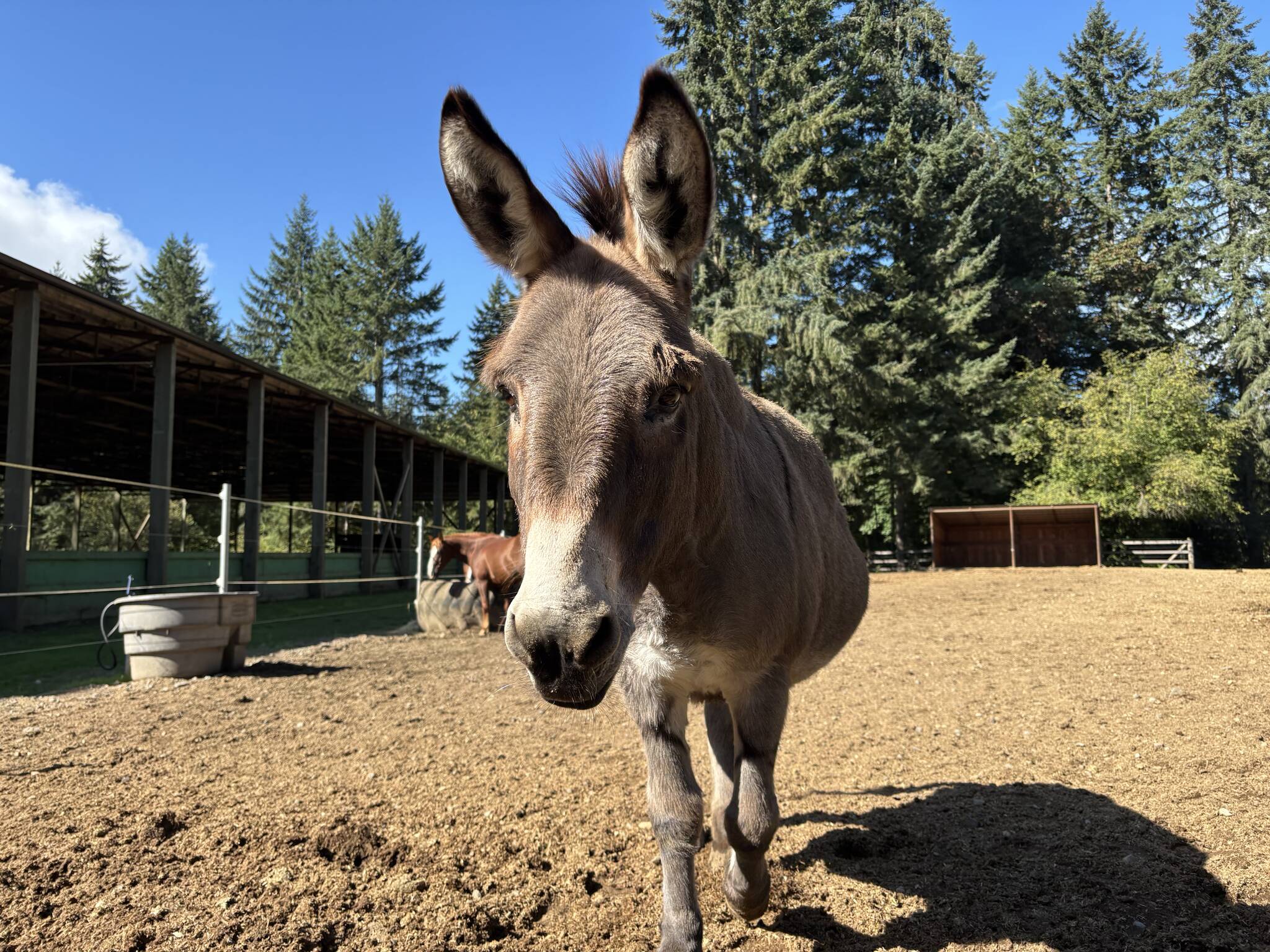
A donkey approaches to say hello at Lazy K Stables.