The 2nd annual Juneteenth Celebration was held at the Bainbridge Island Community Center June 18.
The event was co-chaired by Savannah Rovelstad, co-chair of the BI Race Equity Advisory Committee, and Elizabeth Allum, director of Education at Bainbridge Performing Arts.
In discussing the intent of the event, Rovelstad said the goal was to commemorate those who were enslaved, and the years it took for them to receive the message of their emancipation.
Further, she explained that the event and REAC were intended to drive government to consider all decision-making through a “race equity lens.” She said further that the event’s message and outreach were aimed at local youth, since they would be the ones to carry the struggle for equity forward.
The presentations were varied.
BPA Theater School students delivered a reading from the cultural heritage of the Suquamish tribes in acknowledgment of the land.
The keynote speaker was Akuyea Karen Vargas, a longtime equity activist in Kitsap County. She stated that she came “from a stolen people brought to a stolen land,” and that, “We have to understand the history and erasure. Can you say erasure?”
It was for that reason that she advocates the teaching of the entirety of an “American history” that we generally “don’t want to teach” in our nation. She was joined mid-presentation by Rep. Drew Hansen, who echoed much of her sentiment, that we talk about “reparations,” and that we needed to talk about repairing the country.
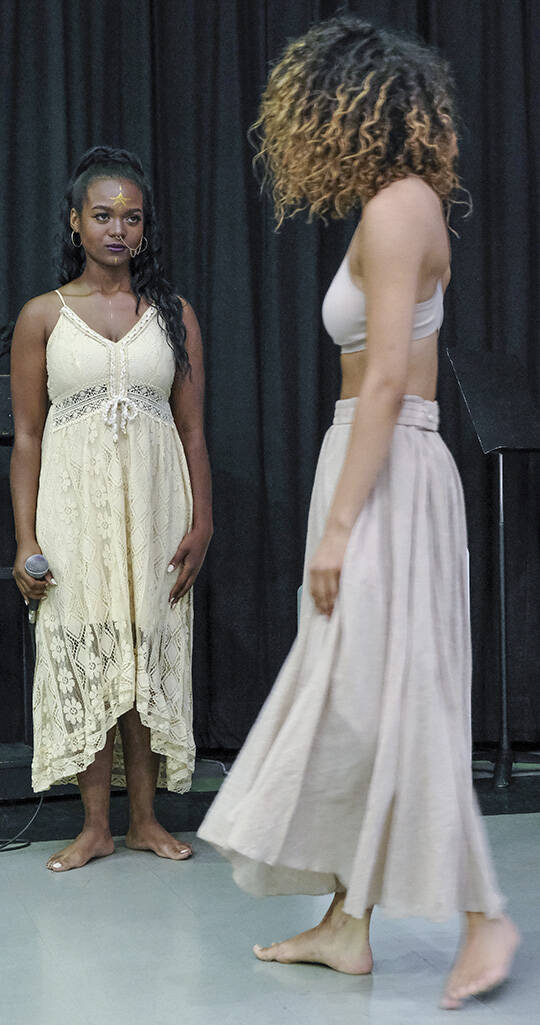
Two members of Ser Arte then performed. Nicole Romine described the group as artists intent on collaboration, seeking to further their medium of expression. The performance was performed by Lydia Olsen and Shalah Rose, and consisted of a recital of Maya Angelou’s And Still I Rise, accompanied by interpretive dance.
Ashley Mathews, chair of the BI Planning Commission, followed and expressed optimism. She explained that many seem to believe that real change will only be achieved with the passing of existing generations and their beliefs. However, upon seeing the audience, she was encouraged that the older generations of BI were actually agents for positive change.
Izaya Brown stated that he’d had a friend suggest that he talk about “black joy” at the event. Instead, he’d responded that he “wanted to make them uncomfortable with their whiteness.” He went on to speak about the injustices and lingering effects of “chattel slavery” (which included the existence of soul food), the existence of hip hop as “a way to commodify black people,” the importance in the community of the Nation of Islam, and the misrepresentation of Malcolm X as violent and a separatist.
He further elaborated that “white people taught us oppression, homophobia and ant-semitism” and seems to at least agree in principle about older generations being the hurdle to substantive change by saying, “We shouldn’t put too much stake in the opinions of elders.”
Nearing the end of the speech, and in a call for real change, he asked listeners “how would you provide for me to organize” because “there’s a lot of money in this room.”
Juneteenth is the nation’s most recently established federal holiday, commemorating the order for emancipation by Maj. Gen. Gordon Granger June 19, 1865, nearly 2 1/2 years after Lincoln’s Emancipation Proclamation that was supposed to free the slaves.
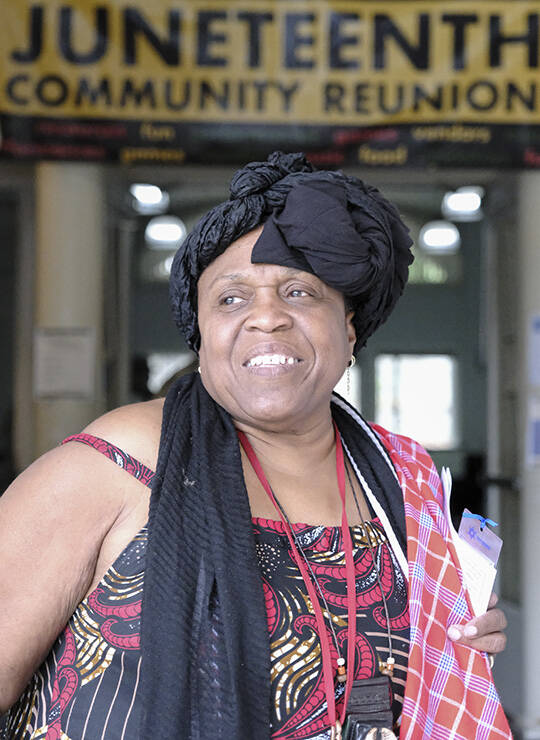
Akuyea Karen Vargas gave the keynote speech.
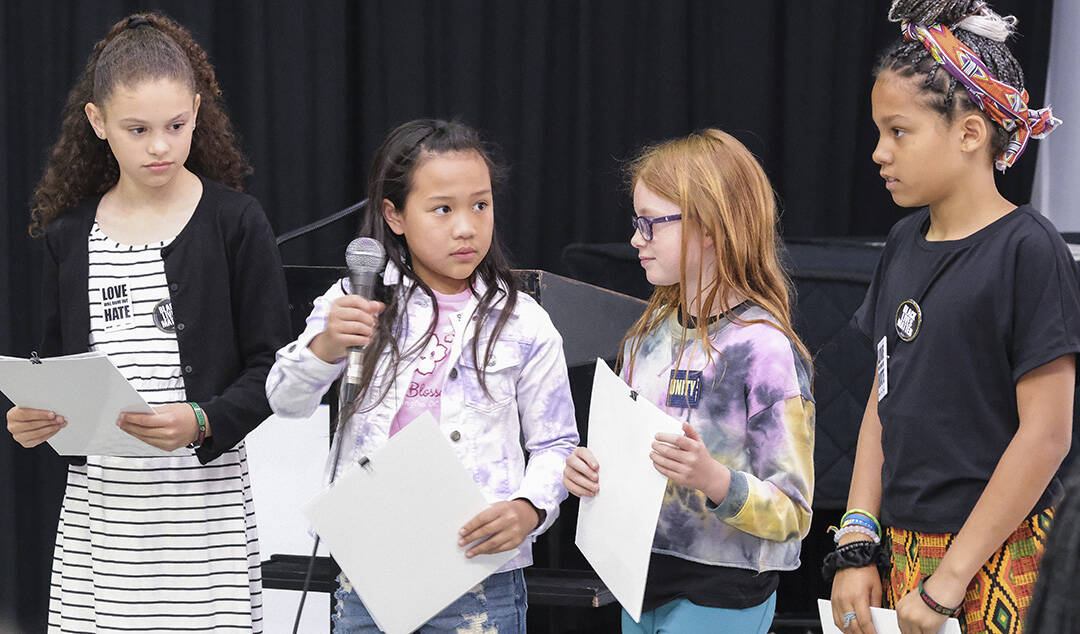
Children played a major role at the event as they are the future.
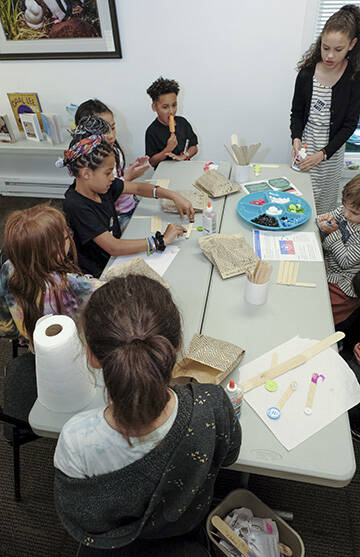
Children played a part doing various activities.