
When the Bainbridge Island Museum of Art canceled a Palestinian play, it didn’t just spark protests — it exposed how, in a small town, conversations about Gaza often happen behind closed doors and in separate circles.
In the weeks since BIMA came under fire for cancelling a production of a Palestinian play depicting a family in Gaza, the Review interviewed five Kitsap residents with connections to the war — Arab Americans, Reform and anti-Zionist Jews and pro-Palestinian advocates — and three members of the arts community to understand how and where hard conversations about high-stakes topics are taking place, and whether BI has a place to connect on this shared issue.
The Review found in a small community like BI, when it comes down to venues to negotiate when, where, how and to whom they can grant a platform on a case-by-case basis, conversations about big topics like Gaza can fall into silos.
Behind the scenes at the museum
In late May, executive leadership at BIMA abruptly cancelled a play called “One Family in Gaza” a few days before its scheduled curtain call. Protests erupted outside the museum May 31, and the performance was moved to the nearby BI Senior Community Center later that same day.
At the time, BIMA director Sheila Hughes cited public safety concerns from community members for her decision, fed by unclear delineations between museum-sponsored and external programming. However, critics, including BI residents, museum affiliates and members of pro-Palestinian activist groups, saw Hughes’ choice as an act of censorship.
BIMA leadership issued a public apology about a week later and committed to “a process of deep listening and healing through facilitated discussion,” but progress has been slow.
Externally, BIMA and pro-Palestinian organizations have agreed on a professional facilitator to lead a series of meetings, the first of which occurred Aug. 28 — about three months after the play was cancelled. KPSC called for BIMA to plan an exhibit featuring several PNW-based Palestinian artists and an apology to all staff and board members who condemned the museum’s actions.
But internally, there has been no official meeting or discussion about the incident between BIMA staff and the board or director’s suite — and a staff member who spoke out about the cancellation was fired in August.
Moorea Seal, former social media manager at BIMA, issued a formal letter on her personal Instagram page condemning the cancellation of the play. Seal was among several BIMA staff members who joined the protest organized by the Kitsap Palestine Solidarity Coalition May 31.
In an unsigned letter addressed to Seal, BIMA leadership stated that Seal’s actions violated the museum’s code of conduct “as our donors and guests were extremely disrespected on social media posts.”
“I hope there can be a meeting with upper management. It still makes me uncomfortable that this choice was made from positions of power […] The point of a board is for everyone to have a clue — and other people were clued in after the fact,” said Seal, before her termination.
Censorship and centered voices
KPSC is a grassroots group founded in 2004 and is the largest pro-Palestinian advocacy organization in Kitsap County. Its work focuses on raising awareness among the public and putting “pressure on power to end the violence,” the group’s Facebook page reads.
“When we say ‘Free Palestine,’ what we’re advocating for is an end to the violence because we believe that when both people are treated equally and have equal rights, and there’s no settler violence, and people aren’t getting kicked out of their homes, that there will be peace, and it will be better for both people,” said KPSC co-founder Nadine Hammad, who is Palestinian American.
The group organizes film screenings, readings, play performances, peaceful demonstrations and protests, calls-to-action like phoning elected officials and fundraisers to support Palestinians and disrupt pro-Israel narratives about the conflict. It was KPSC that approached BIMA to host “One Family in Gaza.”
It was a big surprise when the museum said yes, Hammad said, and a big disappointment when BIMA cancelled it — but not a totally unexpected one.
“It’s hard being Palestinian because you kind of have an expectation that places don’t want to feature a Palestinian story,” Hammad said. “I’m hopeful for the future — it seems like [BIMA] wants to learn about what they did, and they want to change. I think the community putting pressure on them helps that a lot, because they did cancel the play without coming and talking to us.
“We could have told them about how there is systematic erasure to manufacture consent for what’s happening to Palestinians, and it starts with individuals, and it goes up to bigger institutions.”
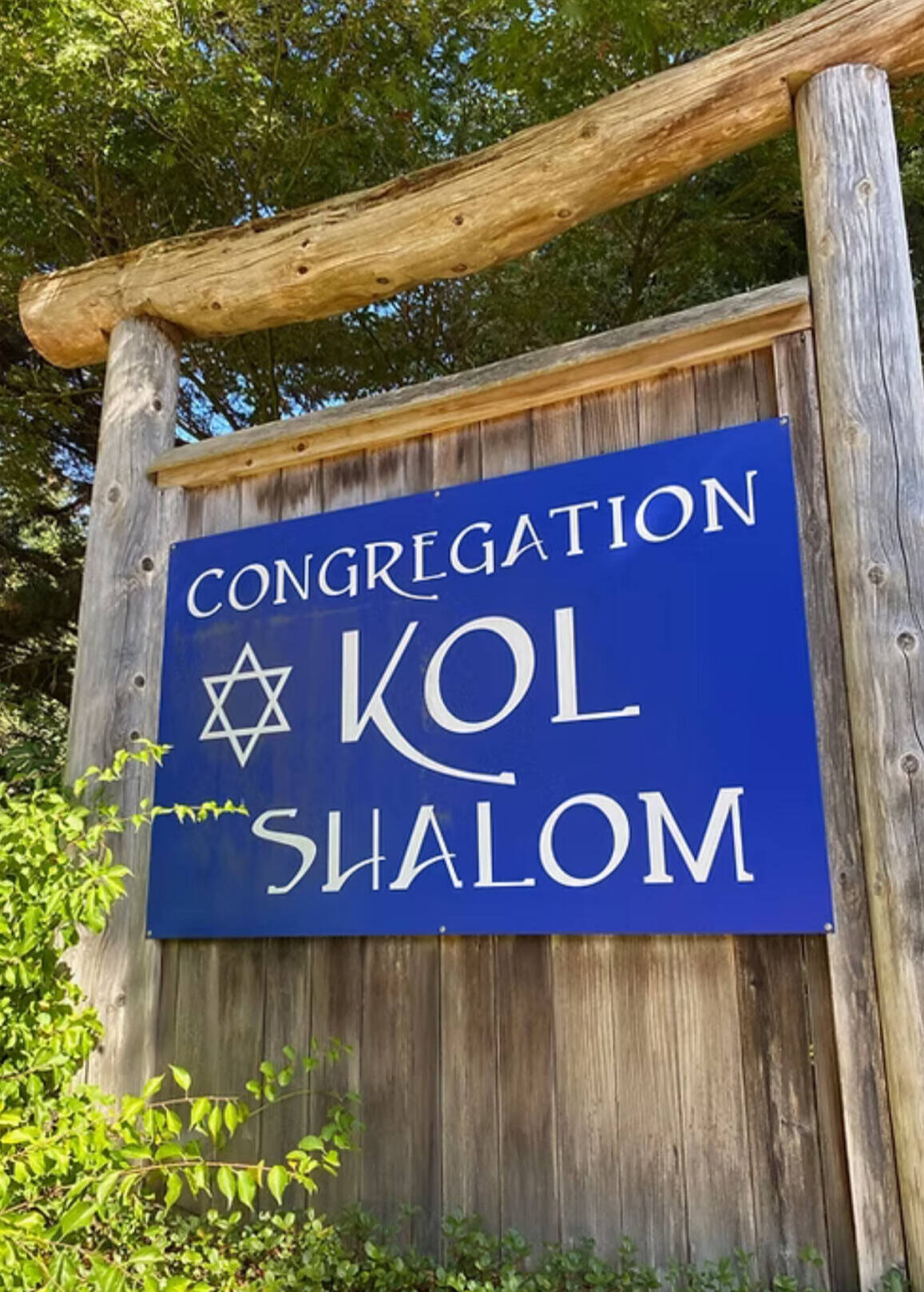
But 20 members of BI’s Kol Shalom, a Reform Jewish congregation, saw “One Family” as a kind of manufactured consent, which is why it issued a letter to BIMA to shut down the program.
Tamar Lowell, one of the letter’s signatories, explained that the play appeared innocuous, but left out key facts, such as the involvement of Hamas in the conflict. It also presented a one-sided portrayal of Israel, she said, contributing to a “broader pattern of antisemitic narratives being normalized under the banner of ‘criticism of Israel.’
“At a time of rising hostility toward Jews, I was deeply concerned that our flagship arts institution was about to be used as a megaphone for the very narratives fueling that hostility,” Lowell said. “This was not just about a controversial play that was completely out of scope of BIMA’s mission; it was about BIMA’s role in amplifying and legitimizing antisemitic rhetoric, especially during a time of heightened threat to the local Jewish community.”
BIMA leadership echoed Lowell’s sentiment in the May 28 cancellation message, writing that the “the content and context of this particular event appear[ed] out of alignment with BIMA’s mission to serve and reflect our diverse community as a whole,” but later stated that the cancellation was a misstep, and that the museum would take action internally to review its policies.
“It is still premature for us to declare how changes at the museum will look in practice, but a successful conclusion would be for our board, staff and community to be able to identify and describe a process and philosophy that is centered on our mission, which is to inspire curiosity, wonder and understanding by connecting audiences with the contemporary art and craft of the Puget Sound Region,” Hughes said in a statement.
The museum’s apology left Lowell “heartbroken” and feeling excluded from the retribution process. “Looking ahead, I hope BIMA will commit to genuine inclusion — not just of Jewish voices that align with a particular narrative, but of the full range of perspectives in our diverse community.”
Sold-out house
“One Family in Gaza” was far from the first event in Kitsap to tackle the war in Gaza — but it was among the few to elicit public controversy.
In addition to demonstrations, KPSC has hosted numerous events around the county and Western Washington featuring creative pro-Palestinian projects: multiple performances of “One Family,” including in Port Townsend, Chimacum and Quilcene; art-building at a community center and chalk-drawing at a playground in Bremerton; storytime and sing-alongs in Poulsbo; and film screenings in Kingston and at the Lynwood Theatre on BI — all of which transpired without incident.
Kevin Lynch, general manager of the Lynwood Theatre, welcomed the chance to host films in collaboration with KPSC. Before the group contacted him in February, he had been researching ways to screen “No Other Land,” which had just won an Academy Award for Best Documentary the previous month.
“It’s a film that was widely in distribution at the time, and obviously that attracted my attention, and the political state of things in the Middle East, to my way of being a programmer, made it a pretty decent choice for programming. I go out of my way to make our venue open for people that would like a community forum to talk about hot issues, and most of the hot issues today are politically based,” Lynch said.
“We’ve done all types of presentations to bring a point of view to our core audience, and our core audience continues to expand: it’s not just Lynwood Center or Bainbridge anymore, it’s Western Washington. I said, ‘This might be an interesting departure from our standard Hollywood programming.’”
However, showing an independent film always comes with some risk for a small theater, Lynch said. Large Hollywood film studios charge theaters a distribution fee per screening, regardless of whether the movie is actually shown. That means theaters have to choose small films carefully to ensure ticket sale revenue can cover the sunk Hollywood costs.
“No Other Land” proved itself worthwhile, with over 100 people in attendance from many political backgrounds, Lynch said. The theater ended up working with KPSC again to show “From Ground Zero,” a documentary featuring short films from 22 Palestinian directors.
A few months later, Kol Shalom members contacted Lynch to arrange screen time at the theater, to which Lynch agreed. After some negotiations and a vetting process by Lynch, the congregation scheduled an invitation-only, private showing of “October 8,” a documentary about the rise of global antisemitism following the Oct. 7, 2023, attack on Israeli citizens by Hamas. Up to 80 people attended, Lynch estimated.
“If there’s one thing that we do, and this is important, it’s that we’re not taking sides because one side offers more of a potential for a profit,” Lynch said. “We’re trying to be all things to all people, and to be neutral and to play the middle, so that everybody has an opportunity to say their piece, or, in this particular case, to show their film.”
However, Lynch is acutely aware that the Lynwood Theatre is a for-profit operation, which allows much more independence in programming than, say, a nonprofit art museum that is beholden to its mission and board. Subject matter aside, Lynch saw the top-down choice to cancel the play at BIMA as a misstep.
“Throughout this entire process, we have been trying to find that magic elixir, that combination of the elements that make something impactful and important, and the one thing that has been a consistent theme throughout [everything] is this: what we do as artists here is we need, in this situation, to find a way to broker the peace,” Lynch said.
“If that can come as a result of our programming, then that’s what we do. And if that carries a risk, we deal with the risk. If we can’t make it a more peaceful society, at least we can do it into our community, and that is hugely important to me.”
Great Decisions at the Library
One community program has already seen a successful moderated conversation about the war in Gaza: the annual “Great Decisions at the Library” program.
“Great Decisions” is a national curriculum hosted by libraries and community centers that fosters a discussion of world affairs for average citizens. Each forum is themed; attendees are given a brief that explains some background of the issue at hand, along with a few additional materials, like news articles and glossaries, to supplement their understanding. Discussions are led by an experienced moderator — in Bainbridge Public Library’s case, usually a faculty member from the University of Washington Jackson School of International Studies.
On Feb. 9, about 110 people attended the “Great Decisions” program discussing American policy in the Middle East, specifically between Gaza and Israel. Dr. David Fenner of the UW JSIS led the conversation.
Fenner’s charisma, experience and firm ground rules of rational discourse, respectful inquiry, civil exchange and acknowledgement of bias helped the conversation go smoothly, recalled event organizer Kathleen Thorne. However, the audience is not always a cross section of the whole community, she noted; the programs often take place during the day, the timing of which caters mainly to retirees.
“The Great Decisions materials are designed to offer balanced perspectives on key foreign policy issues, presenting policy options and discussion points for readers,” said Thorne. “However, some scholars and commentators argue that, despite the program’s intentions, it ultimately caters to a predominantly white, educated, and often wealthy audience, potentially hindering its goal of broad public engagement. The demographics of the Library U audiences certainly bear that out, despite our efforts to entice students to participate.”
Internal discourse
Kol Shalom is a tight-knit community that follows the teachings of Reform Judaism, or a type of Judaism that specifically supports the nation of Israel in addition to other Jewish values, such as tikkum olam (healing the world) and gemilut chasadim (deeds of loving kindness).
KS president Frank Commanday agreed with Lowell and other letter signatories that the play was not appropriate for the museum to host, as “it’s not just art, it is political advocacy, and that doesn’t belong at BIMA.” But he had no issue with the senior center hosting the play. Comfort with nuance is a big part of Jewish culture and worship, and philosophical discussion is encouraged, he said.
“I really, really welcome discourse […] So long as you have a kind of a moderated forum among people who are open-minded and understand that this whole conflict is not so straightforward. It’s nuanced, and they really want to know all angles and understand it, and especially from the standpoint of wanting there to be a condition of peaceful coexistence,” Commanday said. “Ultimately, man, I’m all in — but otherwise the standard rhetoric, polemics and competing narratives don’t help.”
Lowell and Commanday said that the circumstances under which they would attend a public discussion session are specific. A balanced panel and a skilled moderator are a must for each. Commanday said he would only consent to a moderated forum in which all attendees acknowledge Israel’s right to exist.
“Pro-Palestinian — what does that mean? You have people shouting on campuses, ‘From the river to the sea, and ‘By any means necessary’ — people who are pretty extreme, and you have people who are opposed to organizations like Hamas. It’s just across the board; so who do you connect with?” Commanday said.
“My interest is in people who want to see an end to the conflict that involves Israel, and don’t wish Israel away. I would rather devote my time and energy to organizations that advocate nonviolence first and foremost, and that are not ‘anti-Zionist organizations’ that understand Israel is an important player in finding a direction that supports peaceful coexistence.”
Since Oct. 7, 2023, Kol Shalom has kept worship and politics largely separate, but that disconnect has felt like stifling silence to some congregants, like former member of 20 years Wendy Jones.
When Jones moved to BI in 1997, she was thrilled to join a congregation half a mile from her home that was aligned with social justice. She was a board member, led the temple burial society and cemetery — roles she cherished — and attended worship regularly. But after Oct. 7, there was “zero communication” in Kol Shalom to process the war, Jones said, and her attempts to discuss the issue were repeatedly shut down.
“Why couldn’t they open discussion to stand for something? That was the whole point. Having a discussion doesn’t mean that it was only my way or the highway,” she said. “I was ready to hear, ready to talk, and I had some good conversations with people I knew, but I had to seek it out — there was no avenue in our structure whatsoever.”
Jones left the congregation in January and now identifies as an anti-Zionist Jew. She has not yet found a new place to attend services, but feels that her faith is “stronger than ever,” she said, and has found a wide and diverse community among Jewish Voice for Peace and pro-Palestinian groups.
“It was painful for me because I had been thinking, ‘How can I, as a Jew, not support Israel?’ because it was so ingrained in me. But then I stepped back and thought, ‘How can that be more important than supporting a cause to stop a genocide?’ This is the human rights crisis of our decade, and I just could not equate that with one of our basic tenets, tikkum olam, which means heal the earth. It means doing good deeds, taking care of each other. When it came down to knowing what the occupation means to everyday life in Palestine, I was crushed, and I said I just cannot do this. This is a more important value,” Jones said.
Global conversations
Talking about Gaza looks different everywhere, but it’s not as far off as one might think.
When Macy Jones, an organizer with KPSC, joined a global pilgrimage to the gates of Rafah in Gaza in mid-June, she knew she was going to experience new perspectives, new lands and levels of state violence she hadn’t seen before. But she was floored by how different the conversations about the war could be.
The March to Gaza was a civilian-led humanitarian plea to increase the flow of aid to Gazans, who have been living under siege for months. About 4,000 people from around the world, including 400 U.S. citizens, planned to meet in Cairo, then bus to Arish, Egypt, then walk to the gates of Rafah.
But the second Jones arrived in Egypt, it became clear how high tensions were between the authoritarian Egyptian government and its citizens. Leadership did not explicitly prevent activists from traveling to Rafah, but they barred anyone involved in the march from involving Egyptian nationals in any capacity — including hoteliers, taxi or bus drivers.
Jones and her fellow activists tried their best to fly under the radar. They told no one about their plans, played dumb when questioned by Egyptian police and used secure messaging channels. But few made it past checkpoints in Cairo, and when the march began to unravel, Jones and her companions hid for three days in a hotel room. Outside, the Egyptian government detained 200 and deported nearly 500 activists, in some cases using brute force. One person was detained, stripped three times and blindfolded for 25 hours before being deported to the wrong country.
Eventually, Jones and her companions were told to take taxis to Ismailia, east of Cairo, but were caught in a checkpoint with 400 other activists and dozens of bystanders just outside the city. The group was held up for nine hours, and it evolved into a giant rally, Jones said.
“People were holding hands and singing, in all of their different accents and languages, and chanting their own national chants for Palestine, and they had their own national flags, and it was everything that would be beautiful about the world coming together for something that mattered — for hours,” Jones said.
At night, the rally descended into chaos. Uniformed police had been urging protesters to leave during the day, but once night fell, plainclothes militants began grabbing protesters, brutalizing and detaining them, Jones recalled. Jones was thrown to the ground by a man who kicked her several times, then took her phone and walked off. She jumped on his back, yelling at him until he threw her phone away, but she was immediately stuck on a bus by authorities. She escaped when the bus popped a tire, and she was able to climb off and flag down a car.
The scene just two countries away was completely different. When the remaining activists met up with the 7,500-person pan-African Samoud Convoy in Tunis, “everyone was welcomed with fanfare, publicly in the airport, with singing and flag-waving,” she said.
“We got to this old, beautiful theater in downtown Tunis with big stairs, and over the course of a couple hours, it became clear how big of a deal this was to Tunis. Before the convoy even showed up, there was singing coming out of every coffee shop and the two bars in the entire city,” Jones said. “We were wearing Palestine stuff, and store owners would come out and give us things — baked goods and keychains and stuff. It just felt like something big was in the air.”
When the Samoud Convoy arrived, people took to the streets en masse, dancing and singing the Libyan national anthem and liberation songs. Members of the crowd took microphones and spoke out to the people. Even the police presence was benevolent; civilians approached officers for help, snacks and water.
“What was really precious to me about this is that we lost. We all got our butts kicked. It made no difference, it was completely immaterial. In Tunisia, everybody was a hero because they tried,” Jones said.

