Hilltop Meadow could be next spot for controlled burn on BI
Published 1:30 am Wednesday, October 29, 2025
A coalition of public agencies and nonprofit organizations have teamed up to bring prescribed burns to more natural areas on Bainbridge Island — one of the only projects of its kind in Western Washington, if they can find funding.
The BI Metro Parks and Recreation District, the Bloedel Reserve, the BI Land Trust and the BI Fire Department jointly vied for a grant from the state Department of Natural Resources in September to fund a new series of fire programs that would improve wildfire safety and prevention on the island, including demonstration burns.
“This has been a natural progression of shared interests over the past several years with respect to wildfire risk. [BIFD] has worked with Parks, Bloedel, and the Land Trust individually on various wildfire education and prevention topics, but this would be the first collective effort on a single wildfire risk reduction topic,” said fire chief Jared Morevac.
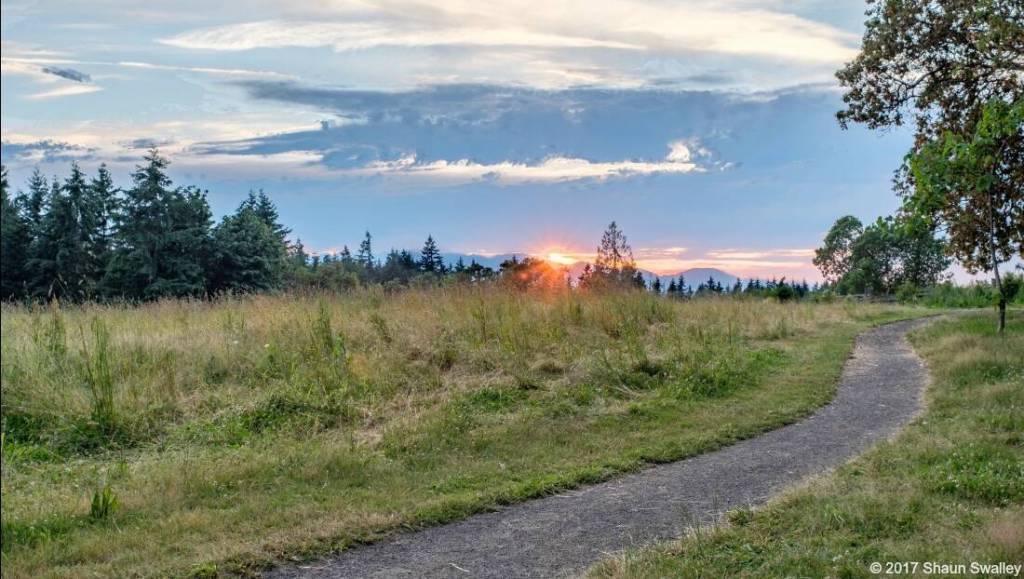
Deep within the Grand Forest, the five-acre Hilltop Meadow could be the second place on BI to be treated with fire.
“[It’s] a great location for a collaborative effort. The meadow is under threat of natural conversion to forest. Before such cultural management was disrupted, many regional tribes used fire to maintain such forest openings, enhancing food plants and habitat for game such as deer,” said BILT conservation director Gina King. “Now, prescribed fire would assist not only in maintaining a healthy wildflower meadow, but also in combating weeds like scotch broom.”
It’s a unique place within the larger landscape on BI. Meadows surrounded by forest provide critical “fringe” habitat, places where two or more ecosystems meet. Fringe habitats are typically highly diverse because features of each ecosystem are present in the transition zone and species can take advantage of both accustomed and new resources.
The Hilltop property was purchased through a Land Trust-led campaign and turned over to park district ownership in 2017, with BILT retaining a conservation easement over it, explained King. In the years since, BILT has removed woody debris and invasive plants from the meadow, restored the historic orchard, and conducted biological assessments — cataloguing over 216 species living in the area.
“BILT recognizes Hilltop not only as important habitat connected to the Grand Forest, but also as an important public gathering place. On any given day, visit Hilltop and you will see not only great wildlife, but families, trail runners, horseback riders, and educational groups using the property,” said former Land Trust executive director Jane Stone on the BILT website.
Fire is already in use in one area of the island. As part of an ongoing series of experimental restoration strategies, Bloedel garden managers have worked with BIFD for the last three years on controlled burns in some of the non-landscaped meadow areas of the reserve.
The use of fire as a means to control landscapes in Washington dates back to pre-colonization, when Coast Salish peoples living in relatively dry habitats — primarily the prairies of the San Juan Islands and nearshore aquatic regions around Puget Sound — would implement fires to encourage growth of the “Three Sisters” of the Pacific Northwest: Garry oaks, camas and salmon.
With prescribed burns, BILT hopes to eradicate invasives like scotch broom, maintain forest openings, and promote plant diversity in Hilltop Meadow.
While the group lost out on the DNR award, they’re seeking funding elsewhere, explained Morevac.
“Using fire as a natural resource tool is not a new concept. Though I haven’t seen many fire departments, especially on the west side of the Cascades, do this as much,” said Morevac. “What we are doing here, especially with the public and private partnerships and the fire department being involved, is unique to this area and hopefully serves as an example that prescribed fire projects can be achieved by working together.”