From gardener to property rights activist
Published 6:00 am Saturday, July 22, 2006
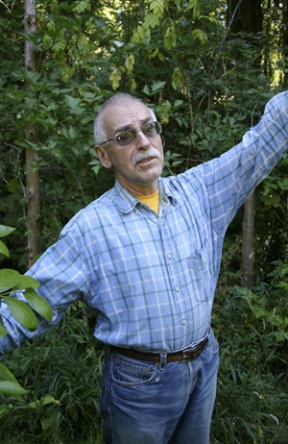
Jean-Paul Gagnon is the last guy you’d peg for property rights zealot.
The soft-spoken bookseller gets misty-eyed when talking about his love for organic gardening, the techniques he uses to grow potatoes and the native plants he propigated alongside his blueberries.
No resident of a “McMansion†nor a driver of an SUV, Gagnon has for 15 years lived with his partner in a humble Paulanna Lane cabin surrounded by wetlands and streams.
As a member of the Association of Bainbridge Communities and other local environmental groups, Gagnon frequently volunteers to restore salmon habitat, test wetland water quality, monitor fish spawning areas and map island streams.
Now he’s collecting signatures for a state initiative many environmentalists say could slash trees, skewer salmon and flay the buffer zones that protect them.
“This is not something I would have supported,†Gagnon said of Initiative 933. “But what the city has done to me has really changed me.â€
That change happened last February, when the city ordered Gagnon to dismantle and abandon a vegetable and berry garden he has tended for over 12 years. The 5,000-square-foot garden, a shed and a gazebo were judged within a wetland buffer zone.
According to city code enforcement officer Meghan McKnight, the garden was completely inside a 100-foot buffer protecting a mid-sized wetland. The city’s investigation, she said, was spurred by a complaint from one of Gagnon’s neighbors.
“We operate on a complaint basis,†said McKnight. “On a site visit, we saw that (Gagnon) had a structure and a garden completely within a wetland buffer.â€
Gagnon, who has no more space on his property not classified under wetland and stream protections, took the closure hard.
“I have always lived in the city and when I came to Bainbridge, I thought that, at long last, I’d be able..,†Gagnon said as tears cut his sentence short. “I’m sorry. This is so hard. I thought this would be my paradise.
“I could garden and grow so many things. I grew very good potatoes. I tried a new kind every year. I grew so many green beans. I’d give them to friends. I grew asparagus, parsnips, some tomatoes, carrots, beets, raspberries, blueberries and a wild currant that was already there. I babied it and it grew into a big bush.â€
Gagnon said he used strict organic growing techniques, never letting pesticides or chemical fertilizers touch his soil.
“It is strange what the city has done to me,†said Gagnon, whose speech is accented with the joual of his native Quebec. “They should have gone and looked at my garden and figured out that it was not a bad thing for the wetland.
“But they would not compromise. Now I am supporting 933 so they cannot force me or anyone else to do this.â€
Dubbed the “ProÂperty FairÂness†initiative by supporters and patterned after Oregon’s Measure 37, I-933 would require cities and counties to pay landowners for environmental laws and zoning rules that affect their property.
Local property rights activist Gary Tripp believes the initiative is “a long overdue correction to many legislative abuses†at the state level and in the city’s Critical Areas Ordinance, which sets guidelines for buffers near wetlands, fish-bearing streams and other sensitive areas.
“The city has removed the right to use private property (in order) to provide public benefits,†said Tripp. “It’s created wildlife (areas) and open space at the private property owner’s expense. If the city wants wildlife habitat, it should buy land for that purpose.â€
Island environmental groups, including Bainbridge Conservation Voters, warn that a hefty price tag will put many wetland and stream safeguards beyond the city’s budget.
Backers of I-933 filed petitions with the state earlier this month bearing over 300,000 signatures in support of the measure, almost guaranteeing it will appear on the November ballot.
Gagnon said some of the initiative’s opponents are trying to “brainwash†voters into thinking the measure will allow farmers to pollute sensitive areas.
“Oh, they say farmers will put cows in streams if this passes,†he said. “But they know to build fences and everybody does it. My situation is very small, very piddly compared to this. But it shows some of the larger picture.â€
Gagnon hopes I-933 will force local jurisdictions to take a hard look at environmental policies.
“Maybe it will make the city revamp its programs,†he said. “Maybe it will make them prove that a garden like mine is affecting the wetland, because it definitely was not.â€
Gagnon may not see the fruits of his I-933 campaigning, having decided he would leave Bainbridge Island after his garden was shut down.
His cabin is up for sale and he’s got his eye on southern Oregon.
“I came to this place for the wetlands and because of the salmon streams,†he said. “The (wetland buffer) didn’t bother us at all. I wanted to take care of it, and be a steward of it.
“I am 64 and I didn’t think I would move. But what has happened has really made me sad. I am leaving and I am never, never coming back.â€