Electric bus charging station coming to Bainbridge
Published 1:30 am Wednesday, April 23, 2025
The Kitsap Transit board learned about proposed fare increases and approved several resolutions at its April 15 meeting, including an electric bus charging station on Bainbridge Island.
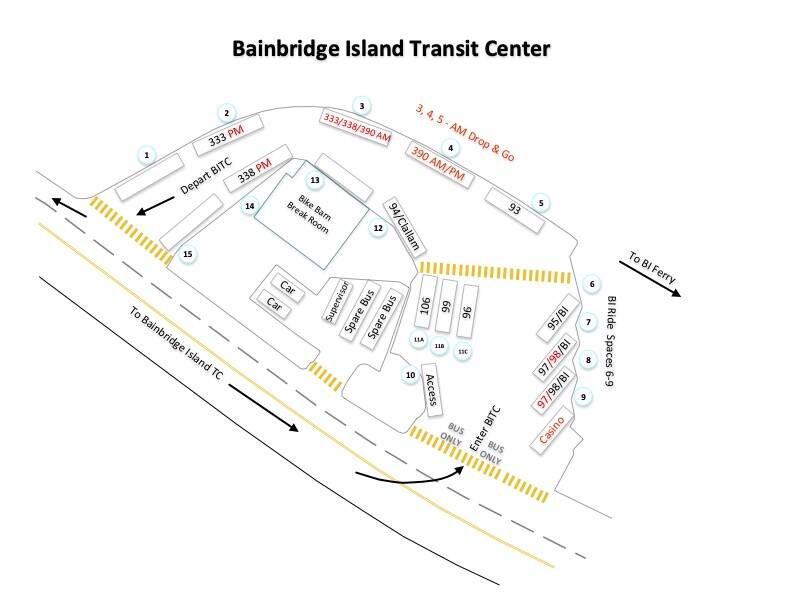
The resolution allows Puget Sound Energy to install two inductive chargers at the BI Transit Center. The project will enable KT to support electric charging capabilities for its buses. PSE estimates the project will cost $140,964, which will be funded by local funds, per KT.
“These electric buses won’t be plugging in when they’re stopped at a park and ride,” KT Boardmember and BI City Councilmember Clarence Moriwaki said. “They just simply drive over a big panel, and it’s wirelessly charging the bus while it sits there waiting for passengers to get on and off.”
A construction date has not been set, as the agency is still in the permitting process with the city of BI and the Federal Transit Administration, Sanjay Bhatt, KT public information officer, said.
“The thing that’s exciting about it, as an environmentalist, is every gasoline or diesel bus you take offline means no more pollution from that same route, because electric buses aren’t polluting,” Moriwaki said.
As for proposed fare increases, Bhatt said they are intended to address rising operational costs.
“Last year, the board approved a $2 increase to the westbound fare starting Oct. 1, 2024, and another $1 increase to the westbound fare starting Oct. 1, 2025,” he said.
The current proposal does not authorize additional fare increases. Instead, it revises the transfer policy and eliminates a discount for some riders. Transfer credits will still be available for bus and local foot ferry services, Bhatt said.
The board also reviewed lost revenue due to transfer credits. In 2024, KT did not capture $810,081 in revenue because fast ferries provided transfer credits.
Per a KT report: “Fast ferry fare revenue in 2024 would have been 19% higher without transfer credit. This does not account for the $1 fare increase in 2025.”
KT is recommending that transfer credit for fast ferries be eliminated effective Oct. 1. However, no change will be made until the agency completes an analysis of potential impacts on riders. That analysis will be made available to the public, Bhatt said.
A 2025 Title VI survey of 1,124 respondents found that 384 people (34%) reported riding a fast ferry route. Of those, 70% used an adult ORCA card and 8% used a reduced fare ORCA card. 30% of users reported getting to or from a fast ferry via transit.
A 2023 origin-destination survey found the most common fare payment method on each fast ferry route was the ORCA Employer Pass.
“The proposal brings us in line with Washington State Ferries, which does not offer transfer credit on its service, and it addresses a need to strengthen the financial outlook of the ferry fund,” Bhatt said.
For Kitsap Transit fare information, visit www.kitsaptransit.com/fares/fares.
For ORCA card information, visit www.kitsaptransit.com/fares/orca.