Downtown in line for infusion of state money
Published 9:00 am Saturday, February 18, 2006
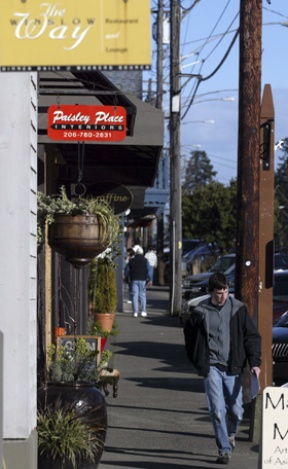
A new B&O tax credit could boost Winslow’s revitalization efforts.
Will Langemack watched downtown Yakima suffer a slow bleed for decades.
“It used to be vital,†the Bainbridge architect said of his hometown. “You lived, worked, ate, slept, shopped there. It had spirit.
“Then everything left.â€
Even the old jewelry shop moved its landmark street clock when it found a foothold among chain stores growing in long strips outside the town’s core.
“For me, Yakima’s the barometer for what not to do,†he said. “You don’t want things to fall so low that you can’t bring it back up.â€
That’s why Langemack was the first island business owner to take advantage of a new state Business and Occupation Tax credit aimed at staunching economic wounds draining the lifeblood from small towns.
With approval of the state Department of Revenue, a business, or group of businesses, may donate up to $100,000 to downtown improvement associations. Businesses then receive a 75 percent tax credit on the subsequent year’s B&O tax.
“The B&O tax goes directly to the (state) general fund and it doesn’t come back (to the island) like sales tax,†said Langemack. “But this incentive means more of the B&O is coming back to our downtown.â€
Langemack’s $1,200 contribution doesn’t mean he thinks Winslow is a candidate for the state register of ghost towns.
Rather, he hopes the donation will bolster the downtown’s economic health before it suffers further cuts and scrapes from growing retail powerhouses off-island.
“This money will be part of a war chest,†he said. “The goal is to retain what we have and keep downtown alive into the future.â€
Bainbridge Island Downtown Association Executive Director Cris Beattie said the tax incentive is a “win-win situation†that could help ensure Winslow’s “charm and eccentricities†aren’t overwhelmed by a changing marketplace.
She’s promoting the incentive in the hopes of reaching the island’s $100,000 cap for 2006.
As an example, Beattie said a business that donates $10,000 to the association can recieve a credit of $7,500 on its 2007 B&O tax liability. Initial donations to the association will likely help prepare downtown businesses for a major utilities upgrade expected along Winslow Way, according to Beattie.
“We plan to use a lot of the money in preparing for the ‘big dig’ downtown,†Beattie said. “That could be workshops, low-interest loans, speakers from other cities that have gone through this.â€
The downtown association is one of 14 similar organizations in the state qualified to receive contributions through the tax incentive. A pool of $1.5 million will be set aside each year for distribution among the growing list of qualified beneficiaries.
Initiated Jan. 1, only $200,000 of the fund has been spoken for, but Beattie expects stronger competition as more towns learn about the incentive program.
“The more that cities get their acts together, the faster those dollars will go,†she said.
Walla Walla is expecting approval of $100,000 by a single donor within the week.
Timothy Bishop, the director of the Downtown Walla Walla Foundation, said part of the money will go toward upgrading the foundation’s office equipment. He said more “brick and mortar†projects along downtown streets are expected as the foundation boosts its administrative efficiency.
Kennewick’s downtown association recently received a $20,000 donation from a technology firm that services the Hanford power plant.
“The (donation) shows that the company is a good corporate citizen to the area,†said Timothy Dalton, executive director of the Historic Downtown Kennewick Partnership. “Over here, at Hanford, companies want to attract good professionals and engineers. When engineers come here, they want to see a strong downtown and arts district.
“Companies know that the area has to compete, as a cultural environment, with San Antonio and San Diego. This helps us get on a level playing field.â€
Dalton said contributions through the tax incentive will help fund a new building that will house his organization and an expanded farmers market.
Later contributions may go toward public restrooms, main street building facade improvements and possible business recruitment incentives.
“This is just the tip of the iceberg,†Dalton said. “We’re saying, ‘Wow, this is going to help us bring back our downtown’ – and not just as a destination for businesses, but as a destination in and of itself.â€
For more information on the tax incentive program, visit the state Department of Revenue’s website at http://dor.wa.gov/.