
The numbers are staggering — in a good way.
With all the turmoil COVID-19 caused, its numbers concerning the Bainbridge Island School District were minimal.
At Thursday’s school board meeting, superintendent Peter Bang-Knudsen reported that BISD only had five cases of COVID since it made the controversial decision to offer in-school instruction in February.
On top of that, there were only 18 close contacts with the coronavirus, nine of them at Ordway Elementary.
In his report, Bang-Knudsen said “health, well-being and safety” play key roles in the district improvement plan as the BISD prepares for the 2021-22 school year this summer. Re-establishing relationships peer to peer, students to staff and parents to staff is very important after the year off due to COVID restrictions. BISD will be working with Bainbridge Youth Services on student social and emotional skills, strong connections, feelings of belonging and a sense of hope.
Also happening this summer is professional development, ordering math curriculum, cleaning facilities and grounds, and installation of a fire suppression system at Woodward Middle School.
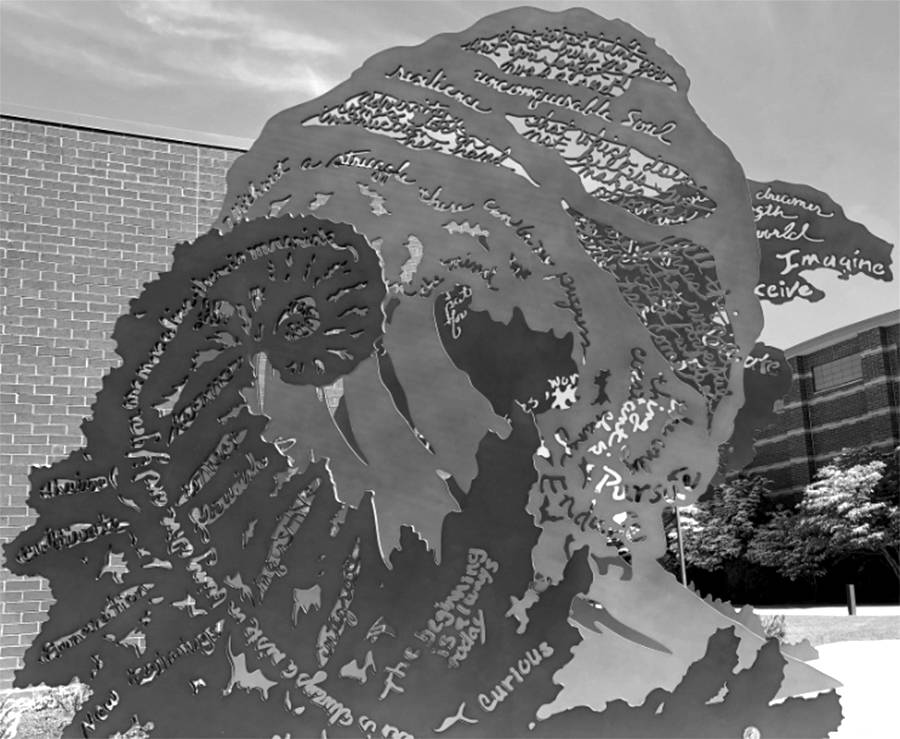
The superintendent also talked about a sculpture by Seattle-based artist Mary Coss that was installed at BHS — providing the finishing touches for the 100 Building replacement project. The art is a metaphor to the lives of students: fern frond unfurling (becoming and learning), wave building (challenge and resilience), and wave releasing (creativity and imagination).
Also at the school board meeting, regarding donations, the Bainbridge Schools Foundation gave $10,270 to the high school robotics club, and First Year Children’s Center gave $1,200 to BHS for a scholarship to a graduating senior.
There was also a presentation on student discipline. Just like other school issues, the BISD is looking at it through an equity lens. They have a worksheet to fill out to look for any bias to ensure “Equity focused decision making.”
“Ensuring fairness, equity and due process in the administration of discipline,” the presentation says, adding changes are “focused on individualized response to student behavior — emphasizing a reduction on the use of exclusionary discipline and encourage the use of restorative practices.”
The new code says, “Discipline is not necessarily punitive, but can take positive and supportive forms. Data show that a supportive response to behavioral violation is more effective and increases equitable educational opportunities.”
The code further points out: “Unless a student’s presence poses an immediate and continuing danger to others or an immediate and continuing threat to the educational process, staff members must first attempt one or more forms of other forms of discipline to support students in meeting behavioral expectations before imposing classroom exclusion, short-term suspension, or in-school suspension. Before imposing a long-term suspension or expulsion, the district must first consider other forms of discipline.”