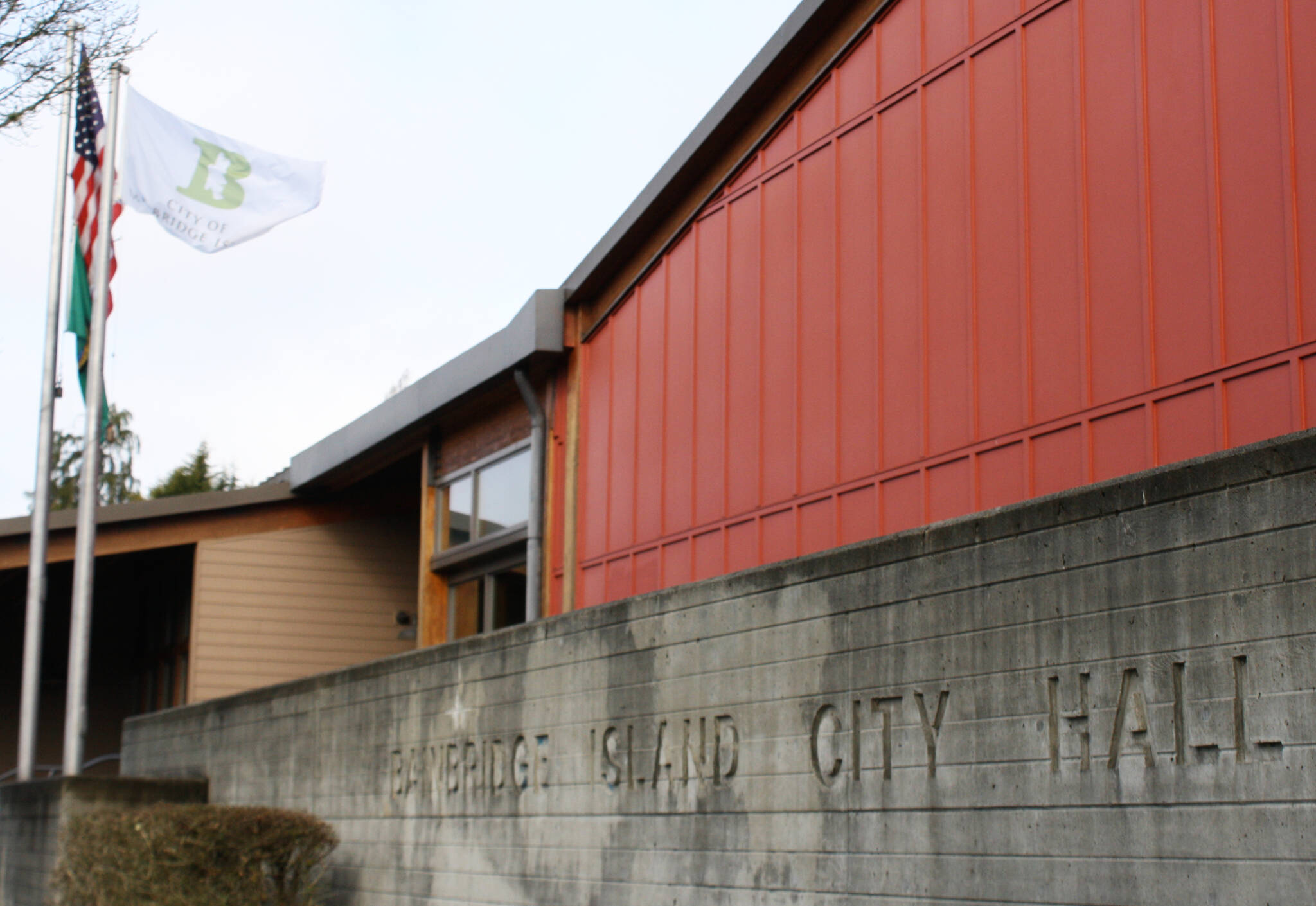
The city consultant’s review has arrived, and the verdict is firm: Bainbridge Island is behind the curve, and time is running out — so city leaders may have to make some tough changes.
City planning consultant Joe Tovar checked in with the BI City Council at its Oct. 27 meeting about the state of the islandwide Comprehensive Plan, and how the city can efficiently proceed with the project before the state starts leveraging penalties in 2026.
A Comprehensive Plan is a living document that local governments draft every 20 years or so that helps guide policy and priorities for the region. Typically, plans include high-level details about the future of transportation, housing stock, economic development, water and natural resources, climate resilience and sometimes cultural makeup.
In Washington, city- and county-level comprehensive plans are required to comply with the Growth Management Act, or House Bill 1220, which means they must plan for housing growth available to all income levels. The point of the bill is to encourage the preservation of existing housing and the construction of a wide range of housing types, keeping communities balanced.
There are two regulatory bodies that ensure local comp. plans are compliant with state law: the Department of Commerce and the Growth Management Hearings Board, a high-level judicial office specializing in administrative law that functions as a Superior Court. They have different methods of enforcement, and can levy different mandates on cities and counties — but if a city receives direction from either body, it means serious consequences are at stake.
A GMHB review is a slower process with more varied outcomes. If someone appeals a city or county’s comp plan, the GMHB reviews the case and determines whether the plan in question needs more work. Depending on how egregiously the plan violates the GMA, the board may recommend a deadline for the municipality to edit the document, usually six months, then re-submit it, or it could recommend the governor impose financial sanctions, like withholding tax dollars.
If the state Department of Commerce reviews a plan and finds that it is not compliant with HB 1220, the municipality that wrote it may face those financial penalties, as well as their ability to deny any new affordable or middle-income projects — a rule sometimes called a “builder’s remedy.”
In early August, the GMHB ruled that Mercer Island and Kitsap County had non-compliant comp plans. BI city attorney Jim Haney recommended that city council take note, lest they face the same fate.
Bainbridge Island’s Comp Plan is over 10 months late. If the city reaches 24 months overdue, it risks losing both existing state grant funding and its competitive edge for future funding. In particular, the Department of Ecology may rescind a $720,000 grant to improve aquifer recharge in the Manzanita watershed if the city does not certify its plan by June 2026.
Tovar attended Planning Commission and City Council meetings for four months, reading documents, meeting with leaders individually and collectively.
Given what he observed, he recommended that in order for the city to avoid legal and financial penalties, it should set a hard deadline of June 2026 to certify the islandwide plan, require the Planning Commission to finish the Winslow Subarea Plan by Dec. 31, and focus further draft planning to essential-only edits identified by staff.
“We’re behind the curve already. The deadline, as you know, is last December. My concern is that unless the council, because you are the decision makers who drive this train, you are responsible under the law for giving direction, you are the key players in this whole conversation — what needs to happen is council action,” said Tovar. “I don’t like to use hyperbole too much, but I’m using the word bold because I think what you need to do needs to be bold. It needs to be different than what has been done in the past. I think unless you can take some bold actions along the lines of what I’ve recommended here tonight, you won’t be done for a while.”
Tovar acknowledged that if the Planning Commission were to implement a Dec. 31 deadline for the Winslow Subarea Plan, “not every single ‘t’ will be crossed, and not every single ‘i’ will be dotted.” The goal of a body like the PC is to give direction — it’s up to city staff and planning consultants to create the policy, he said.
“You cannot expect a lay body Planning Commission, no matter how smart, how dedicated, how experienced they are — they’re not going to be able to stand there and write code line by line. That’s not what they do, it’s not what they should be expected to do,” said Tovar.
The Planning Commission has already taken up some of Tovar’s input. Since he was hired in July, the body has started meeting three days per month, been led more actively by the group’s chair, converted motion passage to majority vote rather than unanimous vote, and created two subcommittees to focus on development regulations and incentives.
“‘Do not waste good infantry,’ to quote Napoleon,” said Tovar. “These people have a tremendous amount of energy and altruism dedicated to this effort, but you can’t burn out your Planning Commission from expecting too much of them for too long.”
Council will decide whether to accept Tovar’s plan at the Nov. 12 council meeting.