
Blakely Harbor healthy, for now
Published 8:00 pm Saturday, November 4, 2006
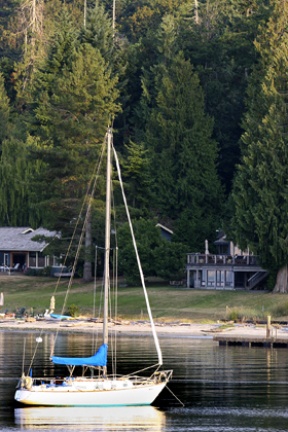
But scientists warn of damage from chemicals and bulkheads.
Salmon are suffering a multi-pronged assault from Puget Sound’s shore dwellers.
Docks cast shadows, blotting sensitive eelgrass beds that cradle young salmon. Bulkheads boost shoreline erosion. Street grime and other pollutants sully the water. Fertilizers and human sewage feed blankets of algae that suck the oxygen from protected bays and harbors.
But Blakely Harbor on the island’s south end is a rare refuge for salmon and other marine life barraged by the blitzkrieg of human development.
“Blakely Harbor is as good as it gets,†said Doug Myers, a Puget Sound Action Team habitat specialist.
Of the 37 Puget Sound estuaries that can support the early growth of endangered chinook salmon, Blakely’s is one of 15 considered “properly functioning†by the state-sponsored action team.
Myers was one of a half dozen marine scientists featured at a public forum Wednesday aimed at exposing the challenges facing the sound’s near-shore habitats.
More than 100 people, including many high school students, packed into a meeting room at the Bainbridge Island Fire Department’s Madison Avenue station to listen to the forum’s speakers.
“We’re fortunate to live on an island still worth protecting,†said Lisa Macchio, a member of the Coalition to Save Blakely Harbor, which sponsored the event. “Not everything has been bulldozed yet.â€
But Bainbridge shores not deeply imprinted by human hands are few, said Jim Brennan, a Washington Sea Grant marine habitat specialist.
“Our beaches are disappearing,†the island resident said. “The bad news is there aren’t any areas left with no impact or low impact. Blakely Harbor has the least amount of impact.â€
Formerly the home of the world’s largest lumber mill, Blakely Harbor has come to resemble its former natural state over the last century. But the harbor’s serene waters and captivating views have proven attractive to homeowners in recent years.
Harbor residents recently sued the city over a moratorium on new dock construction.
The costly litigation spurred the City Council to settle with claimants last summer and allow some dock construction.
In doing so, the council failed to put the harbor’s health before the wishes of a handful of homeowners, according to former councilwoman Debbie Vann.
“The only reason that came forward was because of a few property owners who want docks,†said Vann, an outspoken Blakely Harbor preservationist. “It’s not because of science or new knowledge. It’s strictly the lawsuit.â€
DevelopÂment threatens a largely balanced relationship between humans and marine life that has lasted “over a millennia†in the harbor, said Suquamish Tribe fisheries biologist Paul Dorn.
While a rare islander may trace his or her roots back four or five generations, the Suquamish have lived along the harbor’s shore for over 10,000 years, he said. Despite recent home construction, and a particularly tumultuous 60 years when the harbor supported Port Blakely Mill, dozens of fish species call the harbor home.
But, Dorn warns, “if (the harbor’s) habitat is unsuitable for fish, it could have a very big impact.â€
Blakely’s estuary is in close proximity to 11 spawning streams. The harbor acts as a nursery for young fish until they’re ready for the wilds of the open sound and ocean.
For perspective, Myers urged the forum’s attendees put themselves in the position of a newborn salmon.
“You’re the size of a rice grain. You can’t swim very well, and you’re blasted out of a stream into the big, bad environment,†he said.
Blakely Harbor is a natural refuge for young salmon originating from the Duwamish River and central sound streams.
“You’re an itty-bitty fish with no control over where you swim,†Myers said. “You come from the Duwamish or the (Ballard) ship canal. Blakely’s right in there, in close proximity.â€
Much of the sound’s shores have been developed, according to Myers, but only 1 percent of the population lives along the waterfront. Yet, shore-dwellers have an impact on the environment out of proportion with their numbers.
“We’ve been silent for too long,†he said of the remaining 99 percent. “We need to act like (shorelines) are ours.â€
Brennan agreed.
“Big homes are going in. They can afford it and they can build it, but it has a pretty large impact,†he said. “We’re continuing to go downhill.â€
The forum’s speakers urged attendees to support shoreline preservation efforts and to make personal choices – whether refraining from lawn fertilizer use or removing bulkheads – that promote the health of salmon and other marine wildlife.
Brennan expects the sound will grow by 3 million people in the next 13 years. With that growth rate, chinook will have an even tougher time catching up. Declining in numbers for years, chinook populations need to grow by as much as seven times their current numbers to be considered “recovered†by today’s government standards, according to Myers.
“The clock is ticking,†said John Cambalik, also of the state Puget Sound Action Team. “There’s not much time to act to achieve sustainability in a very short amount of time.â€
**********************************************
Harbor watch
The city recently conducted a study of Blakely Harbor’s eelgrass beds, which are critical habitat for salmon and other fish. The results of the study will be unveiled Nov. 13 at a public meeting. City staff will also discuss the Blakely Harbor Dock Shoreline Amendment Process & Participation Plan at the meeting, which begins at 7 p.m. at the Commons, 370 Brien Drive.