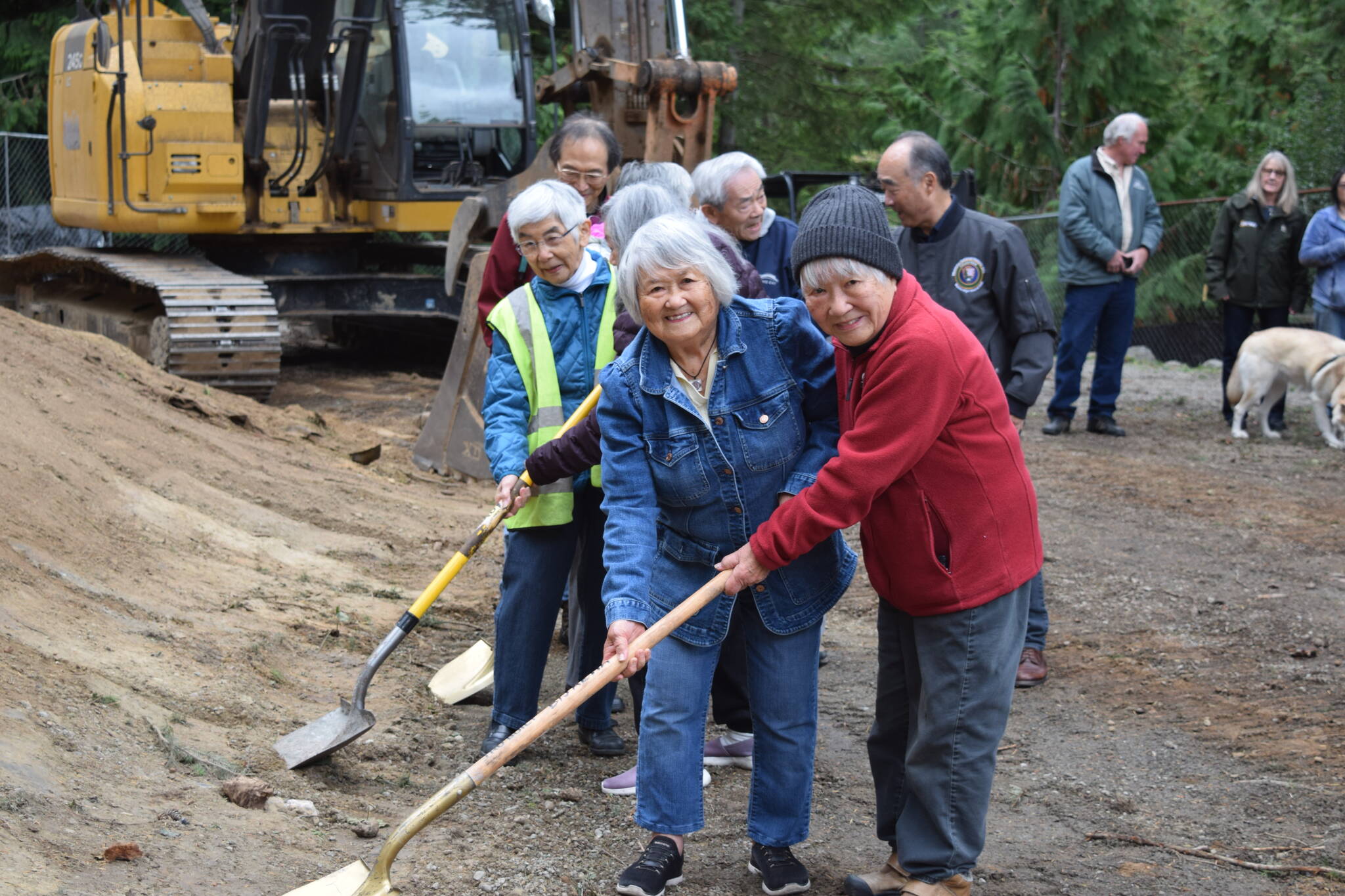
The long-awaited Visitor Center at the Bainbridge Island Japanese American Exclusion Memorial is now underway, following an official groundbreaking Oct. 11.
About 45 people attended the ceremony, with six survivors of state-sanctioned removal during World War II in attendance, along with families. A few of the survivors still live on Bainbridge Island, including Lilly Kodama.
Without the visitor center, the historic site is mostly an outdoor experience. The memorial itself is a long, undulating wall that follows the path that Japanese Americans on Bainbridge took to board the ferry when they were forced to leave their homes under Executive Order 9066.
The new structure will add an indoor component to the visitor experience, creating new opportunities for exhibits, programming and installations, completing the final phase of development, explained Ellen Sato Faust, director of the BIJAEM Association. An indoor space will also allow for visitors to take refuge during inclement weather, while still being able to learn and reflect, she added.
“We often hear, ‘I’ve visited the Memorial many times, but until I took a guided tour, I didn’t fully understand what happened here,’” said Faust. “Our hope is that the Visitor Center will bridge that gap — so that every visitor, whether on their first visit or their twentieth, comes away with a richer appreciation for what took place on Bainbridge Island: the trauma of exclusion, the resilience of the Japanese Americans, and the compassion of the broader community that stood by them.”
While construction is underway, the Memorial parking lot will be closed for the next 11 months for construction vehicles and staging.
“The site is not particularly challenging, but beautiful, and the building is meant to fit within and be complementary to its surroundings,” said Dave Carley, owner of Carley Construction Inc., contracted for the project. “The significance and responsibility is not lost on our team. We are deeply honored to be a part of this build.”
To complement the events captured on the outdoor wall, the goal of the exhibits featured inside the Visitor Center will be to convey the unique nature of Bainbridge Island’s community and how the strength of community ties made it possible for many islanders to return home after incarceration during WWII.
Many artifacts that BIJAEMA has collected over the years will finally have a home in the Visitor Center and will be displayed for public view. There will be a modestly sized event space to hold classes, lectures from guest speakers and film screenings — with programming focused on connecting the events that occurred on BI to the current events and broader national conversations.
“Today, the administration is attempting to stretch national security powers to support harsher deportation policies—a very different and concerning reinterpretation of its purpose. These are, indeed, unprecedented times,” Faust said. “Our hope is that the Bainbridge Island community continues to celebrate all Americans, including the immigrants who have shaped the nation’s growth, prosperity, and diversity. We all came from somewhere. The memorial’s mission is to educate the public about this consequential chapter in American history and to highlight the dangers of racism, hysteria, and government overreach.”