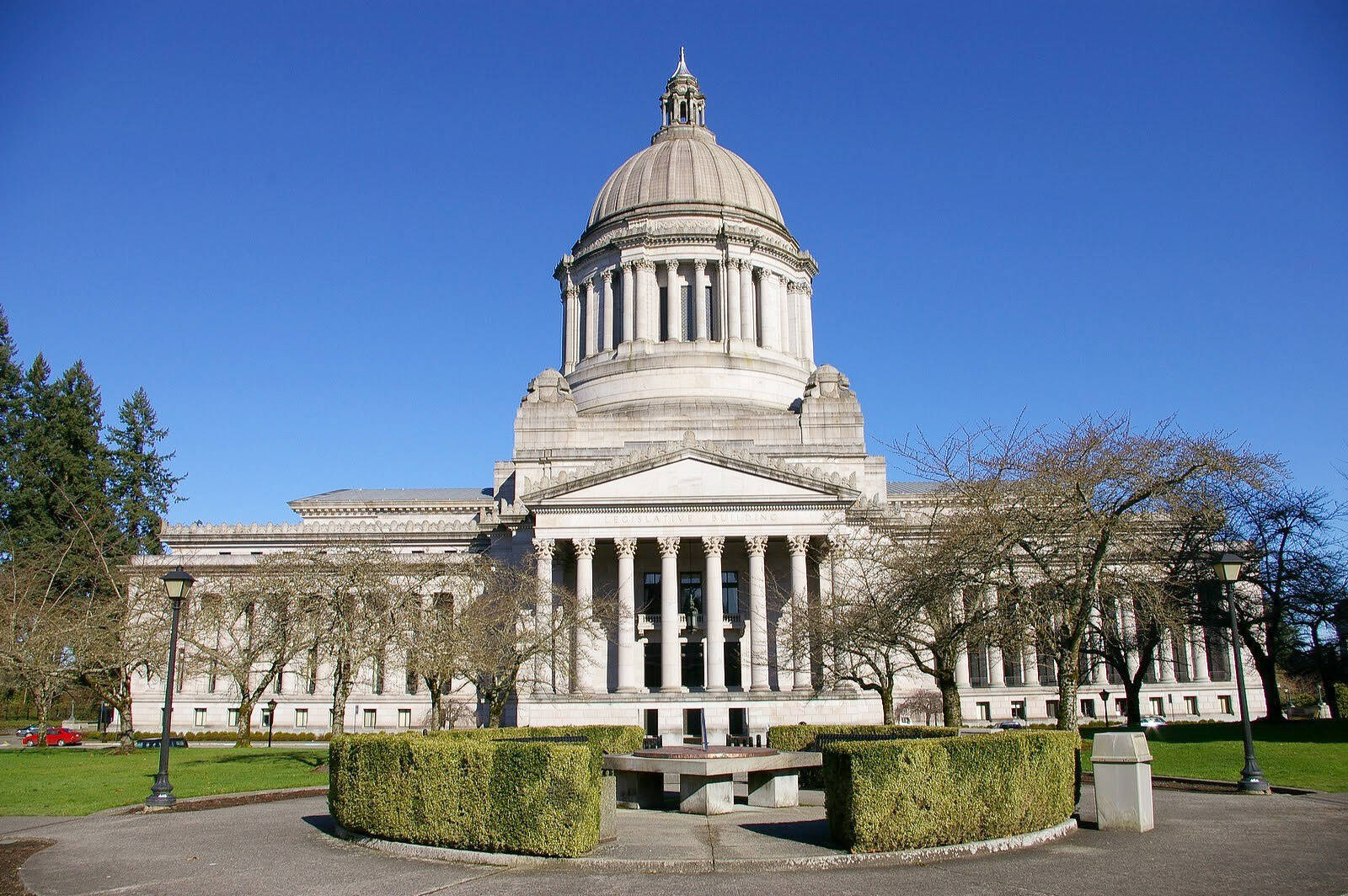
City of Bainbridge Island leaders have chosen three main priorities for this legislative session, but as the state heads toward a difficult budget year, accomplishing some goals may prove challenging.
At the Dec. 9 City Council meeting, Amina Teouri of Gordon Thomas Honeywell Government Relations, the city’s lobbyist group, presented the council with three top priorities to pursue during the 2026 legislative session and a suite of policy endorsements that guide the city’s engagement with lawmakers in Olympia.
Two of the city’s top priorities are related to transportation infrastructure: a new request for $2.5 million in funding to complete the roundabout planned for the intersection of Day Road and Highway 305, and continued investments into fast ferry service and ferry line management.
The city’s third priority is a request from a prior legislative session: a new law exempting the email addresses of people who subscribe to city newsletters from disclosure via the Public Records Act.
Per city documents outlining the 2026 priorities, during the 2025 election cycle, a candidate running for City Council requested the subscription list for the weekly “City Highlight” newsletter through the Public Records Act, then sent a campaign advertisement to subscribers.
“The community provided feedback that this impacted their trust of city government. Additionally, the city was considering developing a BIPOC Affinity Group newsletter. However, this plan has been put on hold as we realize this e-mail list could be provided to an individual with the intention of harming community members,” the city wrote in the legislative priority document.
Kirkland and Ferndale have each been supportive of such a bill, said Teouri, in response to a query by Councilmember Clarence Moriwaki.
“When we provided testimony [on this bill], that was supported by [the Association of Washington Cities’] lobbyist too, at that time,” said city manager Blair King.
As far as requests for funding, per the first two priorities, 2026 is not a year for moonshots, the lobbyists explained. Given the loss of federal support for Medicaid and food assistance programs, tariffs, and steep cliffs in all three branches of the existing budget due to falling revenue and rising costs, new spending is not likely.
“I will note right now that we’ve been told that there is no money within the operating budget, and that they’re not even accepting operating budget requests this session due to the budget deficit,” said Teouri during her presentation. “The transportation budget, like the operating budget, is also facing some fiscal challenges […] [The capital budget] is the most stable of the three, and offers the best funding opportunities. However, even with this budget, funding is still very limited.”
Teouri explained that the 2026 legislative session will largely be a continuation of the 2025 session — partly because it’s the latter half of the state legislature’s two-year cycle, and thus shorter than last year, but also because there are no major elections and all the bills introduced in 2025 that did not become law will be carried over for consideration in 2026.
The 2026 legislative session begins Jan. 12 and ends March 12.