

On June 13, community members gathered on Bainbridge Island to celebrate Juneteenth, a holiday that commemorates the end of slavery in the United States.
The event was a collaboration between multiple organizations, including the city of BI, Bainbridge Performing Arts, the Bainbridge Black Community, and the BI Historical Museum.
The event, hosted at Town Square and BPA, included an array of activities, including food, music, education, sign-making and dancing. Food was provided by Suquamish-based Aunty Dolly’s West African Cuisine.
“It felt good to be responsive to last year’s feedback and connect the Bainbridge Juneteenth event more intentionally to the greater Kitsap celebration,” Anshu Wahi said, the city’s equity and inclusion manager. “This year’s event felt even more community-driven. Instead of a traditional program with speakers and performances, this year, attendees interactively engaged with our community partners of educators, historians, activists, and artists.”
Wahi said the event included opportunities for community members to learn about the history of printing presses and sign-making, including what makes a good protest sign, and giving community members an opportunity to make their own signs.
“The sign-making activity was a powerful way to connect learning with action,” she said.
“For many years and many generations before us, Bainbridge islanders have stood up against racism, hatred and encroaching violence towards our community as a team,” Lindsay Ogles said, director of exhibits and engagement at the historical museum. “We have always been a community that wanted to protect its neighbors and friends and community members,” she said.
In the early 1990s, leaflets were distributed to local businesses by a group affiliated with the white supremacy movement. Now called the Handbills of Hate, Ogles said the group’s origins are unknown. Some islanders also received threatening phone calls.
A local teacher, Eric Hoffman, and his 8th-grade class discussed the leaflets and organized a march for community unity against racism and prejudice, Ogles said.
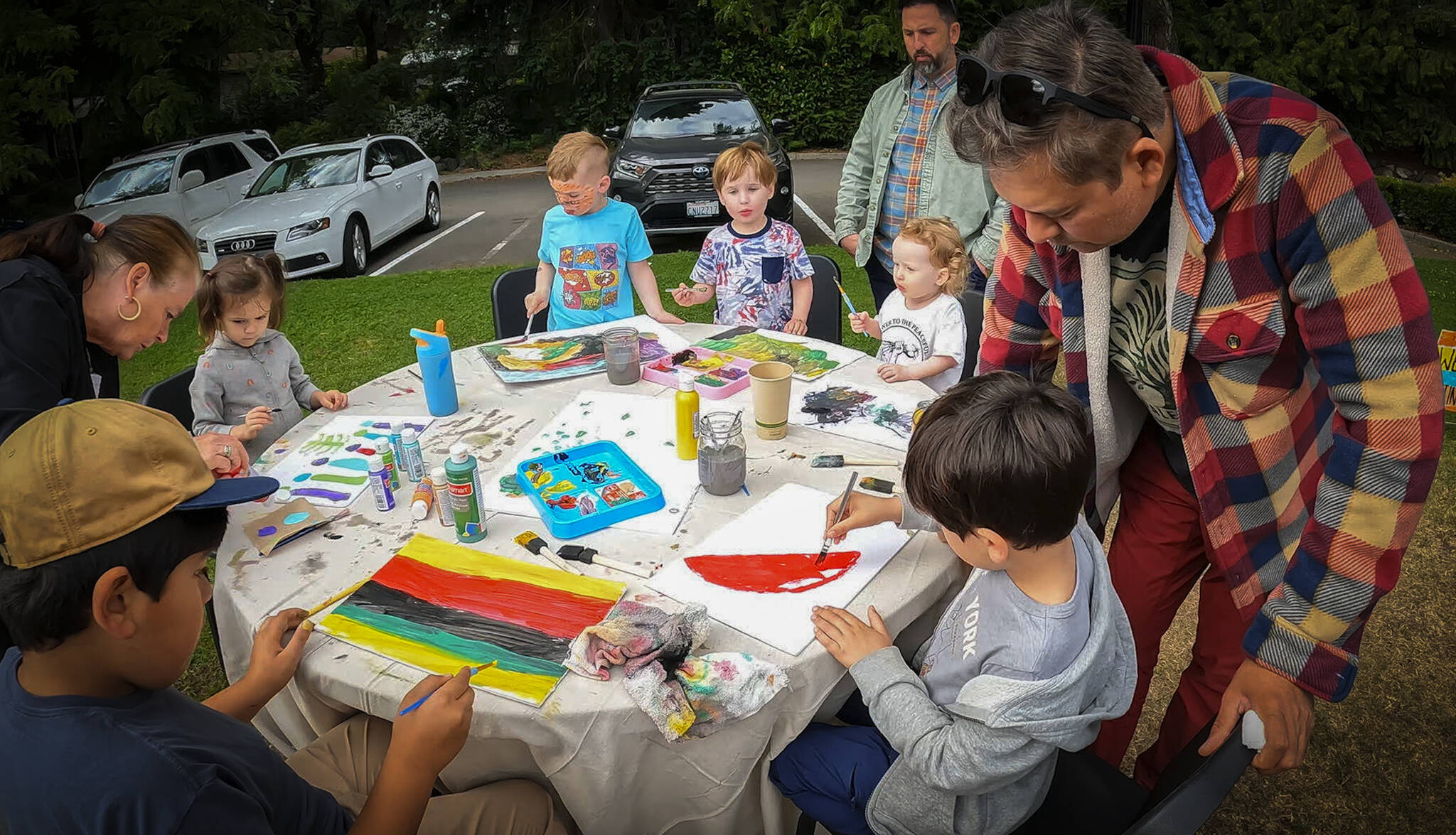
Sign-making was part of the BI Juneteenth event June 13.

