
The Bainbridge Island City Council at its April 8 meeting accepted two grants and updated two contracts for an upcoming fish passage improvement project at the head of Eagle Harbor, where Cooper Creek flows into Puget Sound.
The city plans to remove the existing culvert, a 30-inch tunnel, and replace it with a 15-foot-wide box culvert. Between construction and consultation, the project will cost $3.4 million, offset by $719,000 in grants from the state.
Several iconic migratory fish species of the Kitsap peninsula have been recorded traveling up Cooper Creek to spawn: steelhead, cutthroat, coho and chum salmon. A wider culvert will be easier for fish to navigate but will also mean more water flowing through to the wetland on the other side of the road, necessary habitat for juvenile fish.
This isn’t the first facelift that Cooper Creek has received.
In 2001, after facing pressure from Northwest Indian Fisheries Commission, the state replaced culverts all over Kitsap County that completely blocked fish migration — Cooper Creek being one of them. However, despite improvements to the fish’s migratory path, between 2005-2009, ecologists with the Bainbridge Island Watershed Council recorded only one chum salmon and a few cutthroat trout using the corridor.
“Historically, Cooper Creek likely supported hundreds of returning adult salmon each fall. Over time, these numbers have declined, both because of changes to Cooper Creek itself as well as due to larger-scale threats to salmon throughout the region,” said Deborah Rudnick, lead environmental scientist for BIWC, in a 2012 research paper.
Eight years after the state’s work on the culvert, BIWC began a restoration program for the island’s recovering salmon population, using chum salmon fry raised by the Suquamish Tribe’s hatchery.
“The objective of the Cooper Creek Program was to supplement the native salmon population over multiple years with fish from a nearby source whose genetics are similar to those of our Bainbridge Island fish,” Rudnick wrote. “This supplementation can help to jump-start a healthy return of fish for this stream and re-introduce the important supply of nutrients and food that salmon bring back from the marine environment to freshwater and terrestrial food webs of the island.”
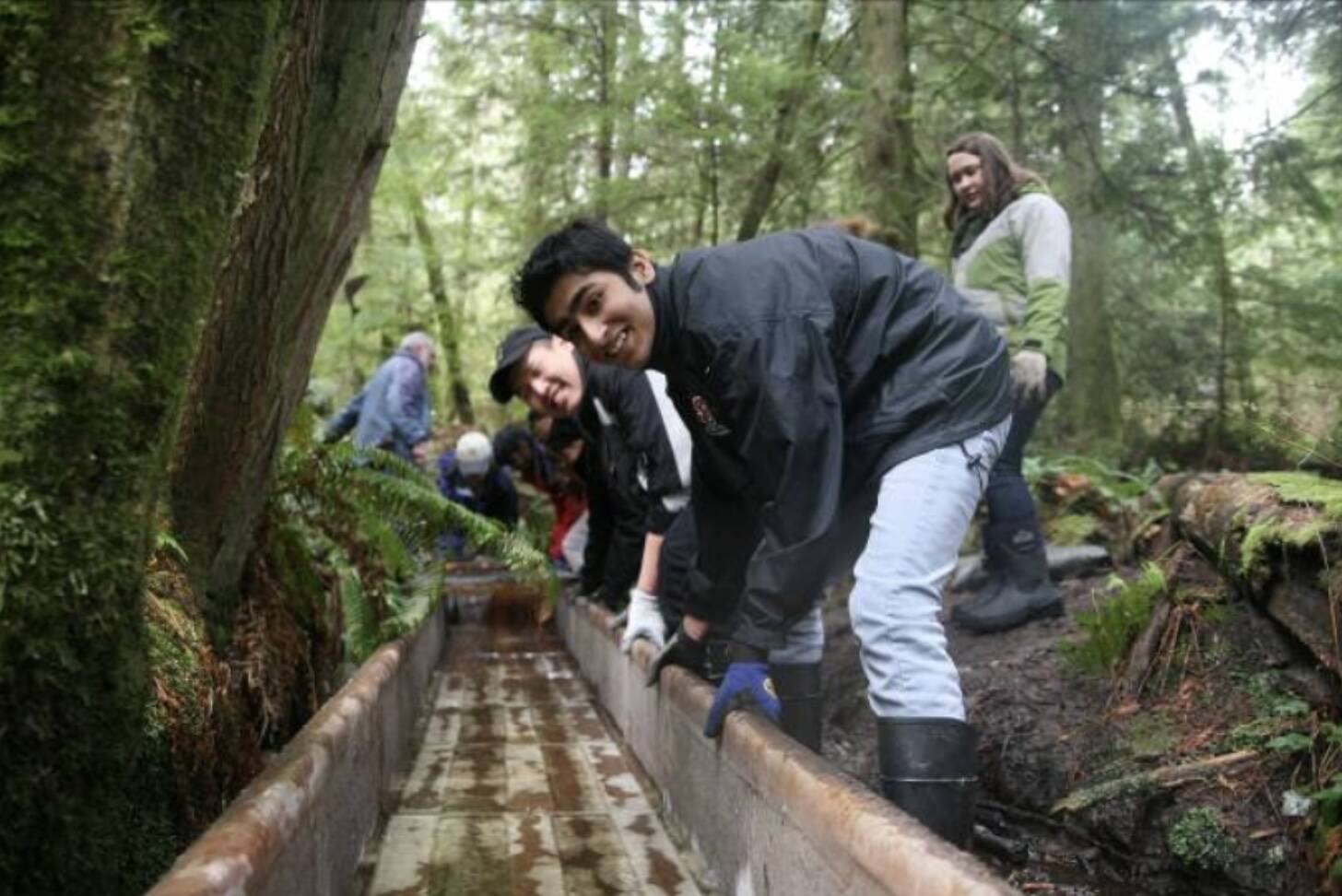
Volunteers reared 12-15,000 chum salmon fry, feeding them three times a day and cleaning their tank daily, and released them in 3-5,000 batches down a fiberglass “raceway” next to Cooper Creek. Initial returns were rocky — in fall 2012, the team counted at least a dozen returning fish, followed by just one in 2013 —but not out of sync with other salmon streams on the east side of the island that year.
“We posit that local fishing pressures may have played a role in rates of return for these two east-side streams given the localization of these low numbers,” Rudnick wrote.
In 2022, the state Department of Fish and Wildlife marked the culvert underneath Eagle Harbor Dr. as a “barrier” but could not determine how passable the culvert may be. Fish that made it past the first hurdle immediately encountered another obstacle: a culvert underneath a private driveway across the road that showed partial blockage in 2020, but after that were able to migrate freely.
Updates to the existing culvert underneath Eagle Harbor Drive will ease access to the upper creek for fish, but the city is hoping to improve human passage on the road as well.
Aboveground, the city will add updates to the intersection of Eagle Harbor Dr. and Wyatt Way in late 2025 as part of the city’s islandwide initiative to enhance roadside safety for cyclists and pedestrians. The construction bid will go out this spring and is budgeted at $4.6 million, offset by $300,000 from the transportation agency Puget Sound Regional Council.
The work will also retrofit “sorely lacking” stormwater infrastructure at the site, said Christian Berg, city water resources technician.
“The roadway crossing the stream is an important connection for both automobiles and non-motorized vehicles alike, but is lacking safe amenities such as bike lanes and guard rails,” Berg wrote. “The high-trafficked hills and tight corners create ideal conditions for stormwater pollutants to accumulate on the roadway and wash into the estuarine environment. This project aims to mitigate those impacts as well.”

