All about asteroids: Battle Point planetarium to showcase mysterious dwarf planet
Published 2:12 pm Friday, September 11, 2015
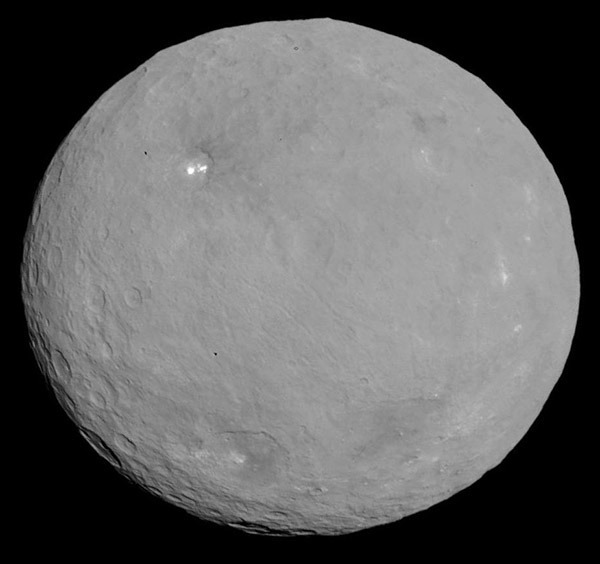
Ceres may have some identity issues.
Floating out there in the cold silence of space with nothing to do for centuries but vex astronomers, it’s really little wonder that the largest asteroid in our solar system is cause for so much curiosity and controversy.
Actually, is it a really big asteroid or is it just a really small planet?
Ceres was the first object in space ever to be considered an asteroid way back in 1801, and then some people thought it actually was a planet, but, like that other celestial outcast Pluto, it’s no longer part of that exclusive club. It does, however, account for about one-third of the total mass in the asteroid belt, despite being the smallest and least massive of all the dwarf planets.
Confused yet?
We’re just getting started on this cosmic query.
Scientists now think that Ceres may have an ocean and possibly even an atmosphere.
The study of this planet-like puzzle is one of the major aspects of NASA’s ongoing Dawn Mission, a nearly decade-long endeavor to study Ceres and the asteroid Vesta, which has produced stunning new imagery of the dwarf planet in the last few months.
“The asteroid Vesta and the recently categorized dwarf planet Ceres have been selected because, while both speak to conditions and processes early in the formation of the solar system, they developed into two different kinds of bodies,” reads the NASA mission overview. “Vesta is a dry, differentiated object with a surface that shows signs of resurfacing. It resembles the rocky bodies of the inner solar system, including Earth. Ceres, by contrast, has a primitive surface containing water-bearing minerals, and may possess a weak atmosphere. It appears to have many similarities to the large icy moons of the outer solar system.”
That all sounds really cool, but if you’re looking to increase your interstellar intelligence and still can’t tell the difference between a comet and a constellation, the Battle Point Astronomical Association will host a public planetarium show “Ceres and the Asteroids” at 7:30 p.m. Saturday, Sept. 12 at the Edwin E. Ritchie Observatory and John H. Rudolph Planetarium in the Helix House at Battle Point Park (11299 Arrow Point Drive NE) to shed a little light on the subject.
“The Dawn Mission reached Ceres earlier this year and it’s giving results back and I’m going to be going over those,” BPAA president Stephen Ruhl explained.
So, what is Ceres anyway and what’s really the difference between a dwarf planet and an asteroid – other than the fact that Bruce Willis never had to destroy a dwarf planet before it crashed into Earth?
“A dwarf planet is a class of objects where they don’t quite make planet status but they have enough gravitational mass to form into a ball,” Ruhl explained. “There’s a bunch of them out past Neptune, but [Ceres] is the only one in the inner solar system.
“An asteroid is basically an object that’s orbiting the sun,” he added.“Most of them reside between Jupiter and Mars.”
What’s the difference between an asteroid and a meteor?
“A meteor is something that hits the Earth’s atmosphere,” Ruhl explained, while a meteorite is a meteor that actually hits the ground.
The association’s spot at Battle Point Park is “close to if not the best spot on the island” for stargazing,” Ruhl said, and where the nearly 90-member group has been meeting for more than two decades.
BPAA is a nonprofit amateur astronomy organization. Visit www.bpastro.org to learn more and see a complete list of public events.