
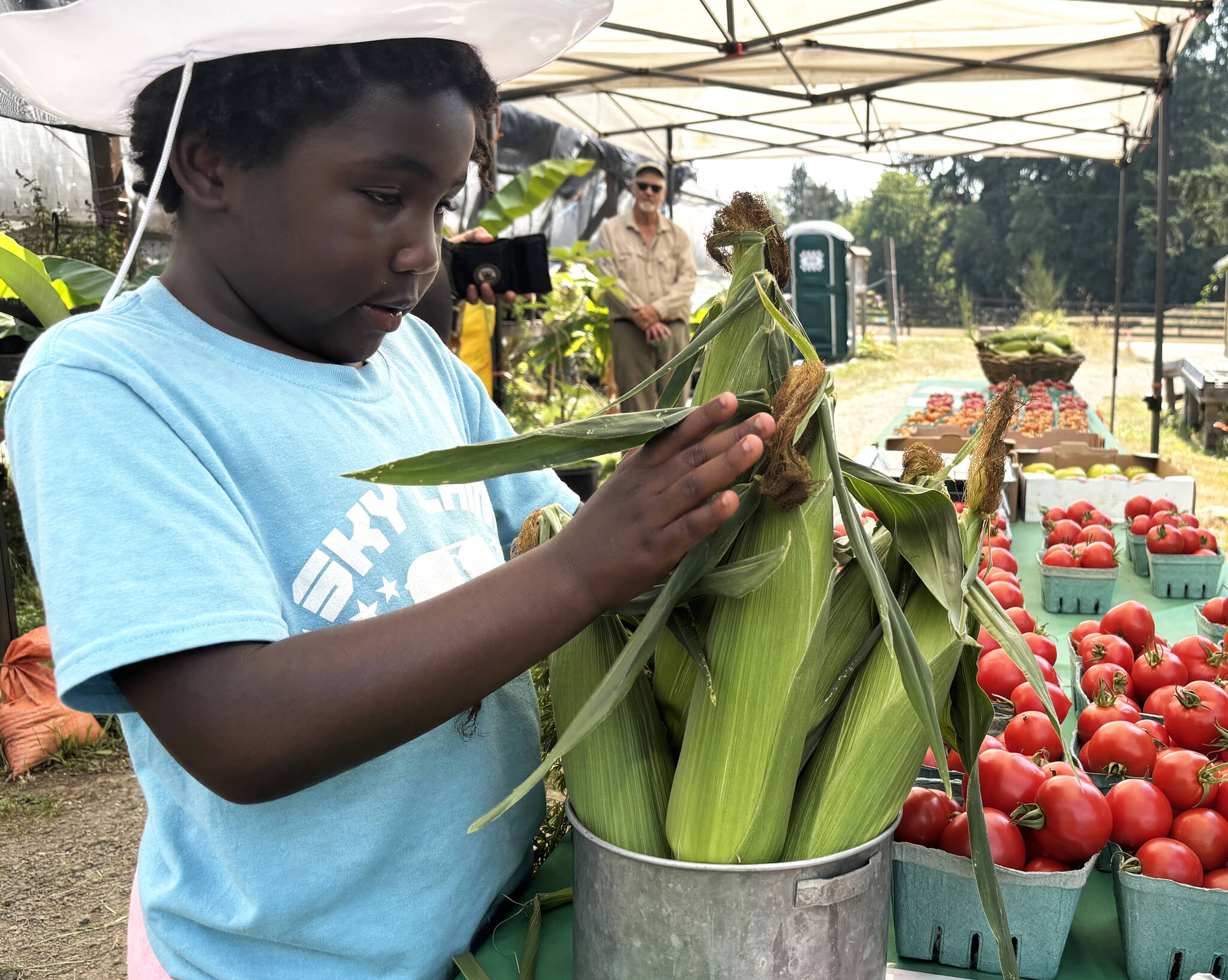
One of the longest-running farm operations in the Puget Sound region just restored a program that represents a critical part of its founders’ legacy.
Starting this fall, about 30 students from Bainbridge and Eagle Harbor High Schools will be attending a horticulture and history class taught by longtime BI organic farmer Brian MacWhorter at Butler Green Farms, a partner of the Suyematsu Farm Legacy Alliance.
“My favorite thing is when kids discover the garden and actually pull carrots from the ground and eat that, and their smile on their face,” said MacWhorter. “[I love] getting that freshness, getting people turned on to it, excited about food and wanting to support food, because how we’re going to get through this whole debacle we’re dealing with right now is community.”
The Butler Green program represents a new iteration of a curriculum that may sound familiar to BI residents.
Between 2006-2019, the nonprofit EduCulture led farm and history-focused classes on several public farm properties around the island for K-4th graders, including the “Strawberry Pathway” unit for x̌alilc Elementary School students.
“Educulture’s pedagogy was place-based, focused on lived learning experiences to inform a more lived curriculum. We used the food community as curriculum and brought the students to authentic settings for lessons, whether local farms, Town & Country, local restaurants, and so on. We liked to believe we were ‘connecting place and taste with where we live, eat, and learn,’” said Jon Garfunkel, director of SFLA.
Between Suyematsu, Heydey, Middlefield and Morales Farms, every Bainbridge Island School District school had a farming classroom within walking distance, Garfunkel recalled, with farmers like MacWhorter, Betsey Wittick and Karen Selvar serving as guest teachers. Instruction also took place in school gardens and in the school lunch program.
Leslee Pate Dixon, owner of the former Mossback Café in Kingston and business consultant, partnered with EduCulture as a guest chef and seasonal farm instructor from 2013 to 2019. She recalled the impact of EduCulture classes reaching “not just kids, but our greater community at large” on the program’s website.
“They are taking the lead role in getting kids out of the classroom, onto the farm and into the kitchen, a pivotal step to educating about where our food comes from, how to prepare it, and the difference between a garden, which feeds a family, and a farm, which feeds a community,” Pate Dixon said. “It is very rewarding to see little ones develop attitudes of stewardship and wonder, and to notice them notice the seasonal changes on the farm. It has been amazing to see kids who don’t want to eat veggies or get dirty come full circle with participating in cultivation, seeding, planting, weeding, harvesting, cooking, tasting, and composting.”
Until 2013, EduCulture underwrote the cost of the program, Garfunkel explained. In 2014, BISD and the Bainbridge Schools Foundation took over funding and sought to expand the program. However, three years later, the school district dropped the edible education initiative, citing changing programmatic priorities.
“Some individual teachers carried on with their edible-ed curriculum into the following school year, then the pandemic hit the year after, placing all EduCulture field programs on hiatus,” Garfunkel said.
But the impact of EduCulture may be continuing to shape the island’s youth.
Over the course of his career, MacWhorter has observed popular interest in farming wax and wane, he said. But if demand for the new Butler Green Farms course is any indication, farming is in a serious upswing amongst BI students. Nearly 80 students vied for a spot in the fall class.
“I think students are interested for a variety of reasons. Some of it might be a tie-in to green careers, and the well-being of the earth, but I also think there’s an interest in sustainable systems and eating healthfully, and all of those things are some shared values in the community,” said Lesha Engels, Bainbridge Island School District CTE director for students in grades 7-12.
It’s what the original farmer would have wanted.
Akio Suyematsu was a Japanese American farmer on BI. He grew berries and other crops that defined the island’s economy in the early 20th century; endured incarceration during World War II; introduced the indigenous and Filipino farmhands whose marriages created the local Indipino community; believed in “clean living” and trailblazed organic farming and composting in the region; brought five generations of farmers under his wing and kept working the land until he died at the age of 90 in 2012.
MacWhorter was one of Suyematsu’s master-farmer mentees in the late 70’s.
“[I’m] just spreading my knowledge, the enthusiasm and developing passion. This whole deal with the school is, you get them going young. You get them at four years old out here, digging carrots [and] eating strawberries out of the field, instead of eating that other stuff that they eat for snacks,” said MacWhorter.
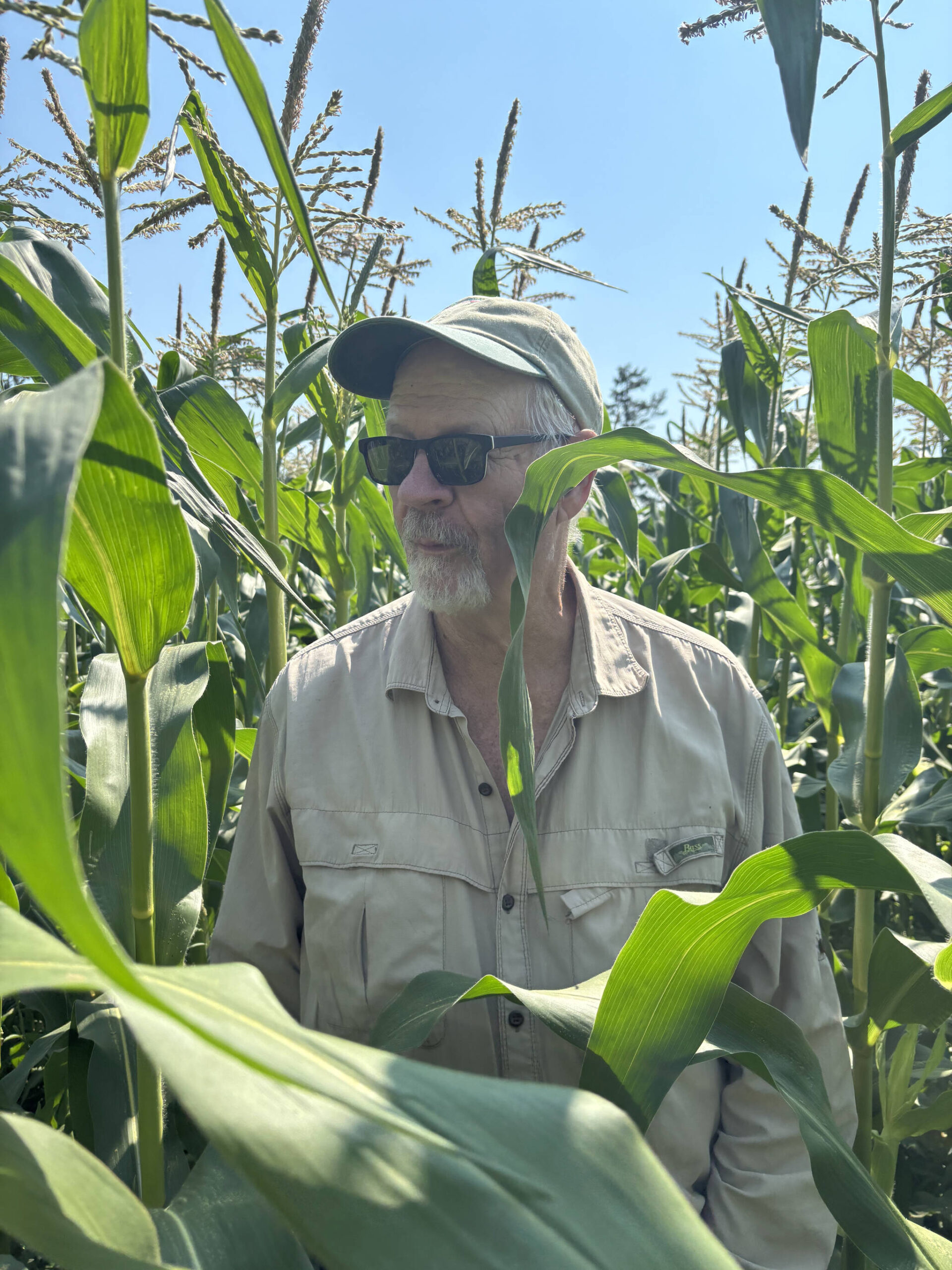
MacWhorter in a soon-to-be corn maze on his parcel of land at the Suyematsu Farm.
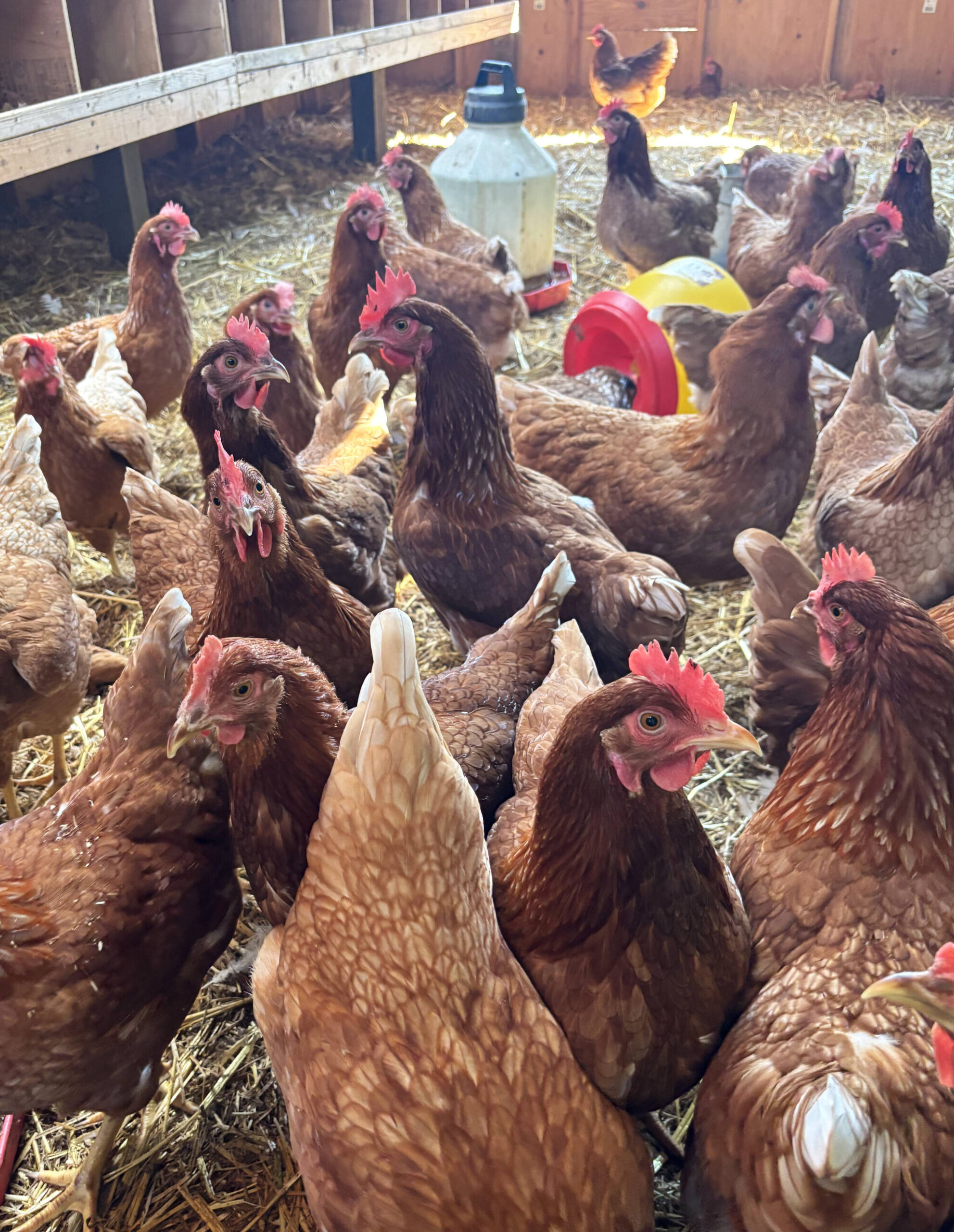
A flock of chickens that MacWhorter is raising.