And so passes a giant.
Stan Lee, the iconic former top editor of Marvel Comics and co-creator of, among others, Spider-Man, the Hulk, Doctor Strange, the Fantastic Four, Daredevil, Black Panther, the X-Men, Ant-Man, Iron Man and Thor, died Monday at the age of 95.
He left behind a world with a very different opinion of his chosen medium than the one he came of age in, and one of the most wide-reaching, boundary-pushing legacies in the history of popular literature.
And yes, comic books — graphic novels, comics, whatever — are indeed literature. That assertion, once passionately debated by only the pastiest, most awkward adolescents and arrested man-boys among us, is clearly no longer in dispute.
See “Watchmen” (or anything else by Alan Moore, really).
See “The Sandman.”
See “Transmetropolitan,” “Preacher,” “100 Bullets,” “Fables” — or any of Lee’s own deceptively deep creations, if you have doubts.
Or just check the box office returns of recent Hollywood offerings.
Not a single even barely aware human being needs to be told comics are a multi-medium phenomenon in today’s world. And that’s thanks in no small part to Lee, and others like him, who insisted on telling important, tough stories (grownup stories) in what were long considered kiddie books.
Thus, in honor of the great man’s passing, Review culture writer Luciano Marano has selected his five favorite comic book movies. Some you know, some you don’t — and some you might be surprised to learn came from the pulpy pages of them thar funny books.
Excelsior!
1. “The Crow” (1994)
There’s a lot of talk around the internet these days about how movies from the 1990s “hold up.” Culturally, aesthetically, or simply as entertainment, a lot of previously loved films from the fading days of the previous century are being judged through new eyes and found wanting.
Not so this Alex Proyas-helmed masterpiece.
Based on James O’Barr’s 1989 comic book, the story of doomed lovers Eric Draven and Sarah being murdered at the hands of thugs, and Eric’s subsequent Halloween night resurrection and vengeance-fueled rampage, is very nearly a flawless movie. By embracing a surrealistic atmosphere it attains a kind of timeless quality. The location is sort of Detroit, the time is sort of the ‘90s — but it’s really a grimy hellscape of A City, in a gloomy shadow-drenched Time. It’s a fairy tale, but it also somehow seems more real for that ambiguity. Those details don’t matter, because it all looks awesome and absolutely everyone on screen sells the hell out of every inch of that nightmarish Neverland, including, most famously (infamously?) Brandon Lee, ultimately as doomed as the final character he portrayed.
Though Lee’s sudden and untimely death almost guaranteed a heavier dose of critical attention than the film might otherwise have received, and does lend a certain power to the imagery, it was his performance — as well as stunning turns by the rest of the cast (Michael Wincott is a maniac!) — that truly keep “The Crow” captivating. That, paired with fantastical visuals and atmosphere to spare make this my personal favorite comic book movie.
It can’t rain all the time.
2. “Watchmen” (2009)
Though this selection is bound to earn me some hate mail from the purists, I really liked Zack Snyder’s CGI-drenched take on the 1986–87 limited series by Alan Moore and Dave Gibbons.
This movie was ahead of its time — to its detriment, I believe. The general movie-going public simply wasn’t as steeped in superhero lore and imagery in 2009 (“Iron Man,” the movie that launched the Marvel Universe, only came out the year before, remember). So this thoughtful culture critique, and realistic depiction of the harsh truth of what a city governed by tight-wearing, all-powerful cops would look like, fell a bit flat. Thankfully, we have the technology to see it again now, in the context of 2018, a world so saturated with superheroes as to be ready at last to consider: “Who watches the Watchmen?”
The film is set in an alternative 1985 America, at the height of the Cold War, as a group of retired superheroes investigates the murder of one of their own, ultimately uncovering an elaborate conspiracy and questioning their own morals.
From Wikipedia:
“[The movie] received a polarizing reaction from both audiences and critics. Some critics gave it overwhelmingly positive reviews for the dark and unique take on the superhero genre, the cast, and the visual effects; others derided it for the same reasons, as well as the R-rating … the running time, and its narrative for being too confusing to follow.”
Nuts to that, “Watchmen” just asks a bit more than your average retread origin story. Do yourself a favor and see it. If you already have and didn’t care for it, view it again now, having grown accustomed to a world besotted with The Avengers. You might see things differently.
3. “Batman” (1989)
Yes, I know Tim Burton hates comics, never read one in his life.
Yes, I know it gave birth to the operatic Joel Schumacher-driven nonsense that almost killed comic book movies.
Yes, I know this Joker is more Jack Nicholson than Jack Napier.
I do not care.
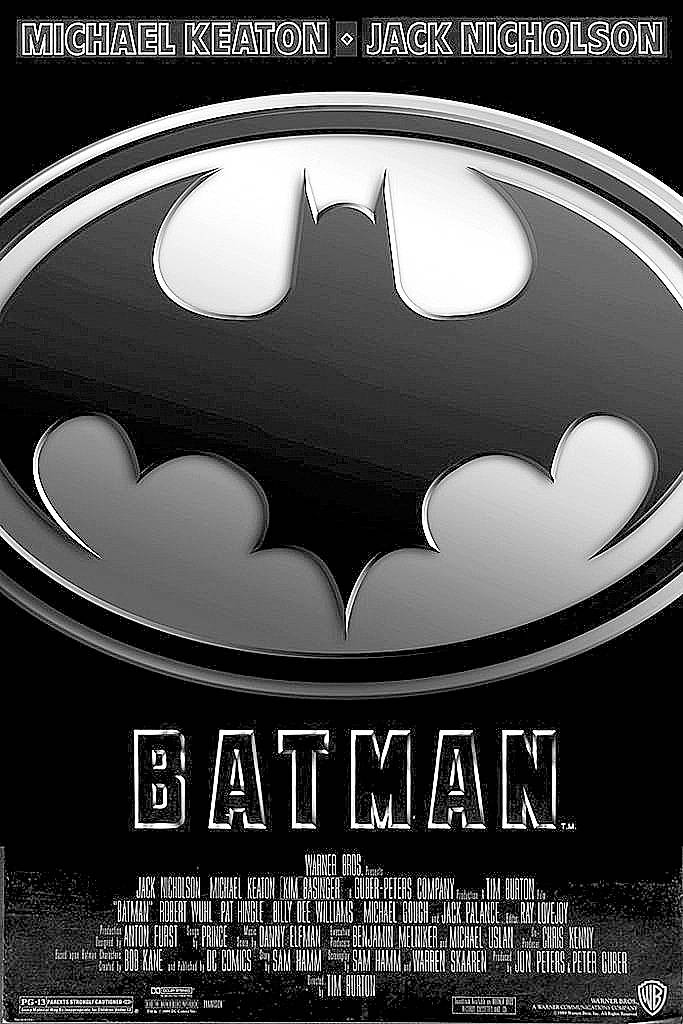
This movie remains a stunning achievement, one of the pillars on which our super hero-obsessed culture rests so heavily. Like “The Crow,” it wisely eschews conventional reality, depicting Gotham as an amalgam of every bad trait we associated with urban life cranked up to 11. It is only in such a cartoonishly vile world that a character like Batman can be taken as seriously as this movie makes us take him, a demand made infinitely easier by Michael Keaton’s strangely magnetic performance.
And then there’s Jack.
The Heath Ledger/Jack Nicholson debate doesn’t interest me (much like Jared Leto’s performance in “Suicide Squad,” wake me up for Joaquin Phoenix’s turn). They are simply two vastly different takes on one of the most interesting villains in all of fiction. Nicholson is mesmerizing, a walking piece of pop art, “the world’s first fully functioning homicidal artist.”
It’s all of Ledger’s nihilism, sans grungy brooding.
It was a huge hit that spawned a hit sequel and made it OK for Tinseltown suits to green light comic flicks. Nothing that came after, for better or worse, would have transpired without this movie.
So, you ever dance with the devil in the pale moonlight?
4. “Road to Perdition” (2002)
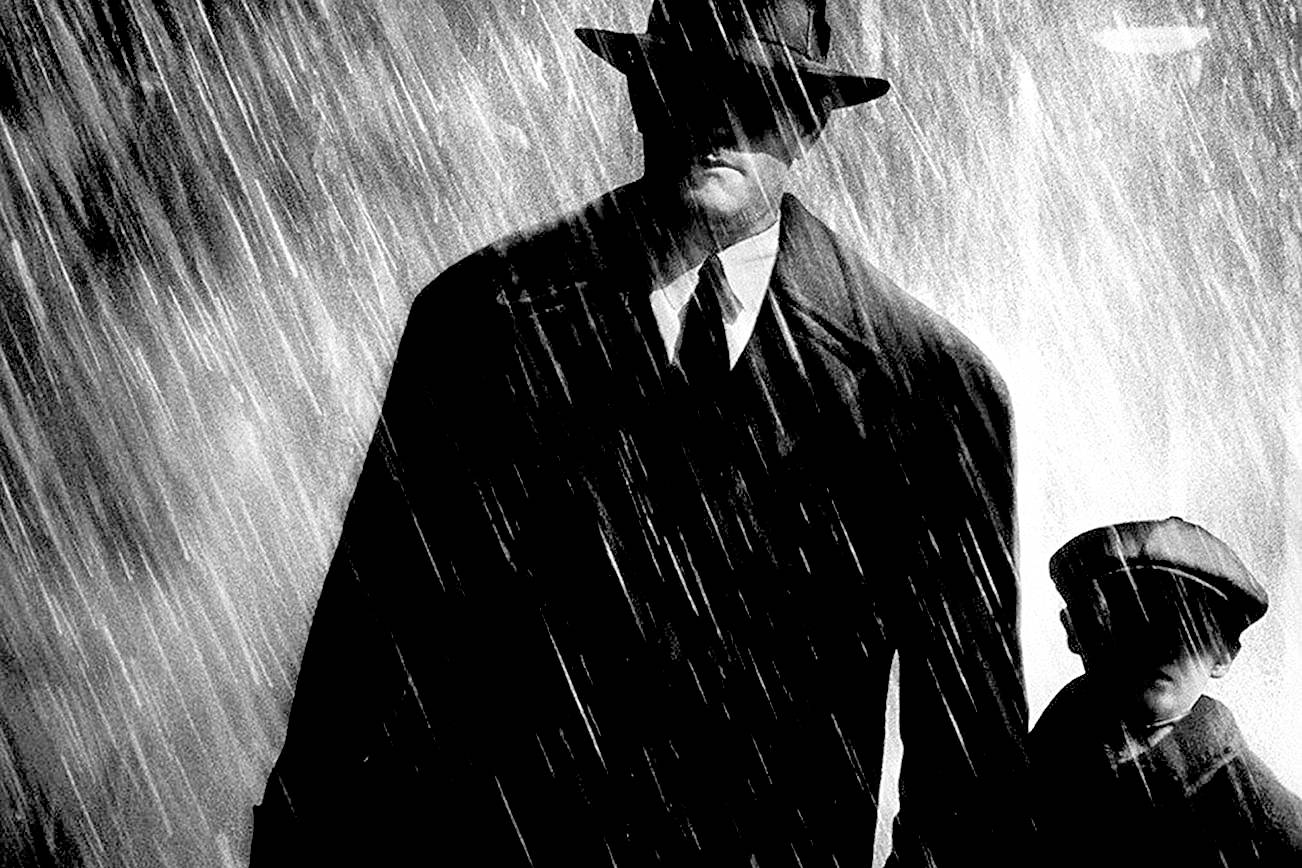
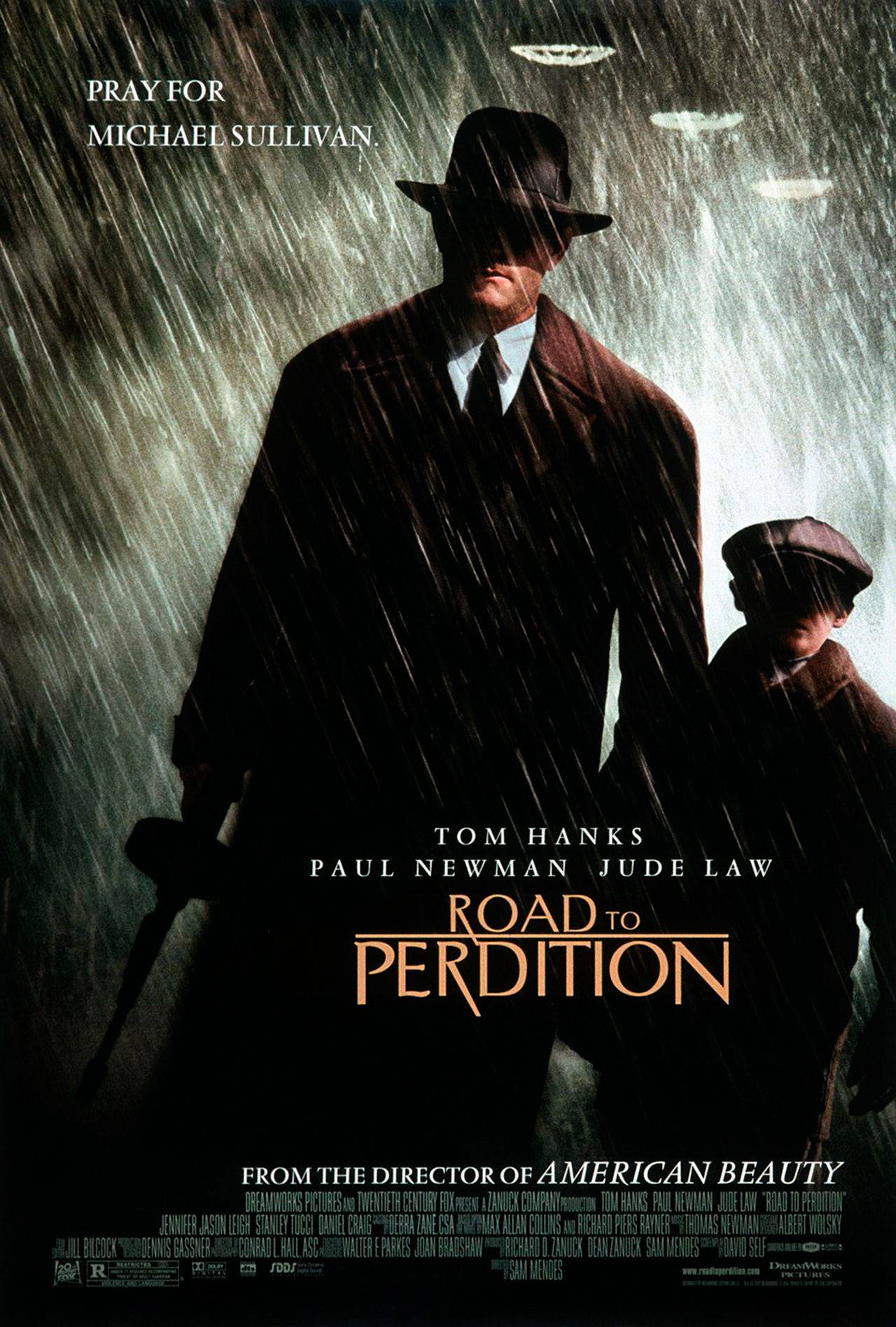
Tom Hanks is the most relatable, sympathetic hitman you’ll ever see outside a Tarantino movie. As simple as it is sublime, the film, set in 1931, during the Great Depression, follows Hanks’ mob enforcer and his eldest son (Tyler Hoechlin) as they embark on a two-man war against organized crime while seeking vengeance against a mob boss’s spoiled son (a despicable Daniel Craig), who murdered the rest of their family. All the while they are pursued by an awesomely creepy rival hitman played by Jude Law.
Directed by Sam “American Beauty” Mendes, the screenplay was adapted from the graphic novel of the same name by Max Allan Collins, who wrote the “Dick Tracy” newspaper strip for many years.
Not as many people seem to know this was a comic first, but it’s a stellar adaptation and a prime example of the rare rewards that await those willing to wade through the glutted swamp of superheroes to find specimens of other breeds of graphic novel.
5. “Uzumaki” (2000)
This one’s not for everyone.
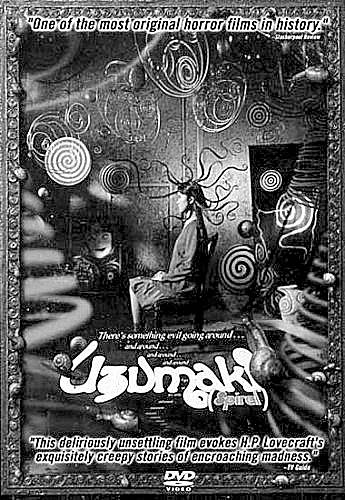
A small town in rural Japan is infected by malevolent spirals, which first alter the landscape, then the people. It’s surrealist body horror, based on the manga of the same name (written and illustrated by Junji Ito, a fascinating character in his own right) and the directorial debut of Akihiro Higuchi (under the alias of Higuchinsky).
More unsettling and disturbing than outright scary, this so-called horror film is more accurately described as strange. It owes a bit to David Cronenberg, a little to Terry Gilliam, and there are visible shades of David Lynch here as well.
Released during the height of the J-Horror craze, alongside better-known films like Kiyoshi Kurosawa’s “Cure” and Hideo Nakata’s “Ring,” “Uzumaki” lacks the terrifying trappings (long-haired girls, haunted locales, evil ghosts, etc.) that international audiences embraced about the sub genre, and was thus less appreciated upon release. Though, in the years since, it’s outspoken fan base has grown considerably.
Honorable mentions:
“Blade II” (2002)
“Batman Returns” (1992)
“30 Days of Night” (2007)
“Ghost World” (2001)