
Chasing the vanishing sun: A road trip to see The Great American Eclipse
Published 1:30 pm Thursday, August 31, 2017

The sound of cars stalling was all I could hear.
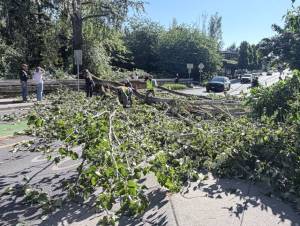
As I stretched my neck, I could see the line of them continuing down the road, under the bridge ahead, and out of sight. We had moved maybe 20 feet in the past half hour.
The “Great American Solar Eclipse” they had called it. Everyone had talked it up, and there were even T-shirts you could get, “Eclipse 2017!” So, it was no surprise to me that even three days before, cars were backed up on Interstate 5 south of Seattle.
The first time that I learned what an eclipse was was in eighth grade; my teacher Mr. Moore had said that during a total solar eclipse, in the path of totality, it felt like the middle of the night. Cows would moo and birds would go crazy.
Recently, I heard that I would be able to see a beautiful ceiling of stars and the Corona, the atmosphere of the sun. It’s fair to say that I had high expectations.
When we finally reached Corvallis, Oregon, my relatives there told me how the city had already warned residents to stock up on food and fill up their gas tanks in anticipation of eclipse chasers. Madras, Oregon had already run out of gas and even briefly closed a section the highway just before the town.
Corvallis, however, did not seem too crowded.
At least not until the day of the eclipse. When it came, there were cars crammed on what seemed like every inch of the streets. A glance into neighborhood yards revealed quite a few tents.
On the day of the eclipse all my relatives and I were gathered around 9 a.m. in my aunt and uncle’s house. My grandma walked in the room.
She slid on a pair of eclipse glasses and went outside onto the deck. A soft “wow…” came from her as she stopped and stared. The eclipse was starting.
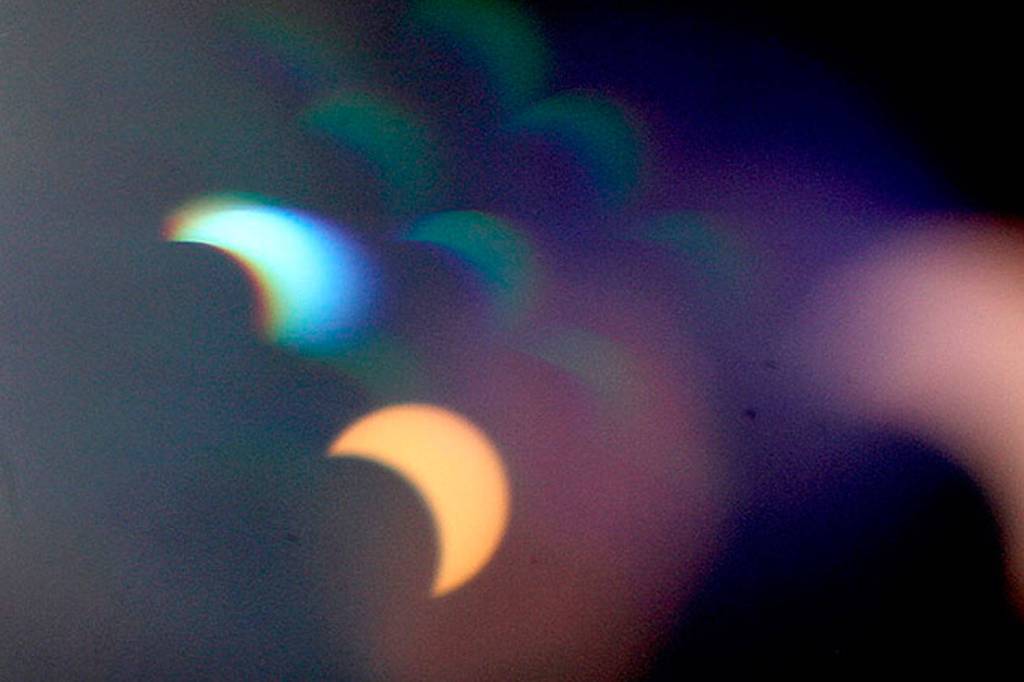
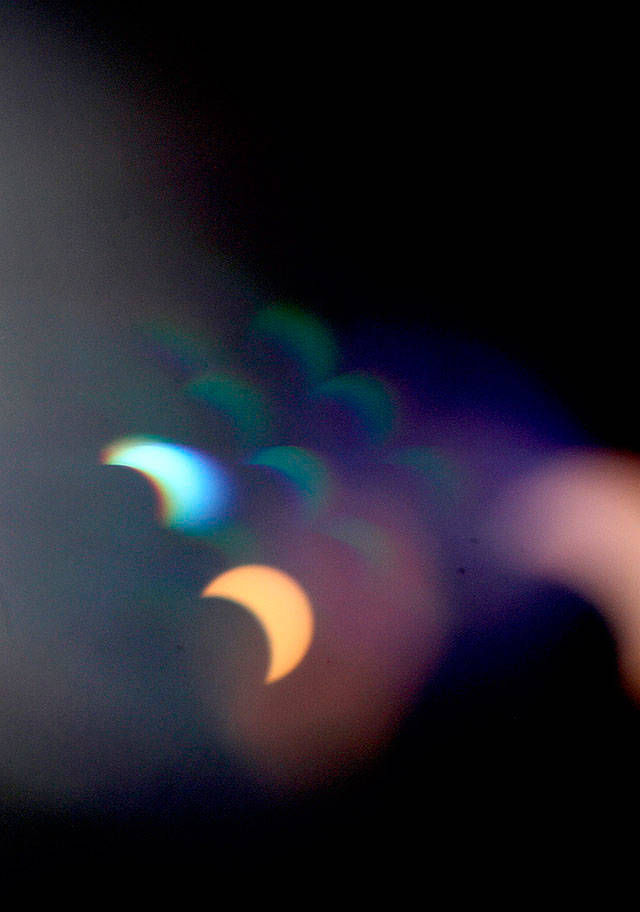
The pile of eclipse glasses disappeared faster than the sun ever thought possible, and everyone jumped up to go outside. I followed, and slid my glasses on once I could see the sun, and then suddenly that was all I could see. It looked different, orange and almost perfectly circular, with sharp lines.
Then the moon came into view, in the top right corner of the sun. You could tell it was there only by the shadow it had started to create. A tiny sliver, encroaching very, very slowly.
About an hour later, it had grown darker, and the sun looked like a “Harold and the Purple Crayon” moon — or at least that’s what my uncle concluded.
There was this eerie light, orange and almost dense. To me it looked similar to dusk when the fires from British Columbia had blown smoke over Bainbridge.
I started to feel a bit of a shiver, and my cousin pulled on a sweatshirt. Everyone was starting to notice the temperature drop around us. Then, the sun was almost gone. My family started to chatter excitedly around me.
“Here it comes!”
“It’s so cold.”
“That’s spectacular…”
A roar rose up across the city. Excitement was in the air and catching.
Then there was only one bright spot of sun, and in a matter of seconds it was gone. Next to me, someone said to take off my glasses.
Cautiously, I slid them off, and the only thing I could think was… wow. It was absolutely incredible. The moon was enormous, and pure black. The Corona blazed behind it, I could see what looked like brush strokes of white light bursting out at three points.
I stood up from my chair, and took a step forward. Three stars were visible, and my dad told us the one we could see directly overhead was Venus.
It seemed like we were in this bubble of twilight. On the horizon the sun shone, painting a border of orange and pink.
As quickly as it came, the eclipse was gone. We put our glasses on and saw it slide away. My family muttered after a few seconds. They couldn’t believe how beautiful it was, and neither could I. They talked about how it felt like seconds, not minutes — and it did. It felt like it was over in the blink of an eye.
“Well, was it worth it?” my dad asked.
I smiled.
“Definitely.”

Best of Bainbridge