Let safety reign: WSF, Coast Guard come together to certify commuter vessels
Published 8:22 am Wednesday, May 18, 2016
It’s been a year. You know what that means.
Take a deep breath. Then, sit for a quick blood pressure reading, a peek in your ears and down your throat, answer a few questions and ta-dah, you’re on your way.
It can be just that simple at a human being’s annual check-up — or even your pet’s visit to the vet.
Things get a little more complicated though, when the patient is a 273-foot-long ferry with a 64-vehicle capacity and very limited down time. It takes a team of four to five Coast Guard inspectors and several Eagle Harbor Maintenance Facility specialists about one full day to go over a vessel for its annual safety certification (two days for the larger boats) and guarantee it’s once again set to sail safely.
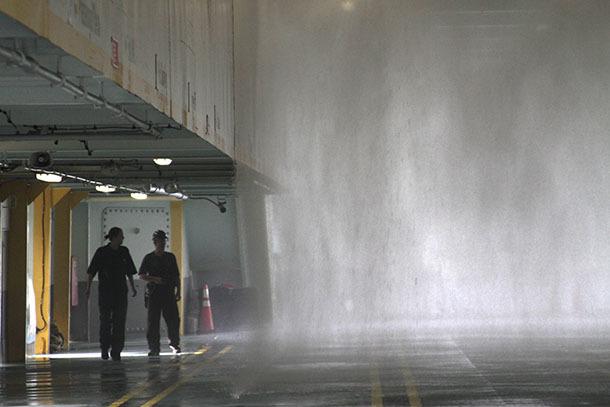
Counting life jackets, testing sprinklers, fire hoses and checking navigation and communication equipment are all critical components of the inspection, which every state vessel goes through annually at the Bainbridge Island facility — and that’s all before you even consider the engine room and its unique myriad of sensors, gauges and gear.
“We go through and successfully prove all of the different systems, the navigation systems and the safety systems and the engine shut downs and things like that,” explained “R.J.” Ran Kelly, the island shipyard’s senior port engineer. “Then the Coast Guard issues us a certificate of inspection.”
The regulations are set by the federal government, Kelly said, in what is known as the Code of Federal Regulations.
“If there are things that the Coast Guard finds that are out of compliance, or they don’t think meet all the regulations, then we get what’s called an ‘835,’” he said. “Which is their notice to us of a discrepancy that they found and it may be, ‘Take care of it in a week,’ or ‘Get it done by the end of the day,’ or it might have engineering involved.”
Some low-key fixes can have a month-long deadline, said Lt. Sarah E. Rodiño, a marine inspector with U.S. Coast Guard Sector Puget Sound, prior to beginning the annual inspection of the M/V Salish — a Kwa-di Tabil-class backup vessel that primarily serves the Port Townsend-Coupeville route — early last week.
Random quarterly inspections are done onboard while the vessel is underway, to test the crew’s ability to deploy a lifeboat or respond to a fire or a security threat, such as a mysterious package.
“I’m in the Prevention Department,” she explained. “Our job is to prevent casualties and prevent any problems on ships.”
There are both domestic and international vessel divisions within the department, Rodiño said, as the Coast Guard is also responsible for similar safety checks on all foreign, commercial and industrial vessels traveling in the region.
Along with the Coast Guard inspectors, ferry certification teams include the individual boat’s engineers, the captain, the deck crew and also Eagle Harbor representatives from several shops — especially the pipe shop and the shore gang, whose areas of responsibility run throughout the vessel.
“It’s kind of a team effort all the way around,” Kelly said, adding that the average ferry passenger would probably be surprised, although perhaps also reassured, to learn about the thoroughness of the inspection process. Coast Guard officials review the plans for each ferry even before it’s built, assuring regulation compliance at every stage of the boat’s career.
“When I tell people I do Coast Guard inspections, people don’t know the Coast Guard does this kind of stuff,” Rodiño said. “I think most people think we’re all in helicopters or on ships.”
Though the state and Coast Guard work well together to ensure each boat’s compliance, Kelly said that there are undoubtedly private companies more focused on cutting costs and increasing profits, who may require closer monitoring.
“We’re not here to make a profit. We’re here to make sure we provide safe and reliable service.”
“The goal is always the same, to make sure everyone’s following all the rules and make sure that we have the safest operations, whether it’s cargo that’s people or cargo that’s some dangerous, hazardous material that could affect the environment or affect the stability of the ship,” Rodiño agreed. “It’s all about just making sure everybody’s doing the right things [and] making sure we’re safe.”