Hewn from history
Published 6:00 pm Wednesday, March 9, 2005
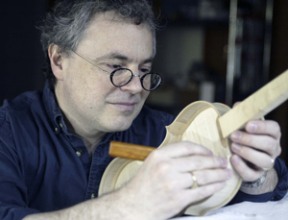
Thomas Mace pursues the lost secrets of violin-making.
Violin maker Thomas Mace is as much detective as artist, as he turns split wedges of maple and spruce into graceful instruments.
Like nearly all violin craftsmen, Mace bases his instruments on those of 18th century master violin maker Antonio Stradivarius, whose instruments, like those of fellow Italian Joseph Guarnarius del Gesu of Cremona, have not been equaled to this day.
The techniques were lost during the Napoleonic wars when Northern Italy, including Cremona, was overrun by Napoleon’s troops in the early 19th century.
“Probably the last apprentices were refugees,†Mace said. “The education of the next generation just didn’t happen. There are a lot of basic things we (still) don’t understand.â€
Mace specializes in crafting hand-made stringed instruments for playing early music, including viola da gambas – a six-stringed, early cousin of the violin that’s played like a cello – as well as violins, violas and cellos.
The baroque instruments differ from their modern descendants. The violin, for instance, has no chinrest and a shorter fingerboard, and gut strings rather than steel.
The art is easy to see, from the nautilus-like scroll at the end of the instrument that may be an elaborately carved human face on a viola da gamba.
The detective work is trying to “reverse en-gineer†how the grand masters made instruments that sound so wonderful.
Approaches include the German Mittenwald school of violin making that Mace studied in Nuremberg, Germany, that emphasizes accuracy of workmanship and “extreme mastery of tools.â€
The thickness of the violin top or back will be measured with highly accurate calipers by German school makers to exact thicknesses.
But Mace reasons that Stradivarius did not have access to such instruments. From his experience, he also finds that thickness is not a good indication of sound.
Having seen many master instruments, he finds the thicknesses to be “all over the map.â€
“I have to draw the conclusion that they didn’t care,†Mace said. “We’ve made progress in not trying to view (construction of the master instruments) in our own times.â€
He cites the famous violin by Guarnarius del Gesu once owned by Nicolo Paganini. The famous 19th century violinist called the instrument “The Cannon,†Mace said, for its tone that was “brilliant and powerful to a degree you don’t expect from an antique instrument.â€
Kept locked up by the city of Genoa, the instrument’s wood is surprisingly thicker than other master instruments, Mace says. That, he said, “(suggests) the extent to which current (antique) instruments have been worked over and worked over, repaired to death.â€
Old school
Mace’s foray into stringed instruments began with gluing together parts of “junky violins†as a teen to building a clavichord from a kit as a freshman at Oberlin College and then a harpsichord the next year.
After several years of training and working in Europe on the restoration of historical musical instruments and making of stringed instruments, Mace returned to the U.S. in the 1980s.
In New York, barely surviving, he found himself with most of his work being repairs rather than creating his own instruments.
Fortuitously, by way of writing for a high tech magazine, he ended up joining a small, Seattle start-up in 1996 called Amazon.com, which gave him the financial security in 1999 to return to instrument making.
Mace calls the present day a “golden age†for violin makers, as antique instruments are priced in the millions of dollars, with the Stradivarius instruments frequently owned by corporations and then loaned to world-class soloists.
Any good antique Cremonese instrument will fetch $1 million, Mace estimates, while a fine modern instrument can be had for $8,000, the same price as a worn, no-name maker’s instrument from the 19th century.
“If you want to buy a violin, you pretty much have to buy a modern instrument,†Mace said.
Returning to violin making older and more mature, Mace looks at the craft differently.
“When you’re an apprentice, you assume a body of knowledge is complete. Only once you have mastered that, can you ask, do we really know what we think we know?†Mace said.
“There are some makers I profoundly admire. They’re changing working habits and willing to try something new while keeping an eye on the antiques.
“If you get satisfied with your work, you’ll never progress.â€
* * * * *
Olde strings
For more information on Thomas Mace’s work, see www.earlystrings.com or call 855-0929.