
Some clothes never out of style
Published 12:00 pm Wednesday, June 29, 2005
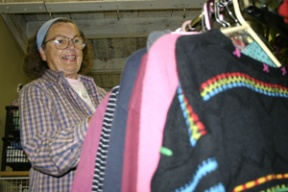
Helpline House is providing the essentials to those in need.
Loading up the family tent and taking off for a week’s vacation is an ideal way to celebrate summer.
Camping on the beach because you have nowhere else to live is not.
Although that snapshot doesn’t fit Bainbridge Island’s idyllic image, there are homeless people here and they need help, say representatives of Helpline House, the nonprofit community resource organization.
“We would like people to know that there is this community of people who are homeless on Bainbridge,†said Marilyn Gremse, manager of Volunteer Services at Helpline House. “We have seen the number increase in the past two years. We have some chronic homeless and a lot of people in transition.â€
Throughout the island, people without permanent shelter put down tenuous roots in the woods, by the ferry terminal and behind local businesses.
Of these approximately 30 people, most are older single men; many are women with children. Two-parent households are not uncommon. This number doesn’t include teenagers, who tend to “couch surf,†drifting from one friend’s house to another.
“We started checking our records at (Helpline’s) Clothing Connection,†said volunteer Patsy Campbell. “We ask clients to sign in. A fair number of people don’t put any address down. Sometimes people say ‘homeless’ or ‘car’ for their address.â€
Some Clothing Connection clients are repeat visitors. They get their clothes and six months later come back for more.
“It costs $2 minimum for a (wash) load of clothes. If you have a few cents, you’re going to buy food,†said Campbell, who has volunteered at Helpline for two years. “It makes more sense to come back and get something clean to wear.â€
This, Campbell said, defies the perception that “everyone on Bainbridge is wealthy.†Low-income housing has helped a lot, she said, “but for the homeless, the down and out, they’re really out.â€
Another outdated perception is that every homeless person is either an alcoholic, a druggie or mentally ill.
Although a percentage of people who live in tents or cars do have such problems, a goodly number are down on their luck because they lost their means of compensation, had health or credit issues or were beset by a string of unfortunate circumstances.
Campbell described one such family: The father had lost his job and the family, including a 3-year-old child, were evicted from their apartment. They had no choice but to live in their car.
Local help
The Clothing Connection provides a variety of items to help men, women and children in transient situations. Some clients are going for a job interview, Campbell said, and “we dress them up in wonderful outfits.â€
The clothing bank is located inside the Helpline “barn,†a tidy, well-lit series of rooms used for sorting and displaying donated goods, which include much-needed sleeping bags, blankets, transportable cooking supplies and toys, and a dressing room.
The Food Bank is located inside the main “farmhouse†building. Here clients fill out a grocery list and select the items they desire.
Choices range from milk and meat to canned goods and diapers. Fresh produce and toiletries also are available. The only bagged items are government commodities, such as dry milk, canned chicken, dried fruits and nuts.
Clients must complete a card that asks for the names and birth dates of all members of the household. Proof of residency is required on the second visit.
Some homeless situations reverse themselves with time. Others never do because the people feel more comfortable sleeping outdoors and living from job to job.
Robert – an affable, well-spoken gardener in his 50s – is a case in point.
He moved from Seattle to Bainbridge four years ago because a taxi driver told him it was a safer place to live.
Robert got $20 together and bought a ferry pass. Before a recession hit the apple orchards, he was a farm laborer in the winter months.
About four years ago, he got cleaned up enough to get repeat gardening jobs through Helpline House, he said.
“These people really take good care of you,†he said.
Robert takes good care of himself, too. He has a pool pass and a health club pass and keeps himself clean.
He doesn’t get assistance from social service agencies because he won’t agree to be labeled an alcoholic. He is not one, he said, but that’s what it takes to get help from social services.
Robert once had a home and could take care of most of his bills. Then new government trade agreements made it so banks wouldn’t give loans to orchards and he couldn’t find work any more, he said, adding he “never really earned enough money to get off the streets.â€
It’s hard for men in their 50s to find jobs, he said.
“Robert is a very good worker who lives a creative lifestyle,†said Clara Manny of Helpline House’s volunteer services. “He comes in here to use the phone and get job referrals.â€
He also is an optimistic individual, sure that the farming situation will turn itself around. It always does, he said.
Of his life he said, “It’s not so bad. A lot of people (in the community) have a tendency to help. If they like the garden (he has worked on), they let me stay there…if they have an extra house.â€
Robert has accepted offers to live in houses for several weeks at a time, but he always returns to the land. He beds across the bridge on the reservation because he “feels safer with the Native people†and they leave him alone.
People like Robert “can’t live in a space with other people,†Manny said. “They can’t be boxed in. They have amazing survival skills.â€
Robert doesn’t own a car anymore because of the expense and because “the police will stop you more often. They can tell if you’re living in your car,†he said.
Police Chief Matt Haney said the level of homelessness is different on Bainbridge than in Seattle, and so is its perception. Islanders aren’t approached by aggressive panhandlers as they are in the big city.
Said Robert, “We tend to be as invisible as you can be.â€
* * * * *
Lend a hand
Helpline House needs donations of items, time and money 12 months of the year, said Marilyn Gremse, volunteer manager. Topping the list at the Clothing Connection are: sleeping bags; quilts; cooking utensils; camping gear; and any type of seasonal clothes, especially sweatshirts, T-shirts, jackets, pants, underwear and boots. Volunteers also help clients put together outfits for job interviews, so business-appropriate clothing is welcome. The Clothing Connection is open from 9:30 a.m. to 12:30 p.m. Monday, Wednesday and Friday.
The Food Bank accepts nonperishable and perishable food; diapers; and toiletry items (such as toothpaste, toothbrushes, shampoo and conditioner). It is open from 9 a.m. to 5 p.m. Monday through Friday; and until 6 p.m. on Wednesday. Clients are welcome to go around to the side of the barn building to take whatever bread and produce are there. This area is open 24 hours a day.
For more information about Helpline House, visit the facility at 282 Knechtel Way NE; call 842-7621; or see www.helplinehouse.org.