
Photo album for a community
Published 1:00 pm Wednesday, May 4, 2005
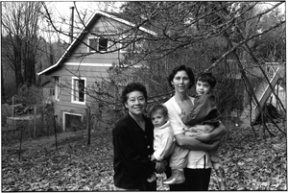
Joel Sackett and Candace Jagel team up for a new book.
It’s a snapshot, not a catalog.
“An Island in Time,†photographer Joel Sackett and author Candace Jagel’s new book, presents visual and textual portraits of 40 islanders – a candid look at a cross-section of who’s at home here.
“We never intended to be comprehensive,†Sackett said. “I didn’t set out to cover everything.â€
However, “An Island in Time†does manage to cover a lot of Bainbridge turf. Many layers of island life are represented, a diversity that Sackett – whose annual photographic exhibits of islanders have been a fixture in the window of the late, lamented Winslow Hardware and Mercantile – has long been attracted to.
“Early on, I realized that diversity was, for me, more about the choices of different lifestyles,†he said, “and there’s a lot of that here.â€
The book’s 40 subjects include a live-aboard family, a city council member, a long-time resident who lived in a commune here in the 1970s, and a developer.
While some subjects are likely to be familiar, prominent islanders influential for decades, Sackett and Jagel make a point of including less-well-known neighbors as well.
The straightforward likenesses of islanders in their everyday settings are complemented by Jagel’s wonderfully intelligent interviews.
While the highly public nature of the venue might have suggested that the text never rise above the generic – the book’s images and overall design are certainly attractive enough to qualify as a “coffee table book†– the narrative formed by image and text together ensure that the publication is much more.
Themes emerge in the texts that are ongoing island conversations – perhaps most notably, changes to the community as Bainbridge is developed.
“People speak their minds, and sometimes they say things that are critical to different degrees about Bainbridge Island,†Sackett said. “But when people approach the book they have choices. There are different levels of experience, different levels of information.â€
One may enjoy simply looking at the images, Sackett points out, if issues raised by some of the text are off-putting.
“You could take this as a coffee table book,†he said, “but you’d be missing a lot.â€
Jagel and Sackett shaped their creative collaboration with “a lot of front end mental work†to tap a richer and more complex story.
The collaborative process had Sackett contacting a potential subject, photographing and explaining the project. Then, most often, it was Jagel who would initiate a series of conversations that, when transcribed, were as long as 25 pages.
But the interview began with a promise that each subject would have the right to excise whatever they found objectionable. That knowledge made interviewees comfortable enough to be candid, Jagel and Sackett believe.
“People know right up front we’re not running to the press with this,†he said. “We’re going to go back and forth a bit. So say what you want and then you’ll be able to tune it.â€
From the long interview, Jagel would cull one or two pages.
That process of distilling information into a story, coupled with deleting material at the subjects’ request meant jettisoning much that was interesting, Jagel points out.
That she has been able to preserve as much as she evidently has, may well be a tribute to the tact and good sense of collaborators who thought carefully about how to work together.
The painstaking process took many months, and so completing segments of the book was interspersed with Sackett and Jagel’s other projects and day-to-day life.
“I think it’s a luxury to be able to work like this,†she said, “to be able to spend that time.â€
“An Island in Time,†self-published with the help of local benefactors, is on the shelves at Eagle Harbor Book Co.
“People are already responding to it in very different ways,†Sackett said. “Everyone’s going to read it differently. Some people are going to look at it once and put it away. Whether people read it from cover to cover or absorb one excerpt at a time, the book is a lens that brings into focus an island that can be devilishly difficult to define.
“There’s a lot to chew on,†Sackett said. “In a book like this, people go back to it.â€