An Earth Day message: Don’t sit idly by
Published 8:00 am Wednesday, April 16, 2008
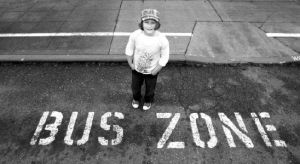
Julia Fradkin and her mom, Linda Mangel, spent two mornings waiting outside Blakely Elementary School this past winter.
During one of those parked ventures, they found themselves cracking up when the biggest sport utility vehicle they’d ever seen pulled up at the entrance to school.
“And this miniature girl got out of it,” Julia said. “It was like a woman being escorted by the entire U.S. Army. We counted it as two.”
Julia and her mom were counting cars as research for a science project Julia took on for Blakely’s annual science fair.
The school provided plenty of project suggestions for the fair, many of which, Julia said, involved dramatic visuals like erupting volcanoes and balloons being blown up by gas created in soda bottles.
Last year’s most popular experiment was to dump Mentos candies into a 2-liter bottle of cola, and wait for the liquid fireworks.
These types of flashy experiments have their place; they can help get students interested in scientific principles, and keep them engaged.
But Julia had a more globally pressing question in mind.
“I’m thinking, what about cars, what about pollution?” she said.
Julia, a bubbly third grader with an orange polka-dot manicure, blue plaid bermuda shorts and a direct gray-green gaze, said she loves being at her neighborhood bus stop every morning.
With siblings and parents joining the half-dozen Blakely students waiting to be taken to school, it’s like a party.
On the other hand, every morning she also sees Blakely kids being driven past the bus stop by their parents. Sometimes they even wave.
“Some moms say, ‘I’m driving by school anyway, so I might as well drop them.’ But the thing is, you’re waiting in that long line, and there’s all that idling,” she said.
Drop-off fumes linger, she added, creating an unwelcome if invisible fog over morning recess.
“All that gas is still there,” she said.
So the question Julia decided to answer, which could also be regarded from her perspective as a problem statement, was “How much carbon dioxide pollution is caused by Blakely students being driven to school each morning instead of riding the bus?”
That’s what put the student and her mom near the entrance to school for two days – enough time to create a reasonable representation without driving themselves bananas by counting cars.
Then, using a calculator available on the Web site www.conservation.org, they calculated the amount of pollution generated by each car for each mile it drove.
Small cars emitted .25 lb. of CO2 per mile; mid-size cars and SUVs, 1 lb.; small SUVs .91 lb.; and large SUVs 1.35 lbs.
Projecting the two days out into a yearly average, and getting some assistance from the school principal to figure driving distance averages per family, she found that each kid’s drop-off amounted to 44.55 miles per year, with each car idling at the curb for an average of 1.4 minutes per morning.
These figures, calculated with the number of each type of car they counted, amounted to 59,072 lbs. of carbon dioxide pollution created each year just from drop-offs.
To put it in terms that a kid could imagine, that translates to 2 million basketballs filled with CO2, or 5,000 basketballs for every student. Or, in super-sized imagery, two Goodyear blimps.
With some typing help from her parents, Julia laid out all the information on two pieces of black-papered foam core board.
And while it wasn’t the fanciest project in the fair, it got some people thinking. One parent told Julia that after seeing her display, she switched from idling in the pickup line to parking her car and turning off the ignition.
Next on Julia’s list may be to expand her study to encompass idling in the ferry lines, a practice she’d particularly love to see the tail end of since her dad, Steve Fradkin, bikes onto the ferry each morning and has ridden through his share of fumes.
Meantime, Julia seems alternately pleased and nonchalant about her project. On the one hand, her teacher, Ms. Young, thought it was great, maybe the best one of the year. On the other hand, perhaps because her peers don’t drive yet, they haven’t quite caught on to the concepts.
“Kids thought it was the boringest thing in the science fair, but grownups thought it was the most interesting,” Julia said.