
IslandWood to host 26th annual Mochi Tsuki event
Published 9:43 pm Tuesday, December 23, 2014
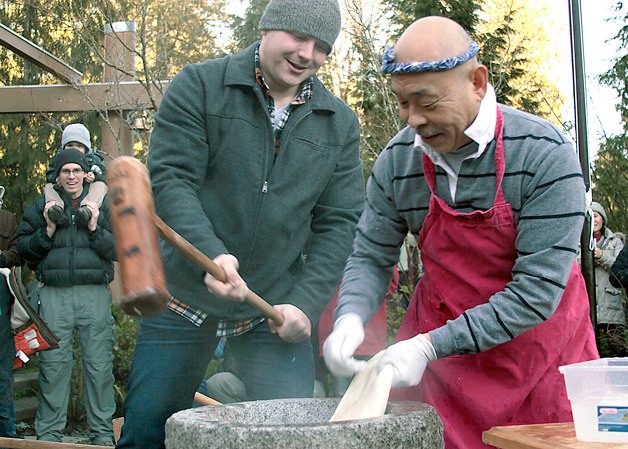
The 26th annual Bainbridge Island Mochi Tsuki event has been slated for Sunday, Jan. 4 at IslandWood.
For over a millennium, making and eating the sweet rice treat mochi (moe-chee) has been a celebrated New Year’s tradition in Japan, with generations of families and communities coming together to wish good health and prosperity for the new year.
One of the nation’s longest-running public mochi tsuki (moe-chee-zu-key) events, the Bainbridge Island Japanese American Community (BIJAC) will again welcome guests and visitors to the annual community celebration from 11 a.m. to 3 p.m. Sunday,
Jan. 4 at IslandWood (4450 Blakely Ave. NE), where staff and volunteers will offer tours of the award-winning “School in the Woods.”
The event is free, though donations for mochi are welcome.
Parking is limited at the site and nearby Blakely Elementary School and carpooling is strongly encouraged.
Event highlights include performances from the acclaimed Seattle taiko drum group Kokon Taiko and, to comply with fire safety laws, each of the three taiko drum performances will be limited to
175 seats.
Free tickets for each performance will be available 20 minutes prior to each performance on a first come, first served basis.
Models and renderings of the Bainbridge Island Japanese-American Exclusion Memorial “Nidoto Nai Yoni – Let It Not Happen Again” National Historic Site will be on display, along with the award-winning exhibit “Kodomo No Tameni – For the sake of the children.”
BIJAC members will prepare some batches of mochi in the centuries-old method of first steaming the sweet rice over an open fire, then placing the cooked rice into a warm stone or concrete bowl called an usu. Using large wooden mallets, two people rhythmically pound the rice in the usu, while with bare hands a third person swiftly moves the rice between each mallet crash.
After several minutes of vigorous pounding, the rice becomes a thick, smooth dough — mochi. From manual pounding in the usu or special mochi-making appliances, the mochi is removed and children of all ages hand form the steaming-hot mochi into small handball-sized cakes, filling some of them with a sweet bean paste called ahn.
While mochi is arguably best eaten hot and fresh, many enjoy roasting it in the oven, then dipping the puffy and crisp hot mochi cakes into a combination of sugar and soy sauce. For future enjoyment, mochi can be frozen in airtight bags.




Best of Bainbridge