
Getting schooled in the art of saving lives: Firefighters gather on Bainbridge for extrication training
Published 12:18 pm Wednesday, May 13, 2015
 A person is killed in a traffic accident in this country every 13 minutes.
Roughly 9,000 fatalities result every year from rollovers, more than 8,000 from offset crashes and more than 2,000 from rear end collisions, according to the Puyallup Fire Extrication Team.
In the face of such daunting figures, first responders know they are facing an uphill battle at best, and rely on quality training and the very best equipment to remove people from damaged vehicles in the quickest and safest way possible, knowing that every second really could be the one that makes the difference between life and death.
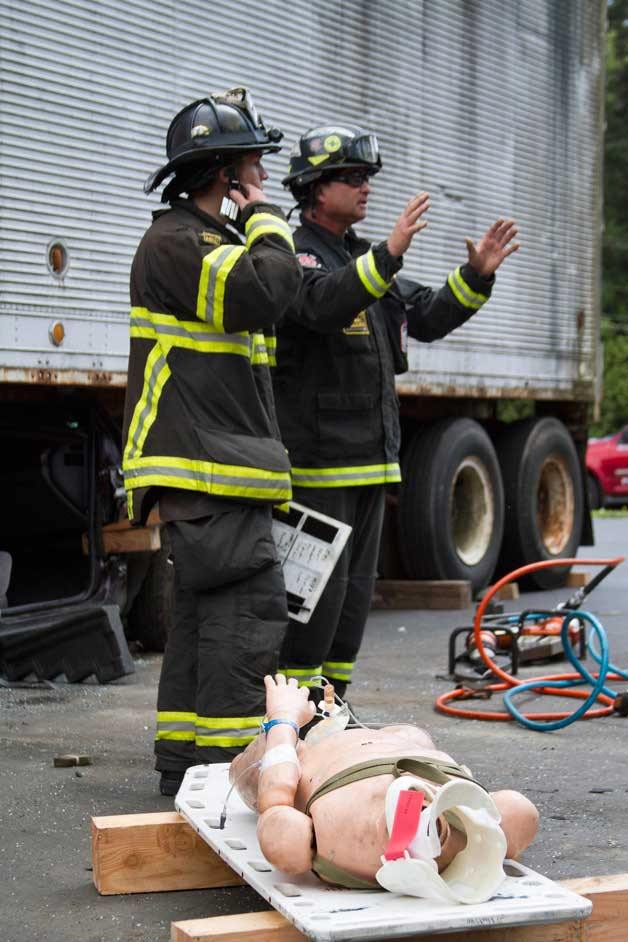
To that end, firefighters from several departments around the county, including Bainbridge, North Kitsap Fire & Rescue, Poulsbo and Suquamish, gathered at the Phelps Road station on north Bainbridge for several days last week for both basic and advanced extrication training sessions with the specialists from the Puyallup Fire Extrication Team, a nonprofit education group made up of experienced first responders who offer specialized courses in a variety of life-saving procedures including basic and advanced auto extrication, confined space rescue and the best on-scene “command and control” techniques.
Training the various departments together is essential as they so often respond to assist each other, explained Bainbridge Island Fire Department Assistant Chief Luke Carpenter.
Several unique scenarios were worked through during the training, Carpenter said, including a vehicle trapped under a school bus, a car stuck under a large trailer — and patient removal from both — as well as more typical patient removal from damaged cars using cutting and prying equipment.
“It’s this juggling act of keeping us safe, keeping the patient safe and getting them out of there literally before they die,” he said. “It’s [about] our safety, the patient’s safety and the fact that the clock is ticking.”
Capt. David Dilley, the Bainbridge department’s training officer, was the primary organizer of the event.
Though incidents requiring these kinds of responses to do not happen often, he explained, the training was essential, especially for the less experienced members of the department, to ensure the best possible help.
The vehicles that were sacrificed to the training were hauled to the station by Ron Jake of Bethel Towing and purchased from a scrap yard, after having been drained of fluids, at a discounted price by the fire department.



Best of Bainbridge
