WSF reports staffing improvements for deck, engine employees
Published 1:30 am Wednesday, May 27, 2026
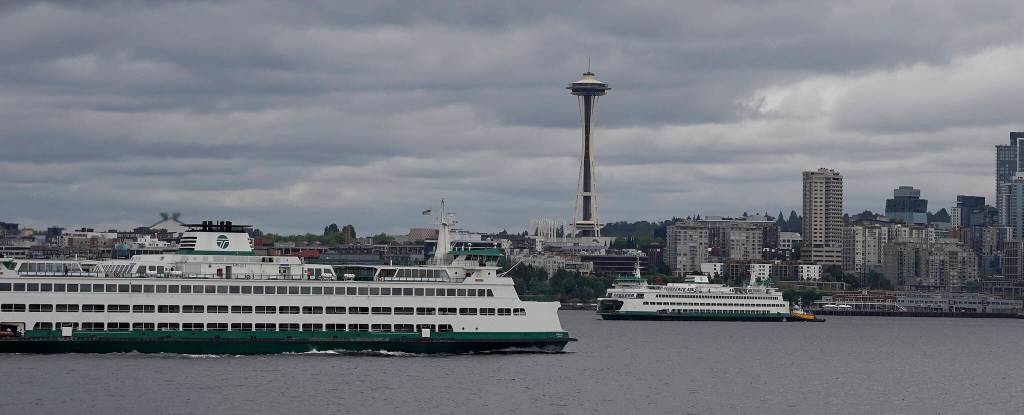
Washington State Ferries held its second community meeting of the year May 26, which included updates on workforce development and the 2026 legislative session.
WSF deputy secretary Steve Nevey said the agency has made progress on staffing compared to previous years, when the agency struggled with crew shortages among other operational challenges.
“Everyone is well aware that coming out of 2021 and heading into 2022, we’re in a very dire situation when it comes to staffing numbers and our ability to crew our boats. Over the last few years, we’ve made steady progress and are rebuilding the workforce necessary to be able to crew our boats reliably,” Nevey said. WSF reported in 2022 that the agency had roughly 656 deck and 370 engine employees, and in 2026, this increased to 817 deck and 462 engine employees.
“In addition to increasing the overall count in both of our onboard departments, we’ve increased our licensed deck officers by 34 positions and our licensed engine position by engine positions by 50, so that’s the most critical piece we’ve managed to get people from the entry level positions up into those licensed positions where we need qualified, trained mariners that meet their U.S. Coast Guard requirements and have the licenses required to operate in those positions,” Nevey said.
Nevey said a 2022 report highlighted 53% of captains and 34% of chief engineers were at or within five years of retirement at 65. In 2026, WSF reduced this to 40% for captains and 23% for chief engineers. “As we’ve added new positions throughout the system, we’ve also reduced our retirement risk. Obviously, I’d like both of those numbers, captains and chief engineers, to be around 20% for us to be considered ‘healthy’, but really encouraged by the way that we’re trending in these areas,” he said.
WSF director of external relations Jenna Forty provided an update following the 2026 legislative session. Forty said $1 billion was proposed by Gov. Bob Ferguson for vessel construction, with additional proposed funds of $150 million to support older vessels in the fleet. Forty said the proposal was ultimately unsuccessful, adding, “We can expect some continued conversations with the governor and legislature in the longer 105-day session, which will start the second Monday of January 2027,” she said.
Forty said the budget retained funding for the construction of new vessels and funding for three of the agencies’ planned terminal electrification projects. The legislature approved funding that aims to support the WSF’s maintenance and preservation programs, including a $500,000 feasibility study to evaluate state-owned dry dock space, which the agency intends to report to the legislature by June 30, 2027.
“Additionally, we received some funding [$254,000] to support warehouse and procurement staff to help manage our parts and supplies. $2 million for a rapid response maintenance team to be based at our Eagle Harbor Maintenance Facility [on Bainbridge Island], so we don’t have to pull some of our workers off of the active layups when we have an unexpected vessel issue,” Forty said. She said WSF also received $19 million in investments to improve and expand the Eagle Harbor Maintenance Facility over six years.