
Kitsap 911 working to fill dispatcher vacancies
Published 1:30 am Thursday, March 5, 2026
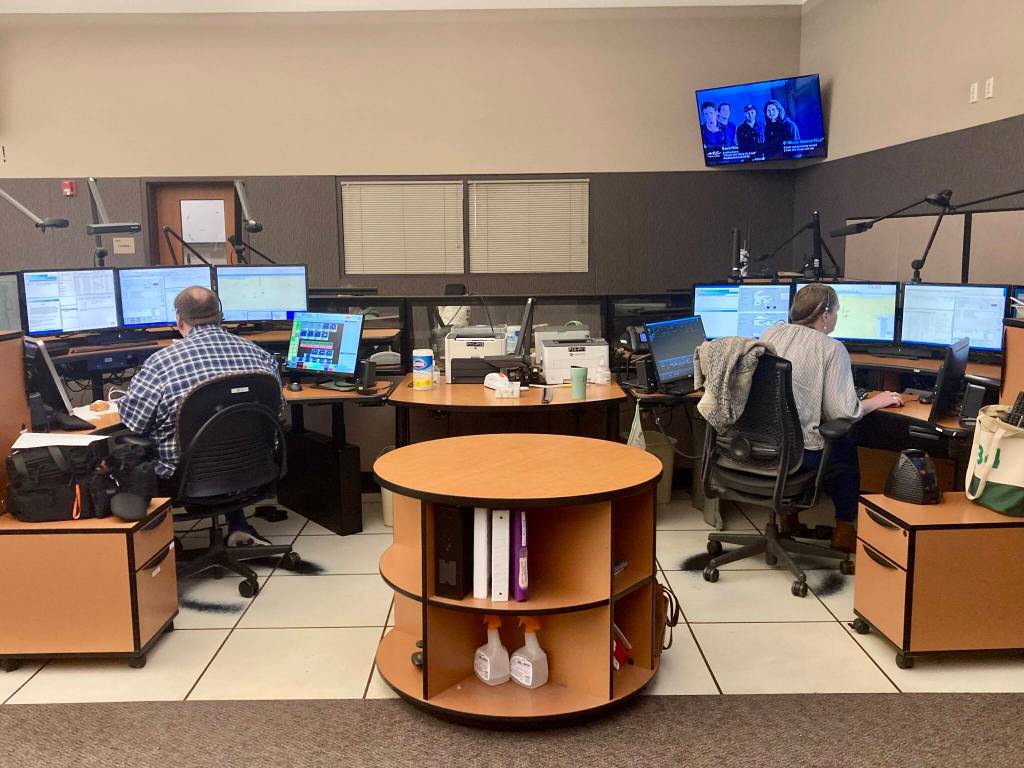
Kitsap 911, the agency that handles 911 services in Kitsap County, is working to fill six dispatcher positions.
The agency has reported its lowest vacancy rate in roughly two years, Kitsap 911 executive director Maria Jameson-Owens said.
“We did a lot of work to make Kitsap 911 a place people want to work, want to be there for the long haul, because we know it’s a difficult job. It’s a hard job to do. Even when you’re out of training, you’re taking hard calls, you’re dispatching hard calls, your all day is a difficult process. And it’s long days, it’s holidays, it’s weekends, it’s all the things you’re going to miss with your family and friends. We want the atmosphere and the culture to be someplace people want to be,” she said.
Kitsap 911 has 86 employees across the organization, with the bulk of employees in operational roles, which include call takers, dispatchers, and supervisors. Jameson-Owens said Kitsap 911 staff worked with the board to change pay, benefits, and overall culture of Kitsap 911 in an effort to improve the agency’s staff retention. The 2024 retention rates for all employees for non-probationary employees are 84.9% and 81.3% for probationary employees. The average tenure of staff is approximately 7.78 years across the agency.
Jameson-Owens described some of the complexities of hiring and training.
“It’s a long process to fill positions, to get everybody trained and on board. And the problem with being short is that we can’t just work without them. We have to have somebody covering that slot during the day. So people were working huge amounts of overtime, huge amounts of mandatory overtime, because somebody has to be there to answer the call, and somebody has to be there to dispatch the call,” she said.
Jameson-Owens said the hiring process and training can be time-consuming and take roughly a year, adding, “the last time we did a recruitment, we wanted to hire six, and we could only hire four, because the process is difficult.” The process includes: two interviews, undergoing a criminal background check, and additional testing. “We had over 200 people apply, and at the end, we could hire four out of those 200 that met all the criteria,” she said.
Call takers answer 911 calls, while dispatchers are responsible for dispatching emergency services, including law enforcement and fire/EMS services, to an incident. Additionally, dispatchers are responsible for answering 911 calls when call volume exceeds the ability of call takers to handle, Jameson-Owens said.
“Depending on the circumstances and depending on call volume, depending on what the actual calls are that they’re taking, a dispatcher may have to jump in and answer a call. It happens more frequently than we would like,” she said.
Staffing challenges aren’t unique to Kitsap 911, but rather part of a larger national trend, per Jameson-Owens.
“I mean, maintaining employees, everybody in 911 across the nation has had problems with retention. At certain points, people were below 50% staffing. We never got that low. But to combat that, we had to do something to make it work for Kitsap 911, and that entailed just a lot of changes and updating and changing with the times,” she said. “ I’m sure other agencies are doing different things, but everybody’s combating that staffing issue.”
Kitsap 911 provides training in-house to new candidates, including full-time 5-day-a-week classroom work and answering 911 calls under the supervision of a trainer. The academy includes: book knowledge, tests, and activities. Once candidates pass the book portion, they move onto the floor with a one-on-one trainer, she said.
“So they’re actually on the phones, but a trainer is connected directly to them and can control their screen, take over a call, and can hear everything they’re doing,” she said. Call takers also get daily feedback, and supervisor observations checking in on them. Call-taker training takes roughly 12-16 weeks, and all initial hires start in the call-taker role. Dispatcher training takes an additional 10-12 weeks and includes both classroom-based training and training on the floor with a one-on-one trainer. Dispatcher training is further broken down to separate law enforcement and fire dispatching academies.
Call takers are trained to take law enforcement, fire, and EMS calls, Jameson-Owens said. She said Kitsap 911 is answering upwards of 99% of calls within 10 seconds, and members of the public shouldn’t notice the current vacancies. However, this can have a larger impact on staff, adding “there may be a time where we’re short a call taker, but other people are filling in to answer those calls,” she said.
Jameson-Owens described some of the skills that make a successful 911 call taker and dispatcher, including having a good memory, the ability to think on their feet, and making quick and accurate decisions.
“It’s not like you could train somebody to say for every domestic violence call you do, A, B, and C. Because even the things you say are different depending on the situation, the resources you send are different depending on the situation,” she said. “Every single call is different, which some people love in the job, because it’s a variety. You never get bored. You’re not stagnant. But other times, it’s the learning curve that is somewhat difficult.”


Best of Bainbridge
