KT continues work to improve bus stop accessibility
Published 1:30 am Thursday, February 26, 2026
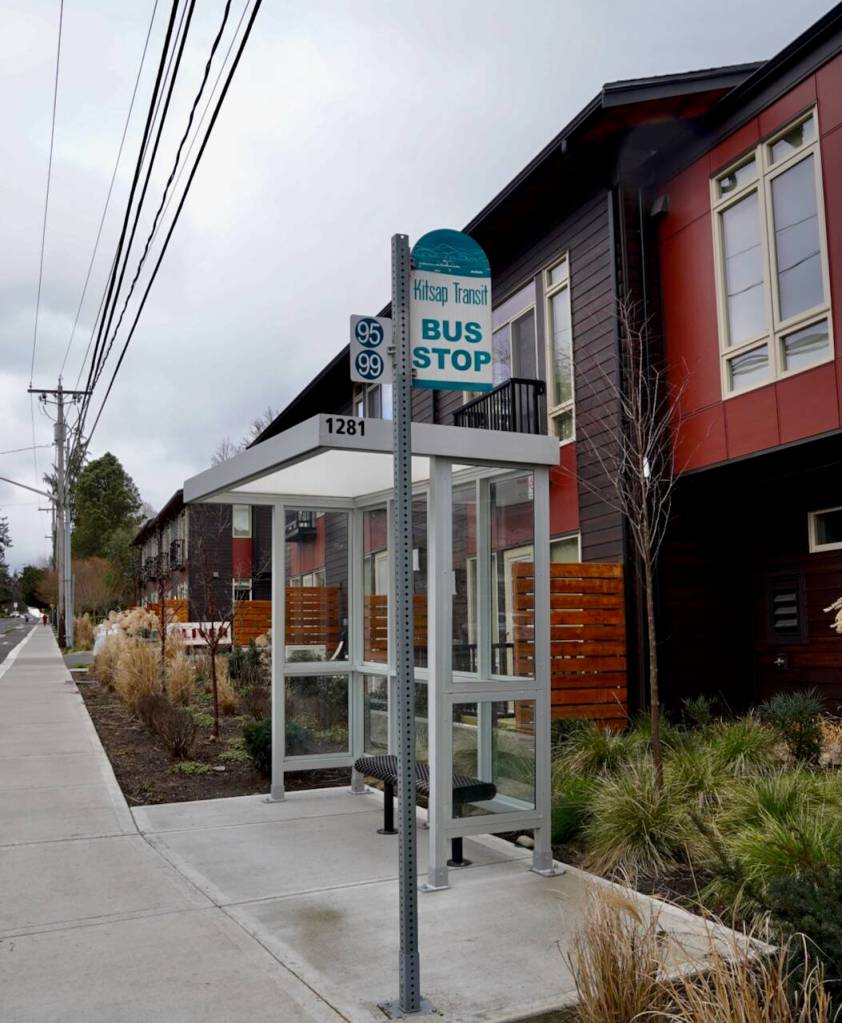
The Kitsap Transit Board of Commissioners received a presentation about future bus stop accessibility work as part of its Feb. 17 regular business meeting.
KT has gone out to bid for improvements to eight bus stops in west Bremerton along routes 220 and 228. The project will cost approximately $36,000 to create eight ADA (Americans with Disabilities Act) accessible stops, Edward Coviello, KT transportation and land use planner, said. The proposed work doesn’t include bus shelters at this time, which he estimates cost around $6,000 per shelter.
Port Orchard Mayor Rob Putaansuu asked if the eight bus stops would be constructed to minimize modifications to install bus shelters in the future. Coviello said six of the eight are being designed with this in mind, adding “there are two of them where the geography and the right of way can’t do anything,” he said.
KT identifies locations for improvements by using Public Right-of-Way Access Guidelines (PROWAG), per a United States Department of Transportation news release.
“What’s important is we must have an ADA accessible path from the point of the bus stop to the shelter location, or to basically the end of the bus stop itself. Beyond that, we’re not responsible. So keep that in mind. We have to do everything we can to ensure a connection to existing pedestrian circuit paths that are already ADA accessible,” he said. “So identifying locations for improvements, utilizing title VI of the Civil Rights Act…that’s a requirement that we have to provide equitable distribution of transit amenities and bus stops, shelters, benches, etc. Those are considered amenities.”
KT also intends to apply for a Regional Mobility Grant, a state-funded transportation program, which aims to support local efforts to improve connectivity and efficiency of transportation systems, per state law. KT hopes to use funding to add bus shelters and improvements at 30 bus stops system-wide. Locations are chosen based on ridership, Title VI, and access concerns, among others, per KT. Coviello said once awarded, it will likely take two to three years to complete the project.
“Kitsap Transit has not yet finalized locations for the new bus shelters. Right now, we are in the grant application process. After the grant is submitted and if it is awarded, we will move forward with selecting locations. Kitsap Transit must meet Title VI and PROWAG requirements for all bus stop improvements,” KT public information coordinator Christian Vosler said.
When evaluating future bus stops, the first step KT would take is to determine the need for a shelter, including looking at: location safety, feasibility, and timeliness of the needs of a location, Coviello said.
“We also look at requests, and we get requests almost daily to improve transit stops, and we do what we can to honor those requests. I can tell you, as a staff member, I take a lot of pride when we can improve a transit stop to retain a customer or to attract a new customer, and then we need to determine a cost estimate for work to bring the location up to those new ADA (standards).”
In 2016, the KT board adopted a bus stop design manual, which is still in use. Coviello said KT has roughly 1,400 bus stops network-wide and 159 covered bus shelters. This follows KT’s previously approved $100,000 for improving bus stops as part of the 2026 budget, per agency documents. KT also frequently hires a civil engineer to design bus stop access points, confirm the slope is correct, and collect measurements in the field, which can take a bit of time, he said.
“So I go out there, and I do the initial estimates to see if I think it’ll fit. And then we have to sort of memorialize that with that professional engineer stamp. And then we begin to finalize the cost and budget, and then determine do we need a contractor to improve this stop, or is that something that we can do in-house? And increasingly, we’re seeing a level of difficulty where we’re going to need contractors,” Coviello said.