
BI’s navigator helps with wide range of behavioral health issues
Published 1:30 am Wednesday, January 28, 2026
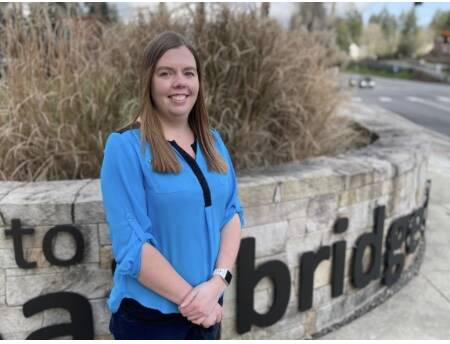
Since 2017, Bainbridge Island has been served by a community health navigator who provides a wide variety of behavioral health resources and now has roughly 300 community contacts every year.
Since its part-time inception in 2017 as part of a grant, the program expanded in 2021 to include a full-time health navigator embedded within the Bainbridge Island Police Department.
The community health navigator role includes providing support to a range of behavioral health concerns, including those struggling with mental health issues, substance use disorders, housing insecurity, and victim advocacy work, Kelsey Lynch, BI’s community health navigator, said.
Since 2013, Kitsap County has dedicated 1/10th of 1% of sales tax to provide mental health services, chemical dependency, and therapeutic courts services countywide. Lynch said moving the program away from grant funding and creating a full-time city position within the police department would be more sustainable to provide resources.
Prior to the program being full-time, Lynch said that during the earlier years of the program, individuals had to contact 911 to access resources from the navigator. Lynch said community members can now reach out directly by calling or emailing her, and she intends to help anyone reaching out looking for support.
The program is currently supported by the city’s general fund for 2025, including wages and benefits; the position costs roughly $165,000. The department reported 322 referrals in 2023, 300 referrals in 2024, and 326 through November 2025, city communications coordinator Shannon Hays wrote via email.
Lynch said she also works to provide victim advocacy services, adding, “I also work very closely with detectives in our department to provide victim advocacy to survivors of violent crimes, specifically domestic violence and sexual assault,” she said.
Lynch said she has the capacity to respond to calls in the field; however, she said it can be most effective to provide resources once an ongoing relationship with an individual is already built.
“We’re a small community. I get to know individuals who have ongoing mental health concerns pretty well, and I get to know their support systems pretty well. And so in those situations, it can be very effective and helpful to have been on scene to help with de-escalation, but…more importantly, to help with and ensure that the family and the individual know what resources are available to them to help mitigate that 911 contact,” she said. “What we find to be less effective for my role in the community is going out to 911 calls, where I might not have that relationship with them prior to that 911 call. A lot of that relationship building actually happens after officers have made contact.”
Lynch said BIPD doesn’t currently track the number of in-the-field responses in comparison to outreach opportunities. “My job is very much designed to build relationships with people in order to understand what it is that is impacting them in a way that is requiring a 911 response. But kind of regardless of whether I’m doing that in the field or whether I’m doing that from my office or from an educational program I’m providing to the community, I would say 100% of my job is community building,” she said.
In addition to community health navigators, police officers statewide complete an 8-hour crisis intervention training as part of the basic law enforcement academy at the Criminal Justice Training Commission (CJTC), which trains and certifies law enforcement officers in the state. Law enforcement officers statewide also complete an annual 2-hour crisis intervention refresher training as part of a 24-hour mandated annual in-service training. BI police chief Joe Clark said every officer in the department undergoes an additional 40-hour crisis intervention training offered by CJTC to be certified as Crisis Intervention Team officers.
“The goal of the navigator program is to really understand that many people are utilizing 911 services because they don’t know what the alternative is. The mental health industry is incredibly complex and layered, and accessing it can be incredibly challenging, especially when you’re already in that fight or flight crisis mode,” she said. “ And so many people are routed through 911, and law enforcement, when that’s not really the service that would provide the best support and resource for them…My role is really to help them understand what those resources are and help them access it, so hopefully we can reduce their need for a higher-level response like 911 in the future.”
Lynch said she previously has worked in outpatient mental health roles, including one-on-one therapy, which she described as very predictable at times. One of her favorite parts of the navigator role is the variability.
“You never know what the barriers in somebody’s life are. So even if you are trying to help them access the same service, the way in which they might need support in accessing that looks very different,” she said.
Clark said the department isn’t currently looking at expanding staffing beyond Lynch, adding, “ I can’t think of anything that we’re kind of not touching already,” he said. “She’s right here in the building, so she sits in the patrol room with the officers. There’s direct communication about different issues that are going on. She’s a resource for us, just as much as the community.”



Best of Bainbridge