Kitsap artist braves the elements to create his work
Published 1:30 am Thursday, November 20, 2025
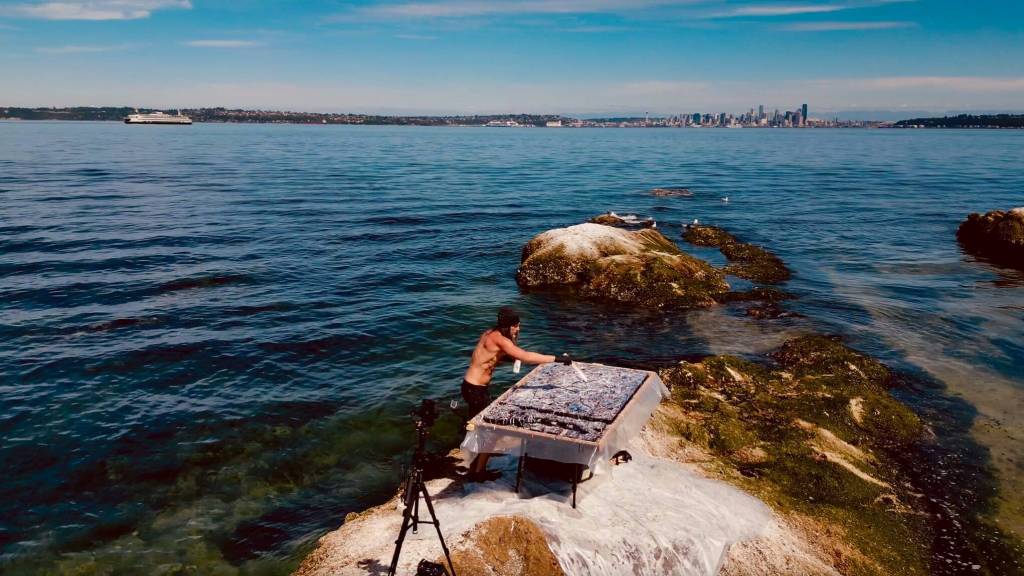
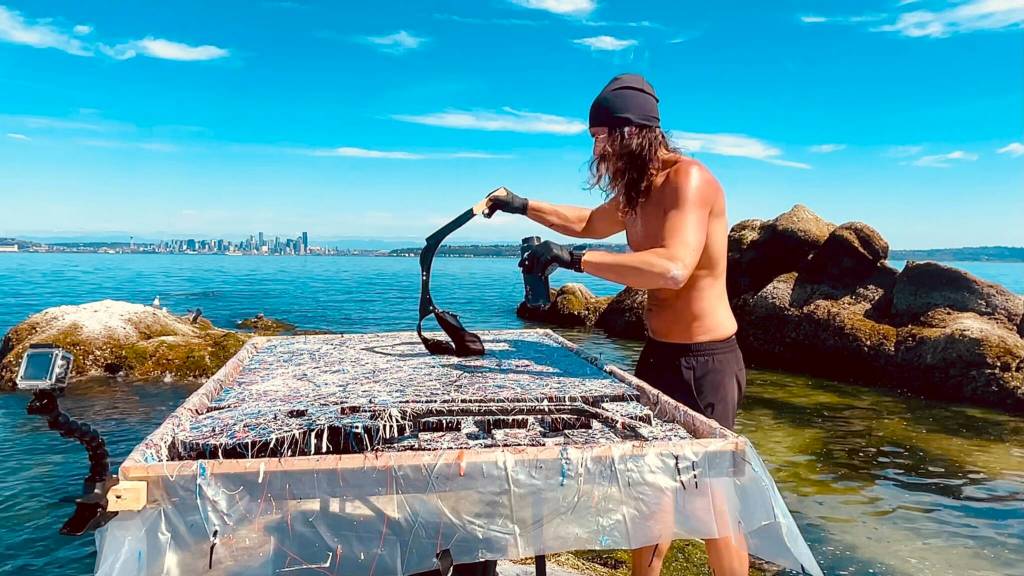

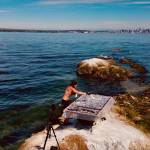
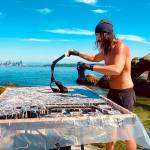
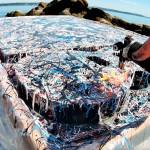
Kitsap-based artist Benjamin Judah Harrison is creating his own lost excursions, where he uses narrative elements in an effort to provide viewers with a unique experience viewing his work.
Since 2016, Harrison has been incorporating QR codes into his artwork. Earlier pieces link to a YouTube video of the creation, with newer artwork including QR codes that link to original interactive content as part of the painting. Harrison calls his artistic style narrative embedded art, which he describes as connecting with people through different narrative elements, which can be viewed through QR codes across the art pieces.
Harrison said due to the scope and complexity of his projects, he likely completes around 10-12 different art pieces each year. He doesn’t have a set studio and brings the supplies to a specific location he has previously scouted and completes the art on location. He films the process with four different cameras and later edits and creates accompanying elements such as music himself.
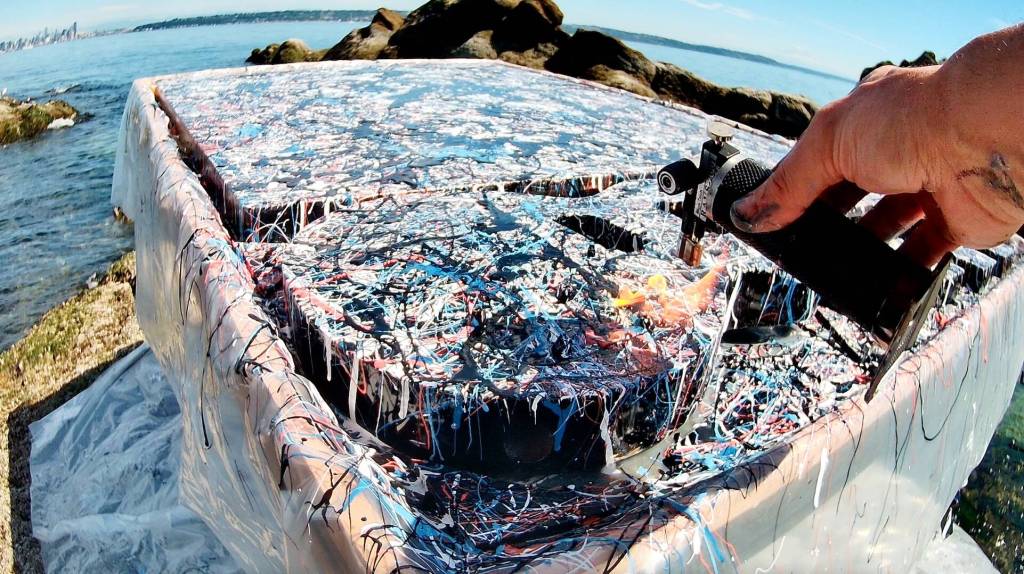
“There’s tech built into it. And there’s, rising tides, and me bringing out a blowtorch and scoring the art and creating different weird curing things in it, and there’s all of these different elements that go into it, but at the at the core of it, that’s really what I wanted to do, was to build narrative into art as part of its creation in the first place,” he said. “I believe the narrative behind art is so important, and it’s what makes something special, a piece of art hanging on the wall. You walk up to it because it looks a certain way; you look at it and it makes you feel a certain way.”
A lot of his early work exploring the lost art excursions method occurred on Bainbridge Island, including at Pritchard Park and Rockaway Beach, he said. One of Harrison’s most recent projects occurred at Blakely Rock in early August, which he estimates took between 12-14 hours in a single outing to fully complete.
Ahead of the shoot, Harrison completed several reconnaissance missions, including sending a drone out to Blakely Rock to determine the optimal tide levels. As part of this process, he also reviewed tidal charts and studied the weather.
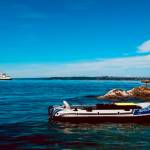
“Not only did I have to commandeer a boat, and figure out how to haul over 500 pounds worth of gear out into the middle of the Puget Sound to set up on Blakely rock. But the really interesting thing about Blakely Rock is that it disappears and gets swallowed up by the tide,” he said.
Harrison had to cut his raft loose because the mooring lines had so much tension from the rising tide, he worried the tide would tear his raft apart.
“And even after all of that, the tide got away from me and came up,” he said. “I had to dive and cut those mooring lines loose and then use the spare rope to tie the raft around my leg to keep it from getting washed away by waves, leaving me out there in the middle of Puget Sound. I had to get all my gear back on it and also keep it away from the rocks out there, which are covered in barnacles, which would cut it, split it open and cause me to not have a raft.”
Harrison said he also cut his leg and hand on barnacles in the process of packing up during the rising tides, and almost dropped the case full of the painting, and guitar pedals, including a 20-year-old Gibson prototype Les Paul guitar. He said he was relieved and happy when he made it home with his wife, Heather, and the couple’s rescue dog, Olivia, a shepherd mix.
“I hadn’t been that happy to be home in a really long time,” he said. “ That was quite the rush of adrenaline. Like in those moments, you really feel alive, but like, start to appreciate being back on land and being safe.”
Regarding copyright of his work, Harrison grants personal use rights to whoever owns the art, and Harrison retains the rights so that an owner can’t use it commercially. He describes his creative process as both physically and emotionally demanding as well as rewarding when everything goes to plan.
“I create the wood panel mediums…I fixed it to a hard shell laptop, like a military grade hard shell laptop backpack. And I’m able to haul things out in that way. I mean, I created every last aspect of this. And so it’s a unique thing to get to be an artist and to have a singular vision for how you want all of that to go and to execute on all of those yourself, to where you don’t have somebody else shooting the video or editing the video.”
However, the process doesn’t always go to plan. In late April, Harrison was working on a project at Gold Creek Pond in the Cascade Mountain range when he got trapped under a wooden panel painting.
“I ended up collapsed under that wood panel, a 40 by 60 inch painting, as it was still wet, and I had to carry it almost a mile at close to midnight in sub freezing temperatures…all by myself and pitch black nothingness, with a headlamp on, trudging through snow…basically resting it on my head,” he said.
Harrison also uses QR codes to include his signature and describes the QR process as another engagement tool to create value in his art.
“That’s really my desire in this is to create interesting narratives through the production of me, creating the art, and then having a user-friendly way of tying that to the art that communicates to people and connects with them through a deeper level than just looking at something,” he said. “That was a big part of wanting to do that, and something that no one else had ever done was creating exclusivity to content that’s linked to an embedded code that wasn’t on a blockchain or password-protected,” he said.
Harrison is originally from Nashville, Tennessee, and decided during the early days of the COVID-19 pandemic to sell his house and purchase a luxury recreational vehicle to adopt a more nomadic lifestyle with his family.
“In the first six months of being gone, the person who had purchased my home that I had been in for 17 years already had more equity in the house than I did whenever I sold it to them,” he said.
The nomadic lifestyle has allowed Harrison to explore different places, including Kitsap County. He said he wants to experience places on his own terms and make his own decisions on where he and his wife want to live and travel.
To learn more about Harrison, visit his website: benjaminjudahharrison.com