
How Kitsap is holding up now that government shutdown has ended
Published 1:30 am Wednesday, November 12, 2025
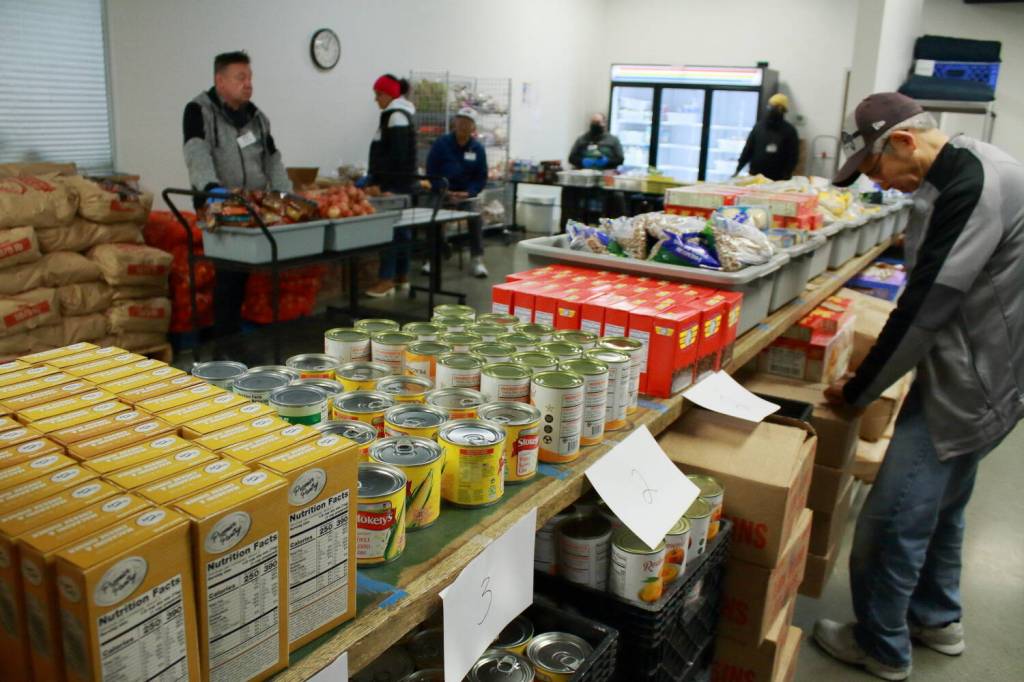
Financial insecurity brought on by dysfunction at the national level has hit Kitsap County, but the community is showing unprecedented support for those affected.
Recipients of food-purchasing benefits saw their monthly stipends delayed while several court actions swung the availability of funding back and forth during the federal government shutdown. Many people — some existing users of benefit programs, some facing financial insecurity from federal furloughs — turned to food banks and financial assistance to make ends meet.
Now that the shutdown has ended Nov. 12, the Supplemental Nutrition Assistance Program (SNAP) will be refilled, per the 2026 federal funding package, and states that used their own contingency funds to make payments to users will be reimbursed.
“In Washington state, people receive their benefits on the same date each month, which can fall between the 1st and the 20th. Due to the federal government shutdown, some Washingtonians were waiting for days to receive their benefits. Thanks to the quick work and dedication of our team, we are caught up on the delayed benefits and back on schedule, delivering full benefits,” a statement from Gov. Bob Ferguson says. “So far, we have delivered nearly $115 million in SNAP benefits, which is where we should be for this point in the month. We have approximately $48.5 million to send out between November 11 and November 20. The situation remains fluid, but our plan is to stay on schedule from here on out. People who receive SNAP benefits should check their cards. If there are funds available, they should use their cards as they normally would. It is breathtaking that the Trump Administration has fought so hard to keep food from hungry families.”
On Nov. 4, a federal judge ruled the Trump Administration had to either make full payments of SNAP in November or make partial payments using contingency funds. A federal judge in Rhode Island ruled the administration needed to fully fund SNAP by Nov. 7. The Trump administration appealed this order Nov. 7, and later that same day, the U.S. Supreme Court issued a 48-hour administrative stay.
Between the lower court orders and the Supreme Court ruling, some states issued SNAP benefits to users as an emergency measure; a few states issued full benefits to SNAP users. Over the weekend of Nov. 8-9, the Trump administration called for states to “immediately undo” those payments, or risk having the state’s SNAP account with the U.S. Department of Agriculture frozen, as in the case of Wisconsin. As of the morning of Nov. 10, the Trump administration renewed its Supreme Court appeal, calling for full payments to remain frozen.
Previously, on Oct. 28, Ferguson approved $2.2 million per week to local food banks statewide through the duration of the shutdown. In Kitsap County, local food organizations are getting $55,121.30 per week, Brionna Aho, a spokesperson for Ferguson’s office, said.
As of Nov. 2, just over one month since the shutdown began, there were 2,306 federal employees statewide who filed for unemployment, per the state Employment Security Department.
But department communications director Chris Barron added that less than half of the claims have been paid — about 44%, or about 1,015 — partly because payment is dependent on when applications are received, and whether applicants keep their claims active. About a quarter of applicants, or 577, have not submitted weekly claims, which is a prerequisite for receiving benefits.
County level
Naval Base Kitsap is the largest employer in the county and the third largest Naval base in the nation, with about 39,440 employees in 2024, per the Kitsap Economic Development Alliance. Between NBK and other federal agencies, Kitsap has the most government workers of any county in the state.
Proportionally, Kitsap has fewer unemployment claims by federal workers than other regions, with 192 filed as of Nov. 2. That’s still the third highest in the state, but far behind King County with 518 and Pierce County with 427, and nearly tied with fourth-place Thurston County at 187.
“Although Kitsap has the most federal workers of any county, it’s likely the majority are deemed essential since most work for Puget Sound Naval Shipyard or on the military installations,” said Barron.
In a news release, the Department of Navy Public Affairs encouraged furloughed staff to seek support from military counseling groups like the Fleet and Family Support Program and Military OneSource. For staff needing financial assistance or emergency travel accommodations, the Navy recommended reaching out to Navy-Marine Corps Relief Society or their bank.
Students at Olympic College are also facing additional strain. About 40% of the student body experiences food insecurity, and the on-campus food pantries assist more than 800 students annually.
The Bremer Trust, a foundation created in 1987 by the sons of William Bremer, founder of Bremerton, donated a matching $25,000 to OC to bolster its Hunger-Free Campus initiative. If matched, the commitment will provide $50,000 to feed students.
It’s also not just people who need assistance. The Kitsap Humane Society is extending its pet food pantry program to help families avoid having to choose between buying food for their pets and food for themselves. Residents of Kitsap and Mason counties can visit the pantry once per month, from 11 a.m. to 4 p.m., any day of the week.
KHS also has a wishlist online and accepts donations from individuals or deliveries from distributors. The animal shelter always needs unopened, unexpired dog and cat food, treats, kitty litter, collars, leashes, harnesses, towels, pet beds, and more.
“Together, we can make sure pets stay with the families who love them most,” wrote the shelter on its Instagram page.
Assistance on Bainbridge Island
Helpline House, a social service organization on Bainbridge Island that serves residents with food and support services, received $7,000 a week through the duration of the government shutdown, executive director Maria Metzler said. The funds are coming from emergency funding allocated by Gov. Ferguson. However, unlike SNAP EBT cards, which can be redeemed for food and cash, the emergency funding goes directly to food banks.
Metzler described the emergency funding as an infusion to get food into the food bank system. She estimates Helpline House serves around 400 households a week, or roughly 700 people. “I can remember when we thought 240 households a week was at the high end of what we felt we could reasonably serve, we surpassed that swiftly as cost of living increases without stopping and other changes to safety net systems just continue to deteriorate,” she said.
Friends of the Farms executive director Heather Burger shared similar concerns about access to food for island residents.
“My biggest concern is the ability to raise enough money that it will make a big enough impact. There’s so much going on, and there’s so much need on so many different levels out there. And, there’s a finite amount of money available, either from foundations or through grants. And I worry that I won’t be able to do as much as I want to do for people, but I’m going to do my best,” she said.
In March, Burger said Friends of the Farm launched an initiative called Share the Harvest, where the organization raises money from local community members and organizations to purchase food directly from local farmers who deliver the food directly to Helpline House’s food bank. Since July, Burger estimates the initiative has raised over $47,000 from local partners and donors, purchased and delivered 9,000 pounds of food to Helpline House, and supported 10 local farmers.
“I really hope that people will stay informed, that they’ll really pay attention, they’ll really look around them, so that they see what’s happening and that they’ll make compassionate decisions and choose to be part of the solution and make sure that people are treated with dignity and are respected and cared for when they need it,” she said.
The Bainbridge Island School District confirmed roughly 9% of students are participating in the free and reduced lunch program as of Oct. 31.
Lindsay Browning, executive director at the BI Chamber of Commerce, said it is hosting a food donation bin through the end of November to help support Helpline House, as well as planning to support multiple human service organizations during the holiday season.
“We wanted to get this up and running before Hometown Halloween in hopes of collecting food during the trick-or-treating and raising awareness about the criticality of stepping up to support our neighbors during these troubled times,” she said.
Browning said additional businesses such as Sauce Nouvelle, Suseyi Pro Moving Company, and Westside Pizza are also running food drives and/or fundraising campaigns to support Helpline House.
The city of Bainbridge Island wellness team has also created a staff food donation drive for Helpline House, city communications manager Shannon Hays said. Additionally, on Oct. 28, the BI City Council approved $30,000 in emergency funding from the council’s contingency fund to provide Helpline House with additional funding to support the food bank program.
Efforts in North Kitsap
Hunger has begun to encroach on the most vulnerable populations in Kitsap. Over the course of a year, the rate of demand at food banks in North Kitsap has steadily risen to record-breaking levels, said Charlie Thompson, director of Fishline in Poulsbo.
“It is all hands on deck in our market. Volunteers and staff are spending more time stocking shelves, accepting donations, and tending to the needs of people in need of food. It is a constant flow of traffic from open to close,” Thompson said. “Prior to the shutdown, we were experiencing about a 20% increase compared to last year. The shutdown has increased that need, and there is no sign of it slowing down. We anticipate record need for our services for the remainder of the year.”
The market portion of Fishline is open to all members of the community from 10 a.m. to 5 p.m., Monday through Saturday. Thompson added that the organization is offering enhanced services from case managers for anyone who lives or works full-time in NKSD, NBK Bangor or is experiencing homelessness, through Nov. 14.
It’s not just food that makes a difference – financial donations to support services like Fishline and ShareNet in Kingston are crucial, too. ShareNet’s annual fundraiser gala took place Nov. 8 and featured an auction and “dueling pianos” from Keys on Main to entertain guests.
In the North Kitsap School District, almost a third of students, 32% or 1,747 students, receive meals from school from the National School Lunch Program, sometimes referred to as free or reduced lunch. The U.S. Department of Agriculture has extended meal reimbursement through Dec. 31, which means there are no immediate impacts to school meal programs.
Through Nov. 21, the district is hosting a “Fill the Bus” food and supply donation drive that will benefit support groups in Kitsap. Donations may be dropped off at any school or district office. Any families who have experienced a change of income — permanent or temporary — are encouraged to apply for free and reduced lunch for their students.
“It’s been encouraging to see individuals and community organizations stepping up together to make sure no one feels left behind. That kind of community effort makes a real difference for our students and families,” said NKSD director of communications Jenn Markaryan. “This helps ensure access to meals and additional benefits such as reduced fees for athletics, activities, and internet services,” she said.
Applying for FRL is as simple as filling out a form, either online at the NKSD “Skyward” portal or in person on a paper copy. All elementary school students attending Richard Gordon, David Wolfle and Suquamish Elementary schools are automatically enrolled to receive a no-cost meal.
Year-round, the district has a suite of counselors, social workers, liaisons and school leaders who assist families struggling with utility, housing, childcare and food costs by connecting them with community resources. These programs will continue following the restoration of SNAP/EBT.
Until then, both students and staff are stepping up for the community. Many schools are hosting student-led food drives to help local food banks, said Markaryan.
The North Kitsap Leos Club, a junior wing of the Poulsbo Lions Club, held one such drive. On Halloween, the youth group collected 960 pounds of food for Fishline.
“Community is what drives all of our NK Leos. I know the federal shutdown has been incredibly hard on a lot of local families, so I was super thankful that our community came together in such a phenomenal way to support each other. It’s so important to be here for each other in times like this,” said Kathryn Mixer, NK Leos Club president. “That is why helping with the Leos is so impactful to me. I believe everyone has a duty to carry compassion in their lives, and support others whenever possible.”