Water report has coliform on rise
Published 12:30 pm Saturday, April 26, 2008
Quality, not supply, attracts notice as the city looks at its underground resources.
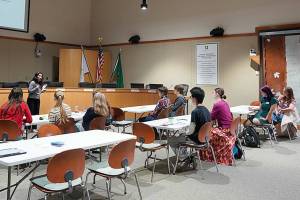
Midway through study of the waters on and around Bainbridge Island, scientists are finding mixed results, according to presenters at a water workshop Tuesday at City Hall.
“Our real concern is fecal coliform,” said city Water Specialist Jalyn Cummings, of the bacteria that is found naturally in the feces of humans and animals. “Overall, we did pretty well, but that one area we had some high hits.”
Coliform levels at one Winslow outfall were more than eight times higher than state guidelines, according to preliminary results of an ongoing pilot study.
Conducted by environmental engineering firm TEC, Inc. and funded mostly by the state Department of Ecology, the study is measuring, among other things, the presence of metal and fecal coliform in island waters.
The latter isn’t likely to cause illness in humans, but at high levels it can have adverse effects on the environment, according to the state Department of Health.
Coliform counts are measured in colony forming units per milliliters of water. The recent high readings exceeded 1,600 CFUs per 100 milliliters, the top of the test range; acceptable levels range between 50 to 200 CFUs, depending on the site.
Two of six monitoring sites saw high readings, three of which were taken at the outfall at Brien and Bjune Drives. One came in late September, the other two days apart in mid-October, during a single storm.
During the same storm, another high reading was measured in a creek through the Winslow ravine, near the outfall, though a reading two days later there showed normal levels of fecal coliform.
“It’s definitely something we need to investigate further,” Cummings said.
The reason for the elevated levels isn’t known, though animal waste and septic systems are known to be common sources elsewhere.
City staff have been trained to use the monitoring equipment so that work can continue after grant funding for the study runs out at the end of the year.
Cummings said there are plenty of positive signs to be found in the results, including the absence of pesticides and “very, very low” levels of metals.
Meanwhile, the city is nearly halfway through its study of the island’s groundwater. Scientists measure water levels monthly at some 80 wells around the island; seven wells are measured hourly.
The study team also is compiling historical data from logs that detail the level of specific water sources over time.
Questions have for some time persisted about the island’s water supply and how it will impact the amount of growth that can be absorbed.
Cummings said it’s understandable that people link growth with water, but the study itself doesn’t do so.
Its ultimate aim is to create a model of groundwater flow using the collected data that the city can then use to better predict how changes in water levels at one source might impact sources elsewhere.
The study began in 2006 and will continue through 2010.
In addition to the studies, the city now is working to meet the state’s tightening stormwater regulations.
Larger cities have long been subject to permitting, but now smaller cities, including Bainbridge, are subject as well.
To be compliant, cities must increase monitoring and present an annual report to the state. Another vital component is public outreach, said City Water Resources Engineer Melva Hill.
“You have to teach people they can’t dump stuff in the storm system,” she said. “All stormwater discharges directly into the Sound.”
In addition to environmental damage, potential lawsuits and the loss of loans and grants, non-compliance with the rules can lead to fines as high as $25,000 a day.
Pollutant levels tend to increase during the rainy season; Hill said that this time of year she usually receives about 20 calls per week from people reporting violations.
Emerging problems caused by the infiltration into local waters of hormones, prescription drugs and caffeine, still haven’t received widespread scientific study, she said.
“We don’t have the testing in place yet,” she said, “But we know it’s happening.”