2,000 paper cranes folded for peace as part of AA&H Festival
Published 1:30 am Tuesday, June 2, 2026

The third annual Asian Arts & Heritage Festival lasted throughout May, with more than 30 cultural experiences that brought folks together through performance, workshops and culinary traditions. The festival aims to celebrate and recognize Asian American, Native Hawaiian, and Pacific Islander Heritage Month.
“It is so exciting to see how our festival has grown from four events in our first year to 30 events in our third year,” said festival founder and chair Stephanie Reese. Reese is also on the board of Arts and Humanities Bainbridge and the Creative Arts District.
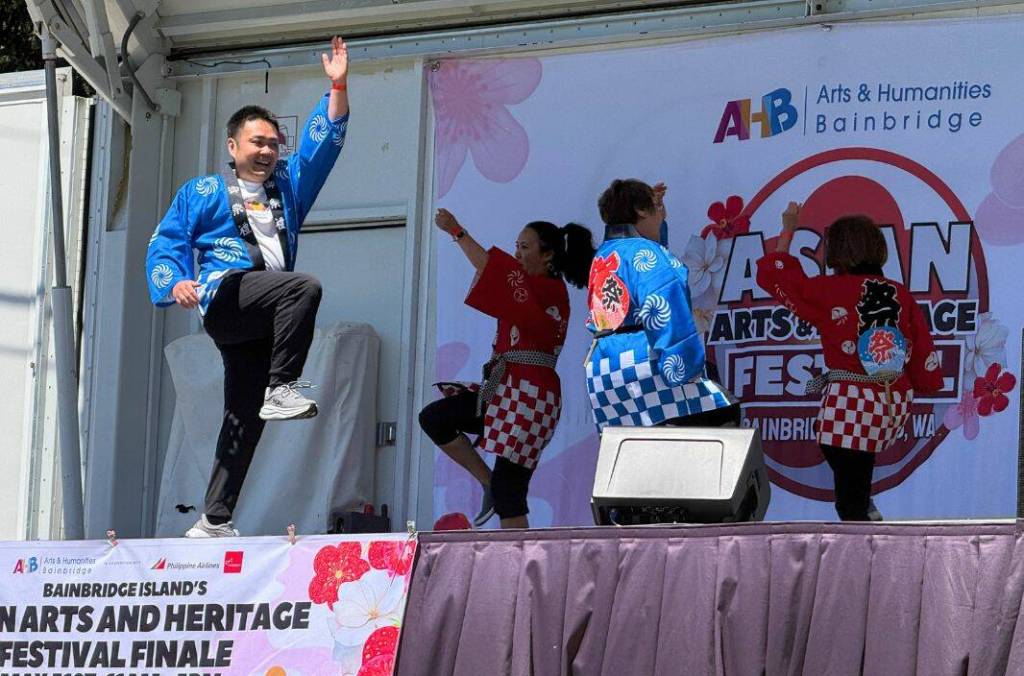
To end off the month of celebration and ceremony, the community came together May 31 for cultural performances from Mongolian throat singers, Taeko drummers, Japanese dancers, a Filipino reggae band and more at Waterfront Park. Cultural education booths and food vendors lined the street.
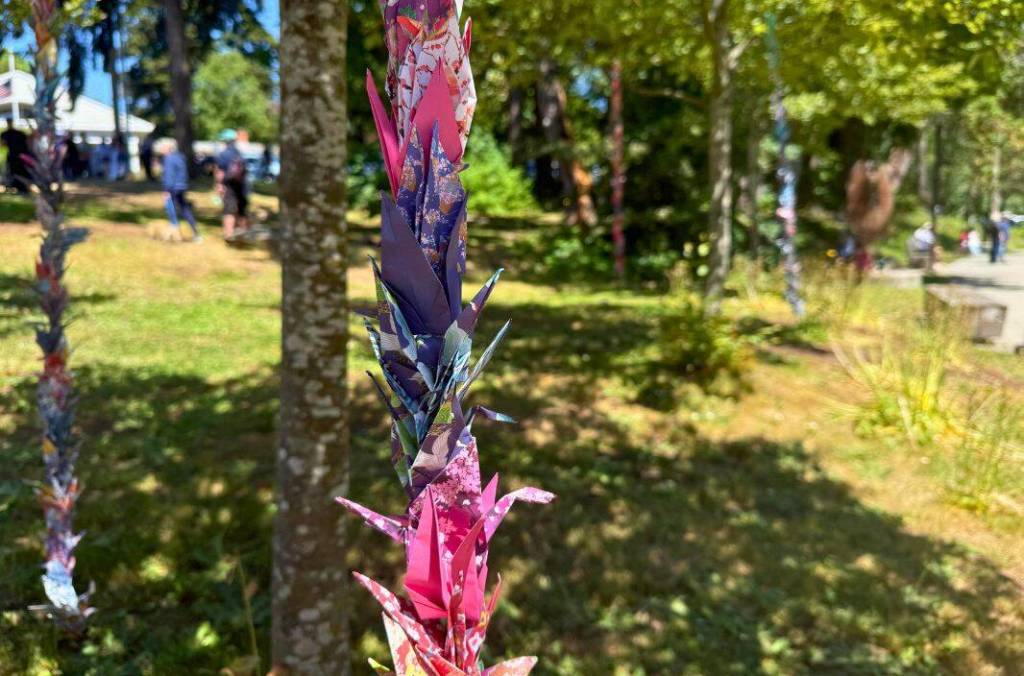
For the first time, the festival finale was moved to Waterfront Park, where 1,000 paper cranes were displayed. “We want them displayed on a central tree as a unified symbol of our celebration of culture and peace and all the success and participation of Bainbridge’s Festival and (AANHPI Heritage) Month,” said Reese. “It is such an easy and thoughtful way to engage our whole community to participate.”
Bainbridge Island Chamber of Commerce partnered with Sonoji Sakai Intermediate School and the Bainbridge Island Japanese American Exclusion Memorial to fold 2,000 cranes for peace. Half of the birds will be visible at the Chamber of Commerce, with the other half strung in a tree at Waterfront Park before they head to a more permanent home at the Japanese American Exclusion Memorial following its renovations.
In Japanese history, when one folds 1,000 cranes, they are granted a wish. This is a long-standing tradition for special events like birthdays or weddings, or for larger world events. “When I was a kid in elementary school, my third-grade class folded 1,000 cranes for peace during the Cold War,” shared chamber of commerce executive director Lindsay Browning. “I have been folding ever since, so at the chamber we thought it was a great way to bring the community together.”
The folding began in mid-April, with tables, paper and instructions set up at both the chamber and the Japanese American Exclusion Memorial. “It’s about connecting for a cause,” said Browning. “It has completely taken off; you never know what will resonate with folks. People have come in that never have before just to ask where the crane folding is.”
Sonoji Sakai Intermediate School was also a large partner in the paper crane project, with art teacher Maggie Hitchcock and her fifth-grade students contributing to the folding of 500 of the cranes. “For the past several years, the fifth and sixth graders at Sakai have folded cranes in honor of the BIJAA commemoration of the day the Japanese Americans were forced, during WWII, to go to internment camps,” said Hitchcock. “While it is challenging to learn to fold cranes in the beginning, our students quickly became expert folders. I love the commitment to community that this age contributes to. Whether it is our food drive to Helpline House or making cards for our senior citizens or folding cranes, they can make it happen. I have always thought that if we could harness their energy, we could solve the world’s problems.”
This is the first year that this project has been done by Bainbridge Island, but many have already suggested that the tradition continue in following years. “It’s about peace, collectivity, harmony and all the beautiful things we wish to represent,” said Browning. “It’s such a unique community activity that also has deep ties to Bainbridge.”

Best of Bainbridge