
How Kitsap’s special crash investigation team responds to incidents
Published 1:30 am Thursday, February 26, 2026

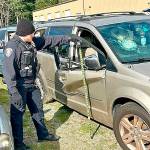
A car accident in Kitsap County involving a death or serious injury triggers a response by the Kitsap Interagency Traffic Team, a specialized police crash investigation team.
KITT travels to serious collisions with the aim of determining how they happened. The skilled unit is made up of law enforcement personnel from the sheriff’s office and police departments of Bainbridge Island, Port Orchard, Poulsbo and Bremerton. Members have undergone advanced crash investigation training, and many belong to the Washington Association of Technical Accident Investigators.
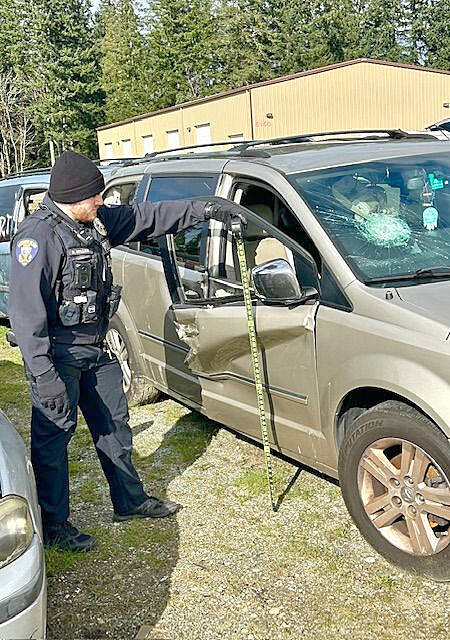
Once at an accident scene, the team, headed by Sgt. Andy Aman of the sheriff’s office documents physical evidence, such as skid marks and vehicle damage. Officers also interview drivers and witnesses and examine whether alcohol, drugs and high speed were factors in the crash.
Later, they scrutinize the “black box” in the responsible car to find out how the vehicle was driven seconds before the crash. After months of analysis, KITT officers are able to reconstruct the crash and identify contributing factors, which can include high speeds and alcohol or drug use. Finally, the team submits findings to the prosecutor’s office to decide if there is sufficient evidence to file criminal charges.
“The purpose of KITT is to provide consistent, thorough investigations. It doesn’t matter where the crash happens, whether it’s in the city of Port Orchard, Bainbridge, Bremerton, or in the county,” Aman said.
KITT investigation outcomes are serious. In Washington state, a person convicted of causing substantial bodily injury to another while driving under the influence can face several months in county jail; causing a death can lead to six to eight years in prison, he said.
“People get injured and killed driving their cars, and our communities suffer from these. We owe it to citizens to respond to a scene and do an investigation. That way, we can get to the root cause of why this happened and, if needed, hold whoever is responsible for any criminal act,” Aman said.
At the accident
Once the team is at a collision, each officer is assigned a task, such as traffic control, contacting drivers and witnesses, or collecting evidence, Aman explained.
If a driver is suspected to be under the influence of drugs or alcohol, a drug recognition expert (DRE) is called in. A DRE officer is trained to assess if a motorist is impaired by drugs or alcohol. “That officer will go to the scene if the driver is still at the scene or go to the hospital if the driver is at the hospital,” Aman said.
Authorities also administer an alcohol breath test or collect a blood sample to confirm whether a driver is impaired, he added.
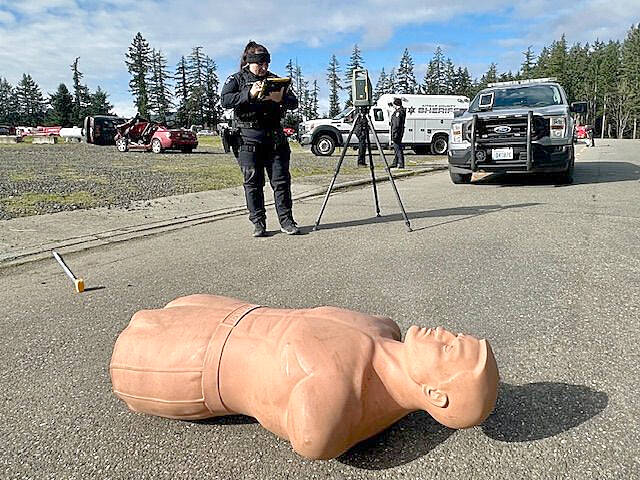
Vehicle damage is examined to establish how the cars collided. Tires are also looked at to determine tread depth and tire pressure, which can impact a vehicle’s ability to brake. In addition, the “stickiness” of the roadway is examined. An accelerometer is a sensor that determines the traction of the roadway, which affects a car’s ability to brake. A wet street is going to have less friction or stopping ability than a dry one, Aman explained.
Officers watch for substance use by noting driver behavior and checking for alcohol or drug items in the car.
The crash scene is photographed to record vehicle positions, damage, skid marks, and scattered debris. In addition to using a camera, officers can fly a drone overhead to capture aerial photos. At night crashes, a laser scanner is set up in the middle of the accident that rotates and scans millions of points. The drone and scanner will produce a three-dimensional rendition of the site, he said. The depiction is used to help reconstruct the accident and serve as evidence in court.
Officers also seek videos of the collision from homes and businesses surrounding the accident scene, from Ring cameras or business cameras. In the event of a fatality, the medical examiner comes to the scene to examine and collect the deceased.
It can take three to eight hours for team members to complete their on-scene investigation. Only after the crash is investigated and hazards are removed is the road reopened for traffic, he noted. Vehicles are considered evidence and are frequently taken to a police lot for a detailed examination. There, officers review the various systems in the car, such as braking and steering.
Post-accident analysis
KITT officers handle many tasks at an accident scene, but most investigation into the cause happens afterward. The sergeant noted that 60–70% of their work occurs post-collision, once the scene is cleared.
Back at the station, evidence from the crash site is analyzed using software tools and mathematical applications. A wealth of information is revealed by the vehicles involved in the wreck.
“Cars are kind of our tattletales now,” Aman said.
He is referring to what is commonly called the motor vehicle’s “black box,” the electronic unit that triggers deployment of airbags. This system is similar to the “black box” found in airplanes, recording critical data prior to the accident, which aids in post-accident analysis. Most can reveal how a car was operating for up to five seconds before the crash, he explained.
“The (airbag) system is connected to the rest of the systems in your car. It monitors a bunch of different things that are happening as you’re driving – speed, steering angles, braking, whether you’re wearing your seatbelt. Some will tell if your stability control and cruise control were on,” he said.
When prosecutors file charges after serious accidents, KITT members often testify in court and are cross-examined about their work. Last year, twelve officers took the witness stand.
Statistics
KITT has responded to a growing number of serious car accidents. In 2023, the team was called to seven crashes, that rose to 14 in 2024 and climbed to 17 in 2025. “We are seeing high speeds and DUIs in a lot of our crashes,” Aman reported.
The sergeant outlined the circumstances surrounding some accidents his team has dealt with:
-In November, a driver believed to be traveling at a “high speed” on Warren Avenue in Bremerton struck another vehicle. The driver, suspected of alcohol or drug use (a toxicology report is pending), died from his injuries days later. The other driver suffered substantial injuries.
-That same month, a southbound car on Bethel Road in Port Orchard hit and killed a jaywalking pedestrian who may have been impaired. The driver was sober.
-Also in November, the team handled a fatal hit-and-run on Wheaton Way in Bremerton, where a pedestrian was killed. The driver fled the scene and was later arrested. He was charged with felony hit and run; the case is pending.
-Last April, in Bremerton, a Corvette travelling over 100 mph on Sixth Street went airborne and crashed into parked construction equipment. The passenger in the car died at the scene; the driver, who showed signs of alcohol use, survived and now faces a charge of vehicular homicide.
An asset to all
The specialized crash team conducts high-level accident investigations throughout the county, said Bainbridge Island officer Brenton Miller, a four-year member of KITT and former Washington State Patrol trooper.
“It’s very much needed because we have a lot of small departments like Bainbridge. We don’t have the resources for a tech, scanners, traffic truck and drones. And we don’t have the (qualified) people for it,” Miller said.
Bremerton traffic unit officer Jacynda Espinosa, who joined KITT in July, agrees the team benefits all of the Kitsap County police departments.
“KITT gives each agency all of the resources in the county to put forth the best investigation. So, instead of it being just me and my partner at Bremerton, it’s the sheriff’s office, Port Orchard, Bainbridge Island, Poulsbo police departments and all of the resources that come along with those agencies,” Espinosa said.
Most people wouldn’t choose to be called to a tragic car accident at 2:30 am, but KITT officers sign up for the responsibility.
“I’ve been there when family members have shown up at scenes and I’ve had to tell them that their loved one is not coming home that night,” Aman said.
Although responding to these incidents can be emotionally challenging, the sergeant finds the work professionally rewarding.
“I’ve had to work with the families from the time that they lost a loved one or was seriously hurt through the trial for the person that caused all this harm. It is truly satisfying that we put in all of this work, then work through the system to hold that person accountable when it’s appropriate,” Aman said.