BI adopts ADA plan, $3.6 million in fixes to start
Published 1:30 am Monday, December 15, 2025
The Bainbridge Island City Council adopted, via consent agenda, a citywide transition plan at its Dec. 9 meeting that will make the island’s public infrastructure accessible to people of all mobility levels over the course of several years.
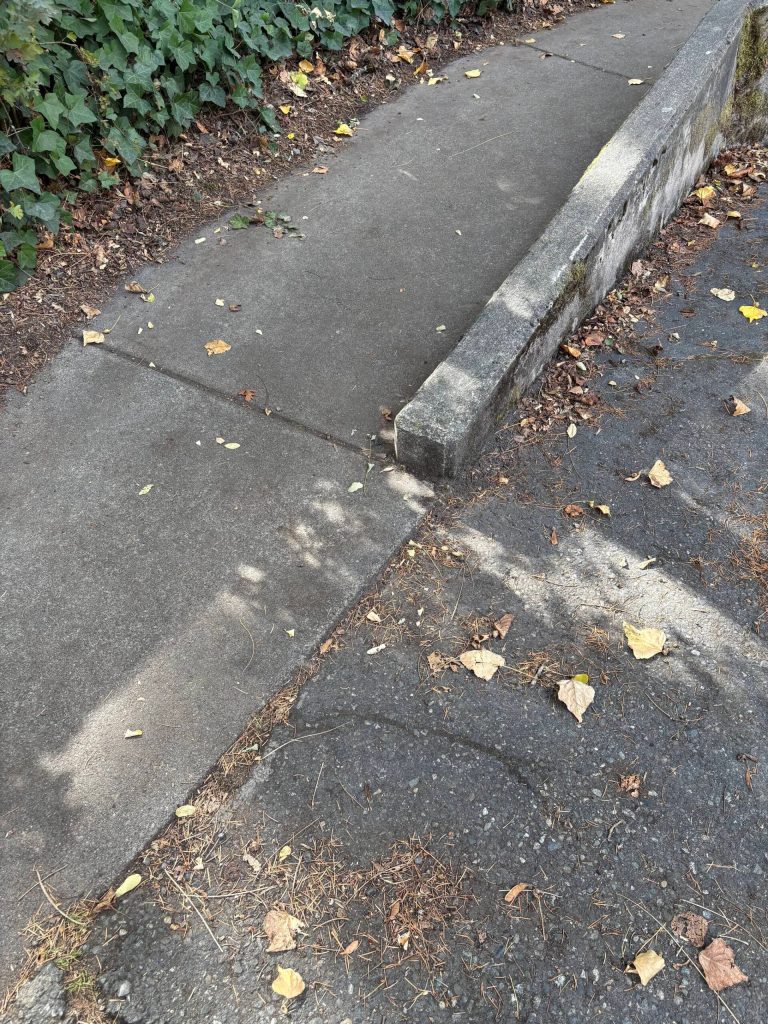
In five-year increments, the city will address the most pressing obstacles in the public right-of-way that limit access to city amenities for people who are not able-bodied. Projects deemed “very high priority” — concentrated mostly in the Winslow area — will be the focus of the first five years, at a cost of about $3.6 million. In total, removing all noted barriers will cost about $32 million.
PNW engineering firm Transpo, which specializes in municipal accessibility planning, studied miles of sidewalks and indexed hundreds of street-level tools that comprise the city’s pedestrian infrastructure to assess compliance with the Americans with Disabilities Act (ADA).
Out of 22.2 miles of sidewalks, 541 curb ramps, 164 crosswalks, 38 pedestrian signal push-buttons and 40 bus stops, only about three miles were ADA-compliant, along with 43 curb cuts, two push-buttons, and 14 bus stops.
During the public comment period Nov. 12-30, the city’s ADA transition plan received three anonymous responses, each of which noted some concerns with the plan and execution of improvements: potential oversights in relation to accessibility outside the Winslow area, vague regulatory language, and resolving issues with recent workmanship.
One respondent noted that some sidewalk improvements are required along corridors that have already received major overhauls since ADA-compliance became an industry standard, and questioned how the city may avoid future issues in new construction. Another noted that while the report was “quite detailed,” it did not explicitly account for areas where the city’s sidewalk infrastructure is not continuous — along Winslow Way W, from Madison Avenue to Grow Avenue, in particular.
The last respondent noted the need to include organic debris building as a physical barrier and maintenance necessity, as well as the lack of overhead lighting in certain areas of the island. They added that the plan did not contain an explicit definition of “service animal.”
“There is no definition of what constitutes a service animal. If the ADA Transition Plan refers to service animals, it needs to define what they are, and their function. Otherwise, a person can claim any animal as a service animal,” the respondent wrote.