
Group opposes BI police expansion
Published 1:30 am Thursday, December 9, 2021
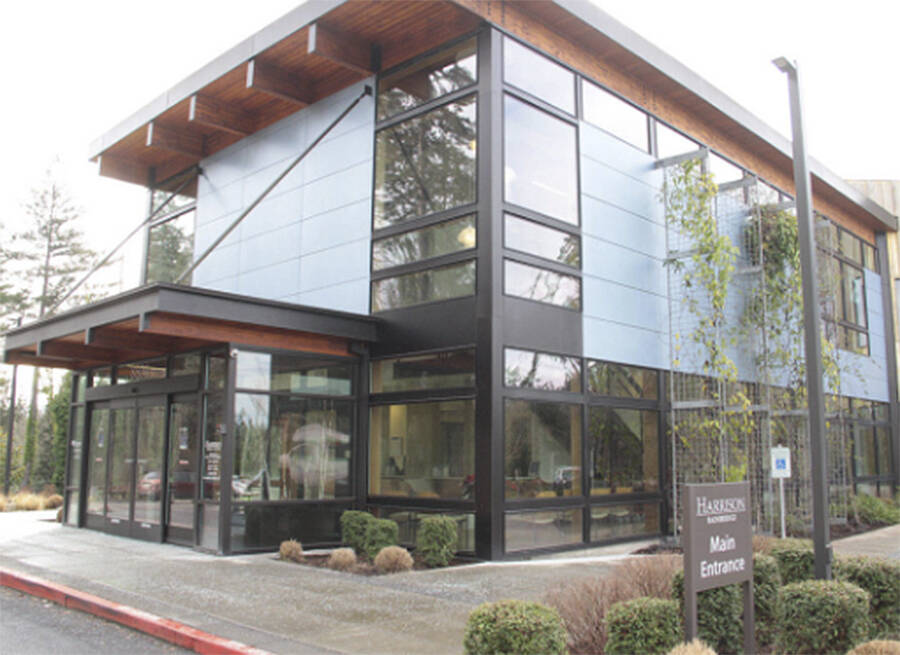
A countywide coalition is interested in having the Bainbridge Island Race Equity Advisory Committee join it to oppose a new police station and courthouse at the old Harrison medical building.
The Kitsap Equity, Race and Community Engagement Coalition says that policing, law enforcement and prisons, in general, need to be scaled back, not expanded. They say with a bigger police station, the BI Police Department would likely grow as it’s three times the size of what it has now.
ERACE’s efforts include focusing on social services for people to help them so they don’t turn to crime.
The coalition presented a slide show to REAC at a meeting last week to explain their #No BIPD expansion campaign.
“We’ve learned many people don’t want ‘more’ or ‘bigger’ when it comes to police budgets, buildings or duties,” one of the slides says.
They add that even if you don’t agree with their world view on policing, they are encouraging those against the specific expansion on BI to join with them in the campaign.
“It’s time for a systematic change, not more policing,” another slide says.
ERACE says: “Instead, Bainbridge Island needs more human services. How can we cultivate public safety through restorative practices, accessible mental health care, low-income housing, and shelter for those being abused, experiencing homelessness, etc.”
And, as always, ERACE’s efforts include engaging community to move race equity forward.
BIPD slide show
• No to more police: Look at police statistics. There is no need for more police here. Police should not be responsible for duties that would better fit social service and health professionals.
• No to police control over mental health or social services: Police are not trained in those areas; society can bridge the empathy gap and understand some people who experience trauma or harm do not want contact with police.
• No to using tax money inefficiently: Prioritize progress on needed and underfunded social services; increase accountability by showing costs of comprehensive work plan items; and don’t rectify an overspending mistake at Harrison by simply going ahead.
• No to bigger police budgets: Big budgets don’t mean increased public safety; increase dialogue around police statistics; build community knowledge of who, when and how to call for help. Police are often not the best first call; fund more restoration, reparation and community-based solutions, not criminalization.
• No to a bigger station: A safe working environment and accessible facility is achievable without such a huge increase in size; there is no reasonable rationale on why so much space is needed for BIPD and courts.
• No to locating social services in buildings with police: Criminalization and help should not be intertwined; mental health services can become punitive if alongside policing; some people fear police, which can cause them not to access their services even when needed.
Working together
In closing, the slide show says ERACE believes REAC also shares a passion for bringing race equity analysis and advice to government and criminal justice.
REAC is tasked with providing technical and planning advice about race, as well as providing equity-related advice and recommendations, to the City Council. It also engages the community in moving race equity forward.
ERACE asked REAC to join them in asking the council to pursue an outside party to review the police-court facility project and policing needs. Also to make sure the outside party understands systematic racism and is able to incorporate a race equity analysis.
REAC did not vote on the issue, but some members did show support in a discussion afterward.
Discussion
Olivia Hall of Winslow and ERACE said human services needs are behind many crimes. Theft, for instance, is a “crime of poverty. People in desperation.” Hall said society needs to fix the root cause the people need help.
Akuyea Karen Vargas, also of BI and ERACE, said society needs to admit there is an equity problem. “If we don’t acknowledge it we can’t fix it.” She said society has never looked at the issue this deeply so, “We are all learning.” She added that people need to respect and connect with each other. “We cannot be divisive.”
As for the Harrison project at 8804 Madison Ave., Hall said affordable housing projects have had to jump through more hoops than that $20 million project.
Rachel Reece of ERACE said that building could instead be used for social and human services or affordable housing.
Vargas said it could be used for services for young people. “It could be a catalyst for health and well-being.” She added that COVID-19 showed some of the disparity in services and that resources for police could be better used elsewhere.
Wendy Jones of BI and ERACE said rather than punitive the funds should be used for helping.
“It’s not about a building,” said REAC member Jing Fong. “It’s about using budgets for other purposes.”
Vargas said government needs to look in-depth at its systems because they are not always equitable. Asked what about people concerned about crime if police funds are reduced, she said, “That fear-based message is not helpful.”
If interested in the cause, email KitsapERACECoalition@gmail.com or go to facebook.com/KitsapERACEcoalition/
REAC member Eric Stahl said even though it’s the committee’s job to advise the City Council, it often doesn’t listen. “We should prepare that that could happen on this issue,” he said.
Best of Bainbridge