Couple delivers COVID-19 shots at homes
Published 1:30 am Friday, May 14, 2021
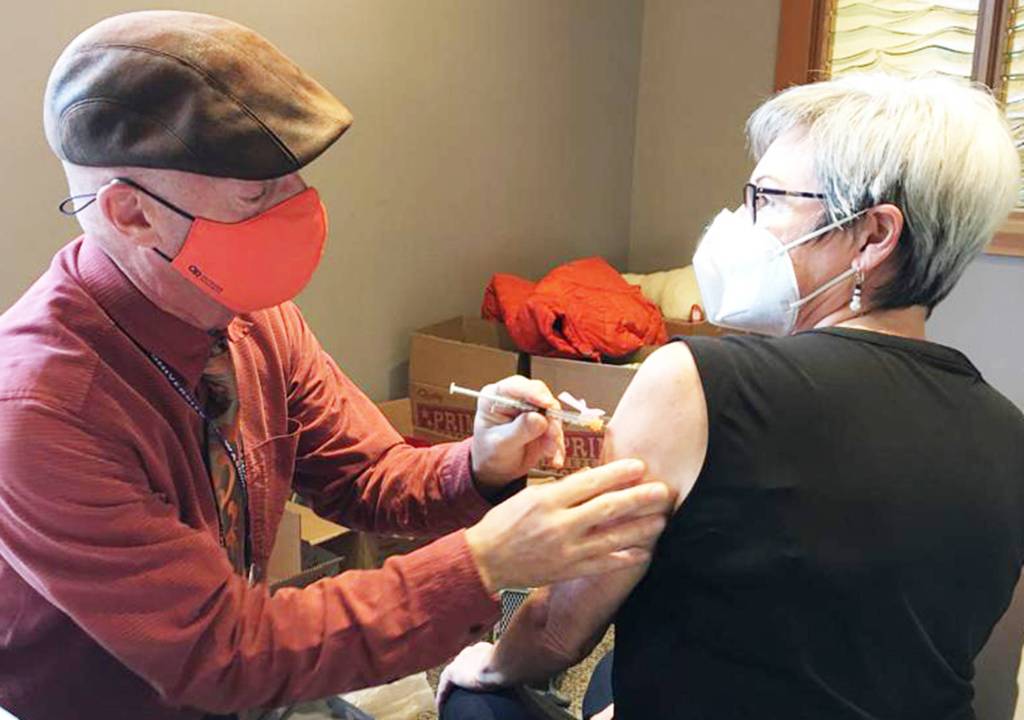
Dr. Fred Hoffer and his wife and nurse Donna Rodger have been providing COVID-19 vaccines for months to people who have been stuck at home for various reasons.
Most of the time it was because they were physically unable to go get one, but some of the time it was for mental health reasons.
An example of the latter was an autistic man who lives with his parents who has a “real fear of people in masks,” Rodger said. Since they both had been vaccinated, not wearing masks was a valid option. While they were there, one of the man’s favorite TV shows was on – the medical drama “Emergency.” He was so excited he was standing up pointing at the doctor and “pointing at me,” Hoffer said.
Others with mental health issues didn’t like going to vaccination sites because of the noise and chaos, Rodger added.
Individuals also had physical challenges. Hoffer recalled a man who was paralyzed. “He was so fragile and vulnerable,” the doctor said.
In general, the couple said it was very rewarding helping people in their homes. For many, they had not been able to have visitors for over a year. Not only were they grateful for receiving medical treatment, they also appreciated the social interaction. “It’s a big deal. They’d been isolated a whole year. They could have conversations with somebody besides themselves. And they could get the freedom” to finally leave their home, Hoffer said.
Rodger said that was the best part of the volunteer effort for the retired couple. We were “libetating them from this difficult” situation, she said, adding now they could see their kids or grandchildren instead of having them “drop groceries at the door,” for example. She said they saw some elderly people who had gotten their first shot, but then had fallen and ended up in a rehabilitation facility. So they couldn’t get their second shot. They couldn’t even leave their room. So the couple would vaccinate them so they were “free to have visitors again — even go home.”
Rodger called her husband a “volunteer-a-holic” helping out 53 times compared to her 38 since Dec. 24. That’s when Bainbridge Island Community Pharmacy received its first vaccines, and volunteers starting getting shots “so they could safely give it out to others.” Before they could even get their second shots they were double-masking and giving out vaccinations in the community. “They couldn’t wait for us to get our second dose,” she said, adding long-term and assisted care facilities were in desperate need. “Their folks were pretty immobile,” she said.
In February they were asked by Kitsap Public Health District to start a mobile service to travel around the county to help underserved people at home. “Fred and I would pack up our kit, and away we’d go,” Rodger said. They received referrals from groups that already dealt with homebound clients – such as Island Volunteer Caregivers, Meals on Wheels and the BI Senior Center. The couple said they got to know those patients a little bit personally because they stayed and watched them for 15 to 30 minutes after to make sure they didn’t have a bad reaction to the shot. They didn’t have one issue related to that.
They provided mostly Moderna vaccines, but also Pfizer and Janssen once it became available. Rodger said they would have liked to give the one-dose Johnson and Johnson one to make “better use of the volunteer crew’s time” but that going back a second time was “fun because we already knew these people. It’s more rewarding … you’re making a real difference in their lives.”
The couple said there are a number of reasons why BI has been so successful against the epidemic.
One is the Medical Reserve Corps, established in 2019. It is a group of what started with 80 but now includes 300 doctors and nurses prepared to work together in an emergency. “I feel way better prepared for an earthquake,” which was the original reason for the corps, Rodger said.
Other reasons are the “talent pool is really deep here” and the “robust volunteer” attitude on the island, she added.
Hoffer said he is one of almost 70 volunteers from the Rotary Club of Bainbridge Island who have helped with the coronavirus clinics, some of which handled up to 1,200 vaccines a day. “People pounded down the door wanting to work,” Rodger said. Rotary also has helped fund local childcare centers in need to keep them operating and donated to senior center technology upgrades.
The couple said they find it curious why young people aren’t getting vaccinated now that they are eligible. Hoffer said even though those in the age 20 to 50 group are not dying or being hospitalized many are getting severely sick with conditions that could impact their health for the rest of their lives. He said they are the ones out working and having more contact, and they need to get vaccinated. “We gotta get this thing stopped,” he said.
He predicted that 80 percent of people on BI have been vaccinated, but it’s a problem in South Kitsap. “It’s not a myth,” he said of why some don’t get vaccinated. “Everybody has these excuses.” He added that people need to think beyond themselves because they can infect others.
“How do you convince somebody who’s already made up their mind?” Rodger asked. “If they’re on the fence they need to talk to somebody they trust,” like their own doctor, she added.
Hoffer said it may take the Food and Drug Administration to give the vaccines permanent clearance. “With emergency use authorization it’s impossible to mandate” people to get the shot, even in the military. “Drug companies are not liable,” Hoffer said, adding vaccinations can be a requirement of employment if the FDA gives permanent clearance.