
Islander helps launch effort to assist in HIV/AIDS education in East Africa
Published 11:28 am Monday, October 20, 2014
BY DANA THOMPSON
Special to the Review
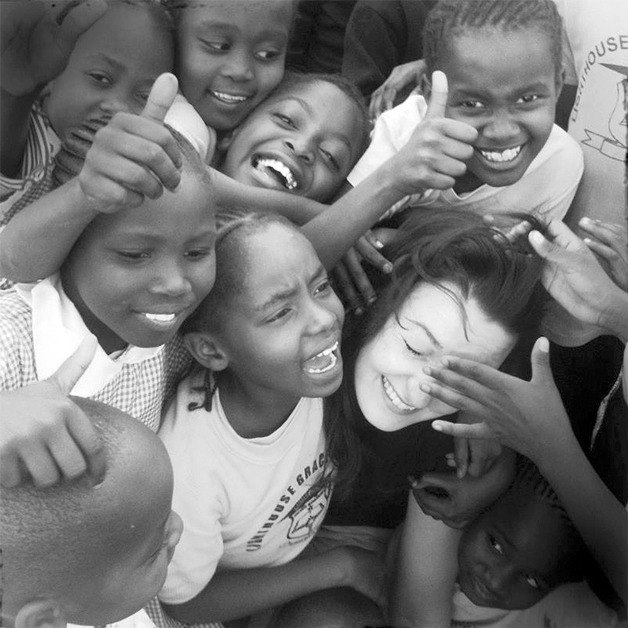
When Bainbridge Island native Galen Douglas traveled to Kenya on a whim in the summer of 2012, little did she know the trip would begin her on a humanitarian effort aimed at providing much needed HIV/AIDS education in East Africa.
 While teaching in an orphanage and providing HIV prevention training in the slums of Nairobi, Douglas met up with a mutual acquaintance, Darren Collins. An internationally known comedian, entertainer and educator, Collins had come to Kenya with a very specific mission — to explore the efficacy of using puppets to get HIV/AIDS education to Kenya’s most vulnerable population.
After spending months researching in Kenya and developing a plan, the two co-founded Project HAND UP, a nonprofit organization aimed at providing life-saving and relevant HIV/AIDS education through puppetry to the countries of East Africa.
An estimated 69 percent of the world’s HIV/AIDS population lives in sub-Saharan Africa, and approximately 90 percent of all children with AIDS are born there. The infection rates in Kenya reach as high as 20 percent in some areas. And while there’s no lack of HIV/AIDS education available in East Africa, the sensitive nature of the information and the strong cultural taboos and stigma associated with HIV/AIDS often impede people from getting the education they need to prevent infection.
Pairing puppets with a serious subject such as AIDS may seem irreverent, but puppets, in fact, are the perfect medium to deliver sensitive information. Puppets can reach any audience — children, teenagers, and adults — providing comic relief to any number of painful and private topics. Since puppets are removed from the person operating them, they can say things — shocking things — that might be threatening coming from a live person. And through the use of laughter, an educator can engage the audience’s attention longer, imparting more information. An entire community can turn out for a puppet show for the entertainment value alone; the fact that the show is about HIV and AIDS is often secondary, and yet the message gets across.
“The information is out there,” says Douglas, who is also the organization’s program director. “Project HAND UP just has a tool (puppets) that happens to be really effective.”
Collins has long been tackling difficult topics through humor, teaching crime prevention, anti-bullying and drug education campaigns in the U.S. using comedy, juggling and magic.
In the early ’90s, Collins began using puppets for those same topics at both PRIDE and DARE Conferences, and has since trained over 20,000 puppeteers world-wide in the use of puppetry.
From 1999 to 2009, Collins worked closely with the late humanitarian and chemist, Dr. Mickey Simpson, in Cambodia to help train three-person teams of traveling puppeteers, who went village to village educating rural Cambodians on the need for safe water practices. Simpson had developed a ceramic water filter that could easily eradicate the spread of water-borne illness, but recognized his filter wouldn’t help anyone if he couldn’t get people to use it.
“Mickey taught me that having a technological solution to a problem is essentially useless if people don’t have the education on how to use it,” says Collins. He credits Simpson for giving him the inspiration to use his own artistic strengths as a means to achieve world health.
With a model based on his Cambodia experience, Collins and Douglas have worked closely with Kenyan and American educators and comedy writers to create culturally sensitive, funny and relevant material for use in their program.
Project HAND UP has developed two distinctive portable HIV/AIDS educational programs targeting multi-age audiences in Kenya.
One program is aimed at elementary age children, focusing mainly on dispelling the stigma of AIDS. The program addresses what AIDS is not, and what are safe means of interaction with HIV/AIDS positive peers and family members, as well as promoting common respect between peers. “There is so much fear,” says Douglas. “Young kids are shunned in school by their peers because they are HIV positive. We try to plant the seed of gender equality as well, gently pushing the idea and need to respect everyone in general.”
The second program — while still focusing on respect and dispelling stigma — is a little meatier, aimed at older audiences from middle school through adult, dealing with more difficult issues such as means of transmission, safe sex practices, preventative measures, rape, abuse, etc.
Approximately 45-minutes long, both programs are informative and funny, using puppets and some magic, and most important, are carefully designed and culturally sensitive for their audiences.
“The key to making this all work,” says Collins, “is to be culturally appropriate. We don’t have an outside agenda – we just want to get the message across in a way that is relevant to the people hearing it.” Anecdotally, the programs are highly popular and are already having results, but Collins and Douglas are determined to see hard data bear out.
“Right now, there is enthusiasm because of the idea,” says Collins. “We want to see enthusiasm because of the results.”
In January, Collins and Douglas will be returning to Kenya to collect data and to fine-tune the programs to ensure they are effective and making tangible change in behavior and awareness levels.
The audio track for each program is pre-recorded, and thanks to a generous $137,000 grant from Rotary International, which will be administered and supported through eight different Rotary clubs around the U.S., Project HAND UP’s presentations are highly mobile. Using self-contained vehicles with solar powered equipment, including a stage and sound system, Project HAND UP operators can easily travel village to village, performing on traditional puppet stages with modern puppets, or out of their trucks in villages where there is no electricity. With the audio pre-recorded in Swahili, Project HAND UP can enlist many different performers and volunteers, regardless of their native languages, to get essential, life-saving information to schools and community settings across Kenya.
Although right now Project HAND UP is focused exclusively on Kenya, the long-term mission is to develop similar programs in different languages for use throughout the countries of sub-Saharan Africa. Ideally, each of these countries would eventually take over the administering of the programs themselves.
This month, Collins and Douglas have a number of informational meetings planned on Bainbridge Island, and invite you to join them.
On Monday, Oct. 20, they will be speaking at two Bainbridge Island Rotary Club functions: lunch at 11:45 a.m. at Wing Point Golf & Country Club (811 Cherry Ave.) and a dinner meeting at 6:30 p.m. at Waterfront Park Community Center (370 Brien Ave. SE.).
On Oct. 25, Collins will be performing a live comedy act, including magic and juggling, at Bainbridge Performance Arts at 3 p.m. to raise money and awareness for Project HAND UP. Tickets can be purchased through www.brownpapertickets.com and are $12 for adults and $8 for kids.
For more information about Project HAND UP, or to donate, please go to www.projecthandup.org. All donations are tax-deductible.
Dana Thompson is a Bainbridge Island-based freelance writer, with a background in international business, and a passion for travel, education and languages.


Best of Bainbridge