Make room for more bikes
Published 5:18 pm Friday, May 16, 2008
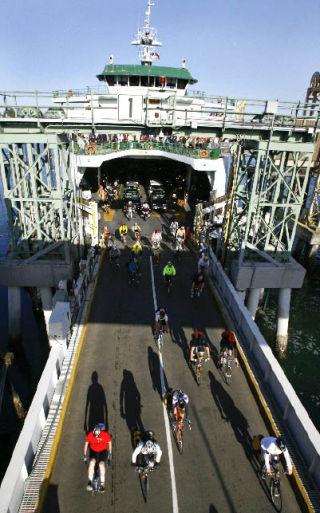
On Monday, Washington State Ferry Captain Ty Anderson watched 130 bicyclists pedal onto the 5:30 p.m. sailing from Seattle to Bainbridge.
It was the most cyclists he had ever seen board a regular commuter run, but he was hardly surprised by the number. Anderson, himself an islander and bicycle commuter, has seen the number of cyclists grow steadily in his 25 years as a captain.
“When I started there would be 10 bikes onboard, and bikes were an afterthought,” Anderson said. “They’re not an afterthought anymore.”
In fact Anderson says the number of bikes has reached a point where ferry crews will soon have to find creative ways to accommodate them, or begin cutting down into the number of car spaces.
Even in the dreary days of February, Anderson said there were more than 80 die-hard bicycle commuters on many of the runs. He expects to see 150 on peak-hour sailing in June. There are currently 747 cyclists enrolled in WSF’s bicycle-permit program for the Bainbridge-Seattle run alone. The permit allows riders to avoid a $1 bicycle surcharge otherwise charged on top of the regular passenger fare. Lines of bicycles have to be secured along bulkheads, which occasionally has led to conflict. Anderson said last week a large truck boarded the ferry and crushed a bicycle that was parked along a wall.
“We’re full up already,” he said. “That’s the problem.”
Anderson has been working with his crew and terminal managers to find ways of squeezing more bikes onto the boat. He wants to find new homes for three large storage containers on the car decks that could be moved to make way for eight bicycles each.
He and his crew are also bicycle racks on the car ramps on each side of the ferry. The racks would fold up and out of the way when not in use and could hold dozens bicycles in a space where only about three cars can park.
Cutting back on car spaces is another option. About 10 bicycles can fit into a single car space, and it would only take two or three cars to compensate for the increase in bike traffic, Anderson said.
Dana Berg of Squeaky Wheels, a Bainbridge cycling advocacy group, said that along with promoting an environmentally friendly form of transportation, giving up car space for bicycles could make sense financially for WSF.
It costs $28.90 to take the ferry to Seattle and back without a commuter discount, and $7.70 for a bicycle fare with surcharge. Berg noted that by replacing one car with 10 bicycles, WSF could more than double its fare revenue from the space.
“We think it’s a win-win situation for the ferries,” Berg said.
Anderson stressed that any space solution will need to be approved and polished by WSF administrators.
Last week WSF chief David Moseley met with Bicycle Alliance of Washington to discuss ways of retrofitting existing ferries and designing future ferries to absorb more bicycles.
Bicycle Alliance Executive Director Gordon Black, also a Bainbridge bicycle commuter, said he was encouraged that Moseley and WSF may take action what he sees as a looming issue.
“They need to realize that this is a single group of customers that has been growing in a time when vehicle use has been declining, or at least staying flat,” Black said.
WSF spokesperson Joy Goldenberg said the agency does not expect space limitations to impact rider access anytime in the near future but planners are working on ways to free up more room.
“Administrators are taking the issue very seriously,” Goldenberg said.