Does belief lead to bloodshed?
Published 6:00 am Friday, April 20, 2007
Local scholar examines big questions about religion and war.
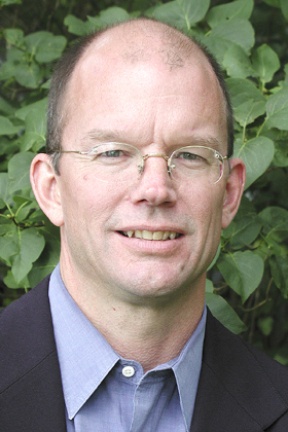
James Wellman isn’t shy about his passion.
“I love to think about religion, do religion, talk about religion,” he said. “Basically, I’m a fanatic.”
Fanaticism, however, isn’t what comes to mind as the author, professor and ordained Presbyterian minister discusses his research, writing and teaching, which center on a thoughtful exploration of the interrelatedness of church, state and culture.
He’s looking at why world leaders and citizens do the violence they do in the name of God.
Wellman will speak Thursday at Eagle Harbor Book Co. about a compilation he recently edited titled “Belief and Bloodshed: Religion and Violence across Time and Tradition.”
The collection, which includes essays by scholars around the U.S., examines “the idea that religion and violence are not foreign to each other, and that it’s not a new phenomenon since 9/11,” Wellman said.
The book explores numerous occurrences and expressions of combined religious and state violence throughout history, from the role of religious ritual in the victory celebration known as “the Roman triumph” to the depiction of wartime spoils in ancient Egyptian and Mesopotamian religious iconography.
“States love it when they can partner with a religion,” Wellman said, adding that states create legitimacy by asserting that their political will is also God’s will.
“It’s a very common trait among leaders to want to think that God is on their side,” he said.
Wellman tells the students in his University of Washington international studies course that throughout history, one of the most effective ways a leader can mobilize a group is to “pick an enemy that is vulnerable, somewhat of a minorty group and that people wouldn’t mind hating” and then turn that group into “the other.”
That way, he says, people can feel innocent even as they dominate.
To illuminate the point, Wellman is having his students undertake a “practical moral project” that looks at religion, culture and violence in an international context.
Before starting their papers, students must address their own personal, political and religious preconceptions around the chosen topic. He tells students, “assess your biases, do the research…and come up with your own hypothesis. And then tell us how your mind has changed because of your research.”
Wellman went through a similar exercise while researching his upcoming book about the clash of evangelical and liberal Christians in the Pacific Northwest.
He conducted 450 interviews with members of the two camps and learned that liberals, himself included, generally perceived evangelicals to want a theocratic state in which God has civil rule.
But with few exceptions, the evangelical Christians Wellman interviewed said they were distrustful of government. Far from wanting a theocracy, they sought a grassroots “moral culture.”
He responded thoughtfully to being proved wrong.
“Research is a moral process whereby you ask the questions you’re interested and then create a research strategy that will try to answer the question, and then be as honest and truthful about the data as you can,” he said. “And if the data disconfirms your bias, then that’s what you have to say.
“You’d like to say that evangelicals are theocratic creeps – and a lot of people are selling books with that – and now I know that that’s just blah, blah, blah.”
With the volume of religious-based violence occurring in the Middle East and the U.S. today, Wellman said, “It feels like kind of scary moment for the nation and for religion in general.”
But as he works with students and continues his own research, he hasn’t given up hope for humanity.
Wellman likens culture, including religion, to the water that we and the “others” we create all swim in, and he asks his students to “pop out of the water for a moment and look” in order to gain an understanding that everyone is part of making the water what it is.
“Can you mobilize a group around love, compassion, and hospitality and treating the other with love and forgiveness?” he said. “I say yes.”