
KCSO ride-along showcases DUI enforcement, arrest process
Published 1:30 am Thursday, April 23, 2026
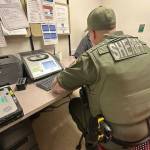
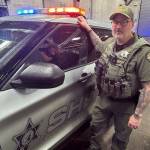
Getting handcuffed, having fingerprints and a mug shot taken, and being booked into jail can happen if you get arrested for driving under the influence – even if you have a clean record.
Over the last five years, DUI arrests by the Kitsap County Sheriff’s Office increased 22%, climbing from 172 in 2020 to 210 last year. On a positive note, in the past two years, such arrests fell 7%, from a high of 225 in 2023.
While arrests have recently dipped, deputies are seeing some troubling trends.
“We’ve been getting higher and higher alcohol levels on our DUIs,” said Kitsap County Sheriff’s Office deputy Rob Corn, a 28-year law enforcement veteran with extensive experience in DUI enforcement. “We’ve had .25, .30 – super, high levels of alcohol (Washington legal limit is .08). I don’t know what’s been causing that.”
Another development is the number of times DUI arrests are occurring. Traditionally, a typical DUI stop would happen late at night and during early morning hours when bars were closing.
“Now, DUI arrests are happening earlier in the day. It’s always surprising to stop someone at one o’clock in the afternoon, and they’re drunk. At four or five in the afternoon, we are getting people with (breathalyzer readings of) .20 driving around,” Corn said.
The decrease in recent arrests could be because there are fewer deputies on the road, Corn said. “We have the lowest staffing levels ever. We have less cops to do the work. Maybe if we had more cops, there’d be more arrests.”
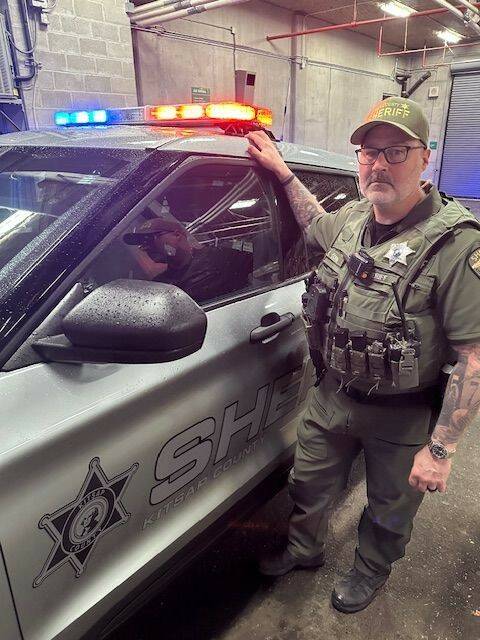
To learn about DUI enforcement, Kitsap News Group reporter Mike De Felice recently rode with deputy Corn during an evening shift. The night was spent patrolling in and around Bremerton.
A numbers game
When looking for intoxicated drivers, Corn said his main goal, particularly in the evenings, is to contact as many drivers as possible.
“If someone’s weaving down the road, that’s obvious. Mostly, it’s just stopping cars. I’ve seen studies that show as many as one in 10 drivers at night has been drinking. We are just looking to stop cars and have conversations with drivers. It’s kind of like fishing,” he said.
“After dark, I’m looking for everything – headlights, taillights or brake lights not working, expired tabs. Pretty much anything that’s a violation. It’s just more about the volume of drivers we can talk to,” he said.
Driving with the headlights off can be a good indication of an impaired driver, Corn noted. Erratic lane changes can also be a red flag, but these days such driving is often the result of someone being on their phone, he explained.
Around 6:30 p.m., Corn parked on Chico Way, watching for speeders. Speed can be an indicator of someone being under the influence, he noted. In a half hour, the deputy only pulled over one vehicle, going 60 mph in a 40-mph zone. The driver, a minor, had not been drinking but did not have a license. The teenager was cited for speeding and not having a license and instructed to wait for his father to arrive.
Next, Corn drove along Trenton Avenue and Wheaton Way without incident.
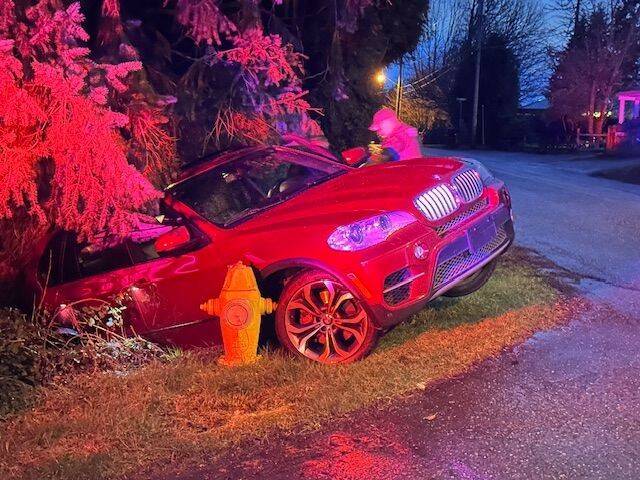
At 7:40 p.m., dispatch radioed that a car had driven off the roadway in a quiet Bremerton neighborhood. A citizen heard an unusual noise near NE Ivy and Olympus NE Drive. The resident investigated and saw that the car backed off the street and slipped down an embankment. Corn arrived at the scene at 7:43 p.m. and contacted the driver, a male who was not injured and seated alone in the vehicle.
Once the driver stepped out of the car, Corn said he noticed the man smelled of alcohol, had slurred speech, red watery eyes, and was unsteady on his feet. Suspecting intoxication, the driver was asked to do some voluntary roadside physical tests, commonly referred to as “field sobriety tests (FSTs).”
Three primary FSTs include: keep your head still as your eyes track the officer’s moving finger, walk heel-to-toe down a line and return, and the one-leg stand, where you keep your arms at your side and raise and hold a foot in front of you.
Midway through the first FTS, the man stopped the test and refused to proceed.
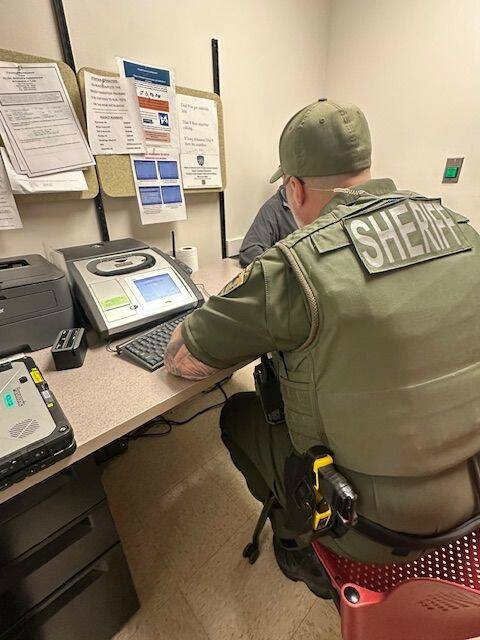
Corn arrested the motorist based on the car being driven off the street and observing signs of intoxication. The man was handcuffed and placed in the back of the patrol car. He was then transported to the Bremerton police station to take a breathalyzer test, a machine that measures blood alcohol content. The man refused to blow into the machine, a decision that likely will result in him losing his driver’s license for one year.
The deputy then phoned an on-call judge to obtain a search warrant, authorizing the taking of the driver’s blood sample to determine the presence of alcohol or drugs. The driver was taken to an emergency and urgent care facility in Port Orchard for a blood draw. The blood sample was sent to the Washington State Patrol’s toxicology lab for analysis.
There are also DUIs where a person is under the influence of drugs, frequently cannabis products, Corn noted. A certified drug recognition expert officer, like Corn, will do an evaluation to determine if the person is on drugs. This includes taking the person’s blood pressure, body temperature, and examining the pupils in different light conditions. A blood sample will also be taken for testing.
Around 11:30 p.m., the man was transported and booked into the county jail in Port Orchard.
The deputy finished writing up the police report on the arrest around 2 a.m. Corn spent about six hours processing the DUI, taking up the bulk of his shift.
A lot of officers do not like processing DUI drivers, per Corn.
“Most cops want to be out on the street taking (911) calls. Most can’t stand doing DUIs because they are very time-consuming,” he said.
While DUI patrol is not the first choice by some officers, Corn continues to request the assignment.
“I go to the crashes. I see the outcome of the ones that got away. I see people who get killed and families that get destroyed by people out there drinking and driving or using drugs. I guess it’s a little bit of motivation to keep doing it. You never know if the guy we pull over and arrest might have hit some family down the road,” the deputy said.

Best of Bainbridge